
Advantages of Low-Density Projects in Bangalore, and How to Verify One
SUYUG Infra
Short briefing · 863 words · 4 min read
Real estate trends evolve fast, but one shift that has clearly taken hold—especially among today’s new-age homebuyers—is the rise of low-density residential projects. In a world where everything feels packed and fast-paced, people now prefer homes that offer more breathing room, greenery, safety, and peace. Low-density communities focus on fewer homes per acre, which means more space, better lifestyle quality, and an elevated living experience.
Unlike most of what gets called a “premium feature”, this one is a number you can check before you buy: total units divided by total land area, both stated on the RERA-filed site plan. It is fixed at approval and cannot be raised later. Here’s why that matters.
- More Space, Fewer Neighbours — And It Is Countable
The biggest advantage of low-density living is simple: you get more space and fewer people around you. Unlike high-density apartments where hundreds of families share the same amenities, low-density communities offer:
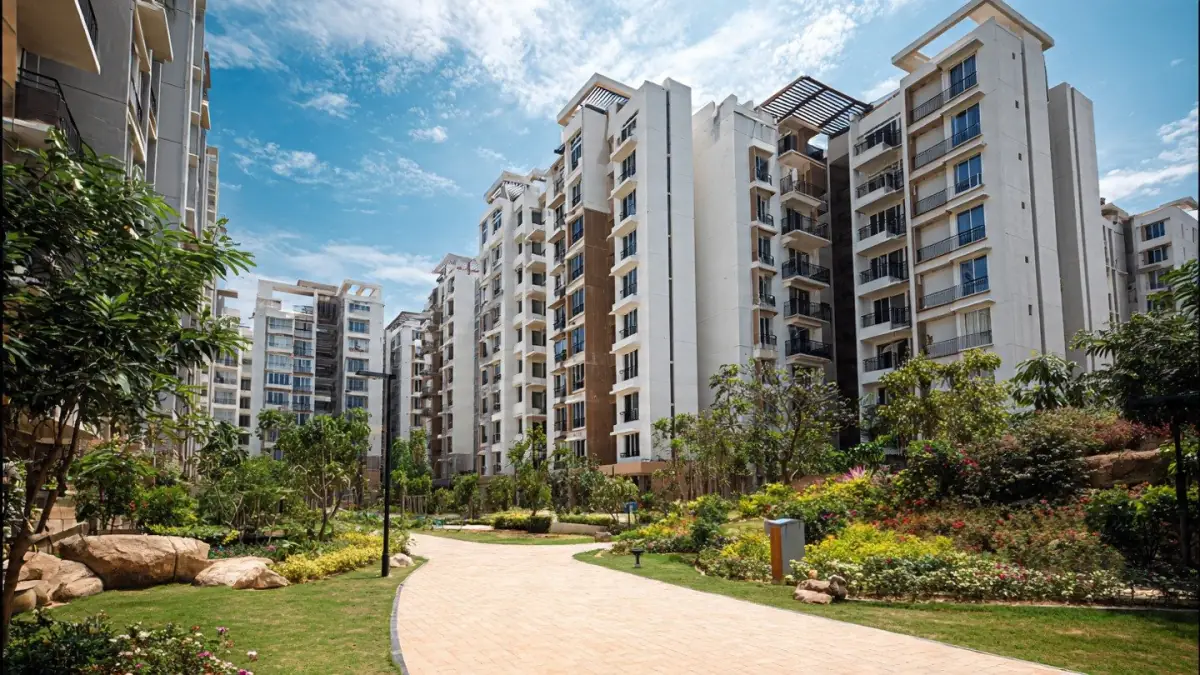
- Wider roads
- Open landscapes
- Larger amenities
- More greenery
- More privacy
None of that is a matter of opinion once the site plan is in front of you — the open area, the road widths and the number of homes sharing them are all drawn on it.
2. Better Air Quality & More Green Spaces
Modern buyers—especially Gen Z and millennials—care deeply about wellness.
Low-density communities naturally allow for:
- More trees
- Larger parks
- Better airflow
- Less dust and traffic
- A cleaner environment
The mechanism is straightforward: fewer homes on the same land means less vehicular movement inside the community and more planted area to buffer it. How much difference that makes at a specific site depends on what surrounds it, so walk the boundary before you take anyone’s word for it.
3. Higher Privacy and Security
Privacy is one of the biggest reasons people upgrade their homes.
In low-density housing:
- Fewer neighbors = fewer disturbances
- Each home or unit gets more buffer space
- Less foot traffic maintains peace
- Security teams can monitor the community better
These follow from the count rather than from the marketing: fewer homes sharing a lobby, a lift and a gate is a structural difference, not a positioning one.
4. A Supply Position That Cannot Be Repeated On The Same Land
We publish no return figures and no appreciation forecasts. What is worth understanding is the supply mechanism, because that part is checkable:
- Density is fixed at approval — a developer cannot add homes to the same parcel later
- The number of homes in the community is therefore the number of competing resale listings it can ever produce
- Land parcels large enough to build this way are finite in any given pocket
- None of this guarantees a return; it describes the supply side, and demand is the other half
To see what that has meant in practice for a specific pocket, look up registered transactions for comparable units in the same survey number on the Karnataka Department of Stamps and Registration’s Kaveri Online Services portal. That is what buyers actually paid, which no projection is.
5. Healthier Social Living Without Overcrowding
Low-density communities strike the perfect balance:
You can enjoy community living without the chaos of too many residents.
This means:
- Clubhouses aren’t overcrowded
- Gyms and parks feel spacious
- Kids’ play areas remain safe
- Pools and sports courts offer better availability
The lifestyle becomes more organised and enjoyable, without the hustle of a noisy neighbourhood.
6. Safer & More Child-Friendly Environment
Parents today prefer homes where their kids can move around freely and safely.
Low-density layouts offer:
- Safer internal roads
- Less vehicular movement
- Cleaner surroundings
- More parks and open play zones
This makes it an ideal choice for young families looking for stress-free living.
7. Stronger Community Bonding
With fewer residents, people naturally form closer connections.
Low-density communities often have:
- Better social engagement
- More meaningful neighbourhood relationships
- Stronger sense of belonging
This creates a warm, welcoming environment—something homebuyers value deeply.
8. Future-Ready Living Aligned With Modern Needs
As urban life gets more crowded, the demand for privacy, space, and mental well-being continues to rise.
Low-density projects perfectly align with these expectations.
They represent:
- Sustainable development
- More space per resident
- Higher comfort
- Better overall life quality
This is why they keep coming up on the shortlists of India’s new-age homebuyers — and why the units-per-acre figure is worth asking for on every project you compare.
Conclusion
Low-density residential projects are more than a real estate trend—they’re a different way of using the same land. Better privacy, cleaner surroundings, improved safety and less contested amenities all follow from one number, and that number is on the approved site plan. Ask for it, and compare it across every project on your list.
At SUYUG Infra, we have embraced this modern shift by designing communities that prioritise open spaces and balanced layouts. Our unit counts and land areas are stated in our RERA filings, so the density figure for each of our projects is something you can calculate yourself rather than take from us.
As modern real estate continues to evolve, low-density living remains one of the few advantages a buyer can verify before signing—which is the kind of claim SUYUG Infra is committed to delivering in every development we create.
Was this useful?
Comments
Was this useful?
Schedule a site visit
Leave your details and the team will call back to fix a convenient date.