
What Budget 2026 Means for Bangalore Real Estate & Luxury Home Buyers
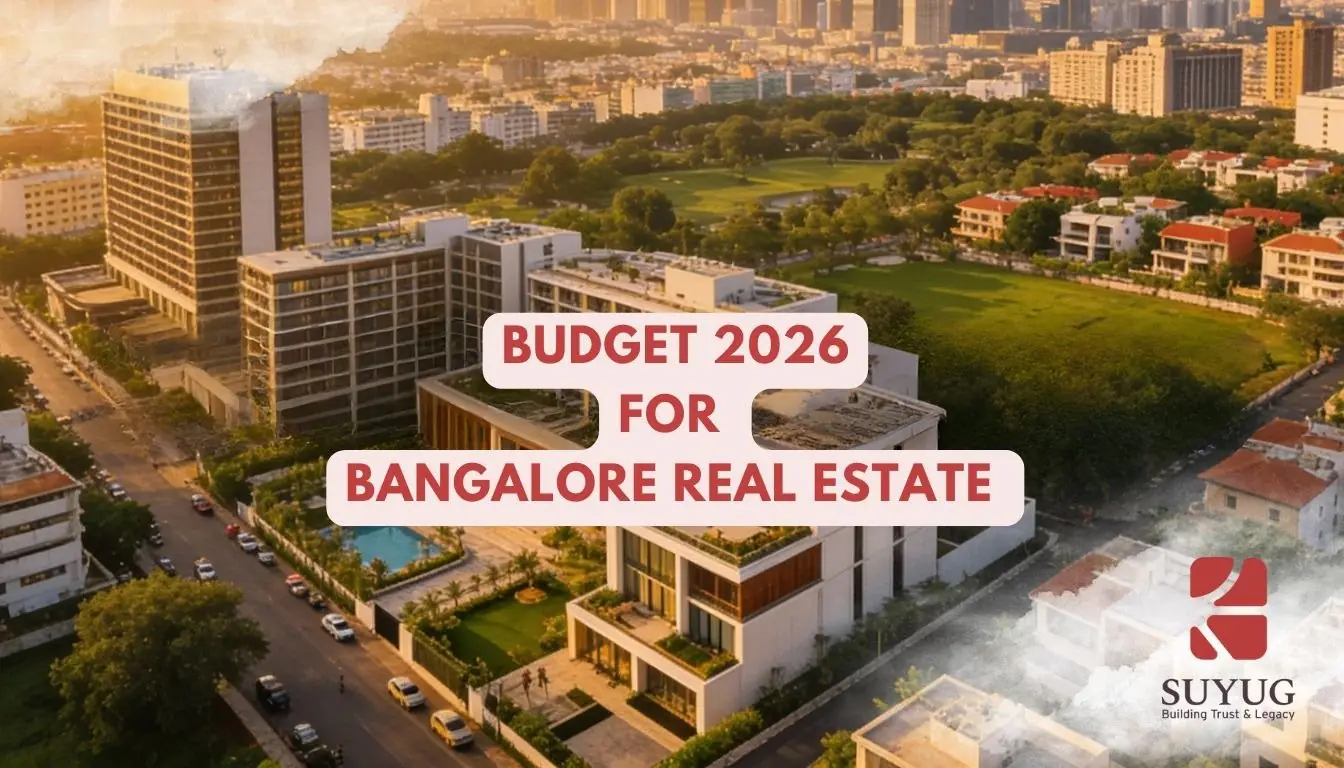
SUYUG Infra
Short briefing · 789 words · 4 min read
In this article · 9 sections
Every year, people read the Union Budget looking for tax changes and subsidies.
But if you are planning to buy a home in Bangalore at the upper end of the market, the real signals are hidden elsewhere — in infrastructure spending, city planning, and investment reforms.
Budget 2026 sets out where public money and planning attention are going. What follows is what it actually announced, and what a buyer can and cannot read into it. None of it is a forecast, ours or anyone else’s.
Massive Infrastructure Push = Real Estate Acceleration
Budget 2026 announces an infrastructure outlay of ₹12.2 lakh crore for roads, rail, urban development, and connectivity — a figure published in the Budget documents themselves.
This is not just about highways. It is about enabling faster movement between cities, better logistics, and improved urban connectivity — the exact factors that increase real estate demand in growth corridors.
In cities like Bangalore, infrastructure expansion directly influences where people choose to live.
The Rise of “City Economic Regions”
One of the most important but lesser-discussed announcements is the concept of City Economic Regions.
This approach focuses on developing urban clusters where business, employment, infrastructure, and housing grow together.
Bangalore is a natural candidate for this model because of its strong services and technology economy. As employment hubs expand outward, residential demand follows the same direction.
Where This Directly Impacts Home Buyers in Bangalore
When infrastructure, employment, and planning move together, certain residential corridors begin to stand out. These are locations where connectivity, lifestyle, and long-term value align.
One such example is Sarjapur Road — a corridor that connects multiple IT hubs while still offering space for modern, premium residential developments.
Projects like Suyug The 1 are emerging in exactly these growth pockets, offering spacious 3 & 4 BHK homes designed for long-term living rather than short-term speculation.
High-Speed Rail & Corridor Development
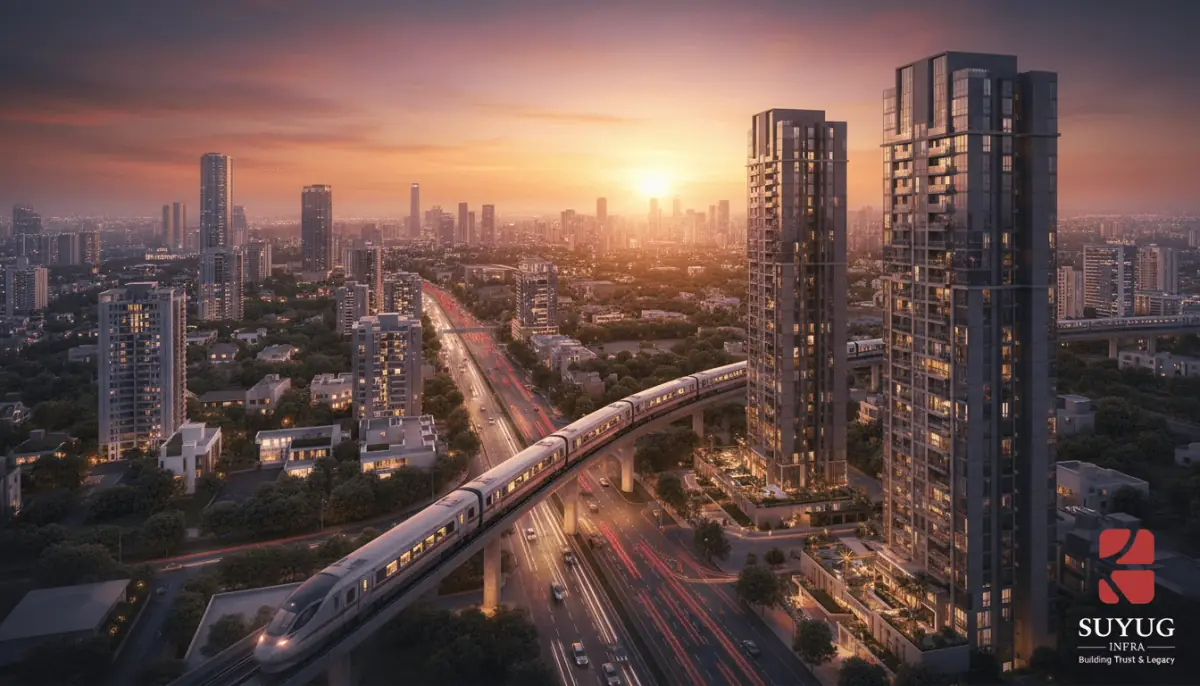
The proposal for high-speed rail corridors connecting cities such as Hyderabad–Bangalore and Chennai–Bangalore signals long-term regional integration.
When connectivity between major cities improves, the pool of people for whom living in Bangalore is practical widens. That is the mechanism; whether any specific corridor captures it is a separate question.
Corridors that already have road and IT connectivity in place are the ones positioned to connect to it — but a high-speed rail corridor is a proposal until it is built, and should be weighed as one.
REITs and Real Estate Asset Monetisation
The budget also highlights the push for REITs (Real Estate Investment Trusts) and asset monetisation.
This signals growing institutional interest and financial maturity in Indian real estate.
For homebuyers, this means:
- Higher transparency in the sector
- More institutional capital, which brings institutional-grade disclosure with it
- More published data on how residential assets actually perform, rather than how they are marketed
Low-density developments such as Saffron sit within that shift — and the way to check any of them against it is the same as always: the RERA filing, the unit count against the land area, and the developer’s completion record.
Services & Technology Growth Focus
The emphasis on services, digital infrastructure, and data centers further strengthens Bangalore’s position as India’s technology capital.
As tech and services employment expands, housing demand follows it outward toward the corridors that connect to those workplaces — which is why the location of the employment, rather than the location of the hoarding, is the thing to verify.
NRI & Foreign Investment Ease
Policy reforms aimed at easing foreign investment and NRI participation create a smoother path for overseas Indians to invest in Indian real estate.
This is significant because NRIs form a major portion of buyers in Bangalore projects at the upper end of the market, particularly for larger configurations.
The Practical Takeaway for Luxury Home Buyers
For buyers planning a serious purchase, this budget is not abstract policy. It is a roadmap of where the city is heading.
Choosing the right location today is about understanding where infrastructure, employment, and planning are aligning for the future.
That alignment is worth tracking through the agencies that publish it, rather than through the version of it printed on a brochure.
Conclusion
Budget 2026 does not directly talk about apartments or home buying. But it clearly outlines the direction of India’s urban and economic growth.
For Bangalore homebuyers, especially those looking at premium 3 & 4 BHK homes, these signals provide clarity about why certain corridors are emerging as long-term residential and investment choices.
Understanding these macro trends helps buyers make decisions that are not just emotionally satisfying, but economically sound.
Exploring projects built in these growth corridors — like The 1 and Saffron — can offer a practical view of how these trends are translating into real residential opportunities.
Was this useful?
Comments
Was this useful?
Schedule a site visit
Leave your details and the team will call back to fix a convenient date.