Luxury Apartments in Sarjapur Road: The Trends That Will Define 2026
Introduction
The structure of the luxury market in Sarjapur Road has changed in a way that is not immediately visible when browsing listings. A larger number of projects now operate within similar pricing bands, similar configurations, and comparable positioning, especially in the ₹1.5 Cr to ₹3 Cr range.
This has reduced the gap between options at the surface level. Differences are no longer defined by availability or headline pricing. They emerge through planning quality, long-term usability, and how well each project aligns with broader shifts in demand.
As a result, understanding luxury apartments in Sarjapur Road in 2026 requires looking beyond individual projects and focusing on the trends shaping how this segment is evolving. These trends determine not only what is being built, but also what continues to hold value over time.
TL;DR
- Luxury housing demand is structurally increasing across Bangalore
- Sarjapur Road has crossed ₹12,000/sqft average pricing
- NRI and HNI demand is driving larger configurations
- IGBC-certified and sustainable homes are becoming standard
- Vastu and layout planning influence buying decisions more than amenities
- Metro Phase 3A impacts long-term value, not immediate commute
Why Sarjapur Road Is Emerging as a Luxury Corridor
Sarjapur Road’s positioning has shifted from a growth corridor to a consolidation zone where premium and luxury developments are now concentrated. This shift is not only driven by infrastructure, but by how demand has evolved across buyer segments.
- Proximity to employment clusters continues to support end-user demand
- Large-scale township and gated developments have increased supply quality
- Developers are moving toward larger configurations and premium positioning
Over time, this has led to a clustering effect where multiple luxury projects compete within similar price bands. The decision is no longer about entering the market early. It is about choosing between equally positioned developments that differ in execution.
Price Trends and Market Positioning (2026)
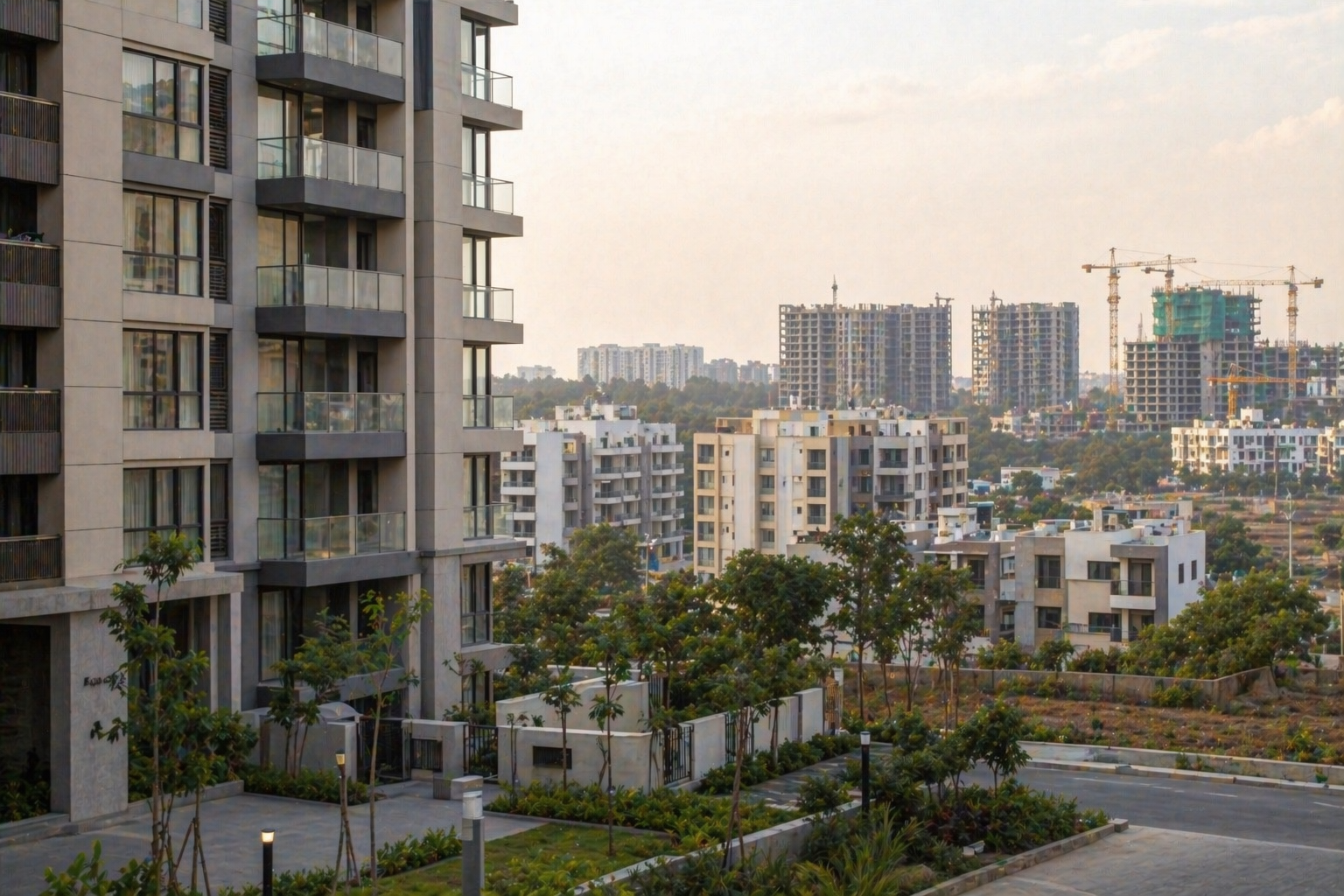
Sarjapur Road has crossed a point where pricing reflects both demand and positioning rather than just affordability.
| Micro-pocket | ₹/sqft Range | Market Position |
| Carmelaram / ORR edge | ₹12,000–16,000 | Premium connectivity |
| Gunjur / Varthur | ₹11,500–14,500 | High-demand residential |
| Kodathi / Dommasandra | ₹10,200–12,500 | Launch-heavy zone |
| Sompura Gate | ₹9,800–11,800 | Emerging premium |
| Chandapura fringe | ₹7,500–9,800 | Budget-luxury |
- Average listing prices are now around ₹12,000/sqft
- Long-term appreciation has crossed 180% over a decade
- Rental yields remain in the 3–4% range
Over time, this pricing spread creates segmentation within luxury itself. Buyers begin choosing between location strength, space, and long-term positioning rather than simply budget.
The 12 Trends Shaping Luxury Apartments in 2026
Luxury housing in Sarjapur Road is being influenced by structural shifts rather than short-term cycles.
1. Luxury supply is structurally increasing
Developers are allocating a larger share of new launches to premium and luxury segments. This reflects a shift in demand rather than a temporary spike. Over time, this increases competition within the segment and raises expectations around planning and execution.
2. Bangalore continues to lead premium housing demand
Higher launch volumes and sustained absorption indicate that demand is not slowing. This creates consistency in pricing but also reduces the margin for poorly planned projects.
3. Ticket sizes are moving upward
Homes in the ₹2–5 Cr range are becoming more common. This changes buyer expectations from “upgrade” to “long-term residence,” where usability and flexibility matter more.
4. HNI allocation to real estate is increasing
A larger share of wealth is being allocated to residential property. This shifts the focus toward asset stability, long-term appreciation, and legacy value rather than short-term gains.
5. Branded developments are gaining preference
Buyers increasingly associate brand with execution reliability. Over time, this leads to consolidation where stronger developers capture a larger share of demand.
6. NRI demand is returning at scale
NRIs are actively investing in larger homes, particularly 3 and 4 BHK configurations. This influences pricing and increases demand for well-managed projects.
7. Sustainability is becoming standard
IGBC-certified homes are no longer seen as premium differentiators. Buyers expect water management, energy efficiency, and lower operational costs as part of the baseline.
8. Wellness-focused design is gaining importance
Ventilation, natural light, and air quality are influencing how homes are designed. Over time, these factors affect comfort more than visible amenities.
9. Vastu is becoming a consistent requirement
Orientation and layout alignment are increasingly considered during selection. Homes that align with these preferences tend to see stronger resale demand.
10. Vertical luxury is becoming common
High-rise developments are increasing, changing skyline and density. This allows better views and planning but also increases reliance on lift and shared infrastructure.
11. Market consolidation is visible
A smaller number of developers are capturing a larger share of demand. This reduces risk for buyers but also limits variation in offerings.
12. Infrastructure is shaping long-term demand
Metro Phase 3A and other projects will influence value over time, but their impact is gradual rather than immediate.
Infrastructure That Will Influence Demand
Infrastructure continues to shape long-term positioning, but timelines need to be understood clearly.
- Metro Phase 3A (Sarjapur–Hebbal) is approved, with execution expected over the next decade
- STRR and Peripheral Ring Road will improve regional connectivity
- SWIFT City is expected to influence employment distribution
In the short term, road connectivity remains the primary factor. Over time, infrastructure begins influencing pricing and demand more visibly.
Answer Block
Infrastructure impacts long-term appreciation more than immediate convenience. Buyers should evaluate current usability first and treat future projects as additional upside.
Sarjapur Road vs Other Luxury Corridors
| Corridor | Avg ₹/sqft | Key Advantage |
| HSR / Koramangala | ₹14,000–25,000 | Established premium |
| Hebbal | ~₹16,000 | Airport access |
| Whitefield | ₹9,000–15,000 | Metro connectivity |
| Sarjapur Road | ₹10,200–12,000 | Balanced entry + growth |
Sarjapur Road sits between established luxury zones and emerging corridors. This creates a balance between pricing and future potential.
Who Is Buying Luxury Homes Here

Buyer profiles in this segment are more defined than before.
- Tech founders and senior professionals prioritise proximity and quality
- NRIs focus on long-term value and ease of management
- HNIs evaluate projects based on legacy and asset value
Over time, buyer expectations are shaping how projects are designed and positioned.
NRI Buying Reality in 2026
NRI participation in this segment has increased significantly, but the process remains complex.
- FEMA regulations govern purchase eligibility
- TDS applies on rental income and resale
- Power of Attorney is commonly used for transactions
Many NRIs prefer branded developers due to trust and execution reliability.
Answer Block
NRI buyers prioritise legal clarity, developer credibility, and ease of management. Projects that simplify these aspects tend to attract stronger demand.
Vastu and Design Preferences in Luxury Homes
Vastu has become a consistent factor in luxury housing decisions.
- East-facing units often command a premium
- Layout alignment influences long-term satisfaction
- Developers are adapting designs to incorporate these preferences
Over time, these considerations influence resale demand as well.
Green Luxury and Sustainability Shift
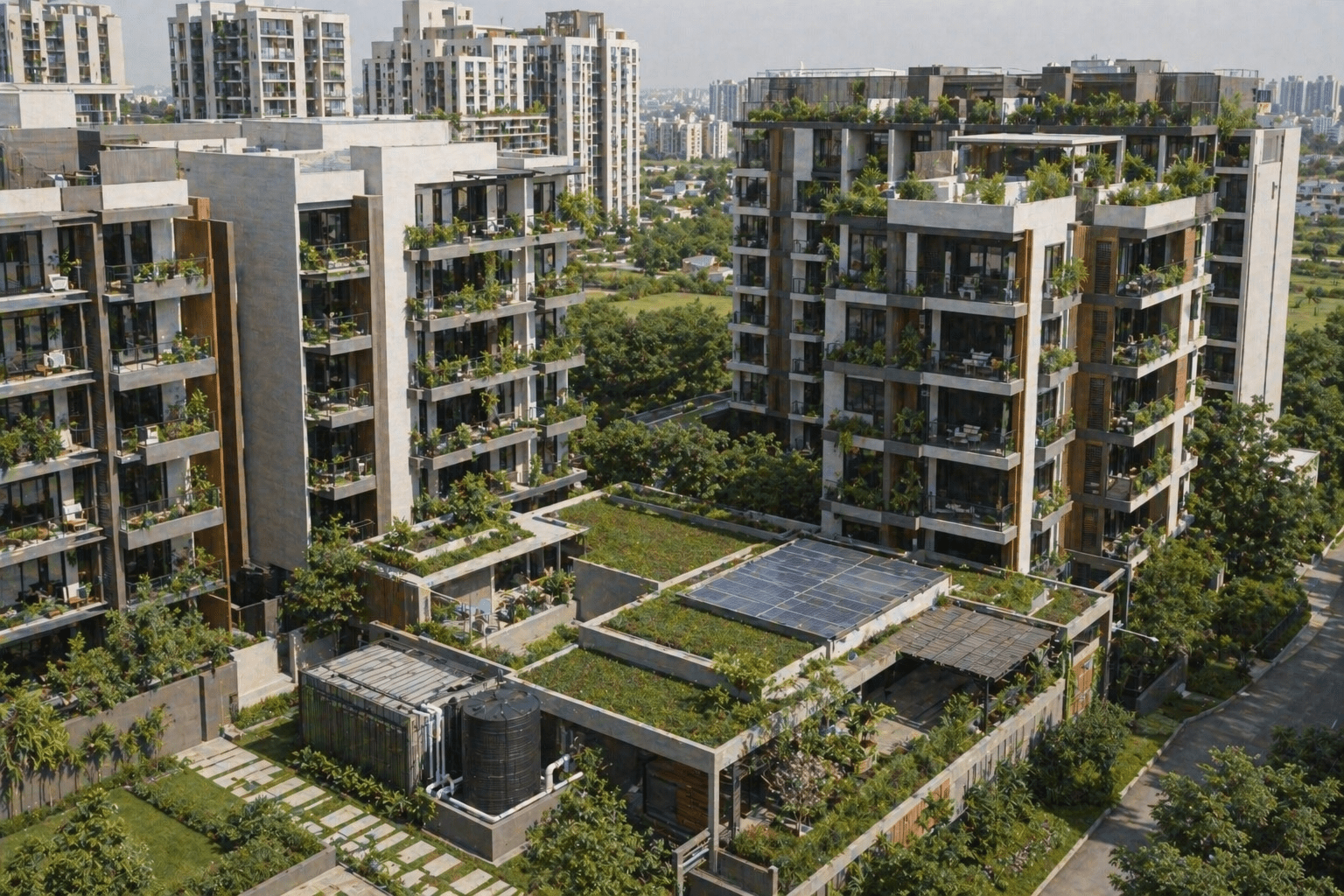
Sustainability is becoming a measurable factor rather than a marketing feature.
- IGBC certification is increasingly expected
- Water management and energy efficiency are key considerations
- Buyers evaluate long-term operational efficiency
Homes with strong sustainability features tend to reduce costs and improve resale value over time.
Case Insight: How Modern Projects Are Responding
Projects like Suyug’s developments reflect these broader shifts.
- Focus on layout efficiency and usability
- Integration of sustainability features
- Alignment with buyer expectations around planning
These elements are becoming baseline expectations rather than differentiators.
Risks Buyers Should Factor In
Despite strong demand, certain risks remain relevant.
- Traffic congestion during peak hours
- Infrastructure timelines extending beyond expectations
- Variation in project execution quality
Over time, these factors influence both daily experience and asset performance.
Luxury housing in Sarjapur Road is no longer defined by isolated features or pricing alone. The direction of the market is being shaped by broader shifts in demand, design, and infrastructure. Understanding these patterns helps create clarity in a segment where most options appear similar at first glance.
It remains one of the more active luxury corridors due to demand concentration and infrastructure growth. The experience varies significantly by micro-location, which influences both daily convenience and long-term value.
Pricing typically ranges between ₹10,000 and ₹16,000 per sq ft depending on location and project positioning. Premium pockets command higher pricing due to connectivity and demand.
They offer stable long-term potential supported by demand and infrastructure. Returns depend on project quality, layout efficiency, and location selection.
Rising ticket sizes, sustainability, Vastu alignment, and NRI demand are among the key factors shaping this segment.
Yes, a significant portion of demand comes from NRIs, especially for larger configurations. Ease of management and legal clarity influence their decisions.
No, it is currently approved with long-term timelines. Its impact will be visible over the next decade rather than immediately.