Apartment Price in Bangalore: 2026 Trends and Insights
The Bangalore residential market has entered a new phase. After two years of aggressive post-pandemic appreciation, 2026 is a consolidation year. Rather than a correction, it’s a pause in which the market is digesting supply, reassigning value by location, and rewarding buyers who understand what they are actually buying.
Apartment prices in Bangalore now range from ₹4,500 per sq ft in peripheral developing zones to ₹18,000 per sq ft in established premium corridors. That gap is far from arbitrary. It’s a testament to the proximity to employment, infrastructure delivery, construction quality, and developer credibility. Understanding the gap is the difference between a sound investment and an expensive mistake.
This guide works through the forces shaping Bangalore’s apartment price landscape in 2026, breaks down pricing by zone and corridor, models real returns on Sarjapur Road, and gives homebuyers and investors a practical framework for making the decision.
TL;DR
- Apartment prices in Bangalore range from ₹4,500 to ₹18,000+ per sq ft, depending on zone, corridor, and project quality
- Properties above ₹1 crore now account for 61% sales nationally, across the top 7 cities combined. (JLL data). The premium segment is the market
- Sarjapur Road has appreciated 86% between 2020 and 2024, from approximately ₹5,000 to ₹9,300 per sq ft, and still offers mid-corridor entry at pre-appreciation prices
- The commercial-residential multiplier is Bangalore’s defining demand driver: every 1 million sq ft of office pre-leasing historically generates 6,000 to 8,000 new housing unit requirements in proximate corridors
- Metro Phase 3A (Yellow Line), the Peripheral Ring Road, and SWIFT City are the three infrastructure catalysts not yet fully priced into Sarjapur and South Bangalore pricing
- Net rental yields on well-located apartments in Bangalore run 2 to 3.5%, but combined with 6 to 8% annual appreciation in core corridors, total annualised returns reach 8 to 11% on leveraged positions
The State of Bangalore Real Estate in 2026
Bangalore’s residential market has structurally transformed over the past decade. What was once a largely mid-segment, end-user market has reorganised around premium supply, institutional-grade demand, and yield-conscious investment. The speculative fringe that characterised early Sarjapur or North Bangalore launches has been replaced by fundamentals-driven buying from corporate professionals, NRI portfolio builders, and upgrading families.
Premium properties priced above ₹1 crore dominated the market, contributing to a 62% share of total housing sales across India’s top seven cities, heavily supported by high absorption in Bangalore. Nationally, homes priced below ₹1 crore contracted to a 38% market share in the same period as demand shifted heavily toward premium living.
This reflects the income profile of Bangalore’s buyer base and the construction cost reality that makes affordable supply structurally unviable at current land and input prices.
Anarock’s Q1 2026 data shows Bangalore posting record residential launches of 24,400 units, the highest quarterly figure in the city’s history. More than half of this lay in the ₹1 crore-and-above segment. Inventory absorption has kept pace with launches, which means pricing pressure is not a supply glut story. It is a demand story, driven by employment and lifestyle convergence.
For buyers, 2026 represents a window. Prices have not corrected. But the pace of appreciation has moderated, giving serious buyers the ability to evaluate, compare, and transact without the FOMO pressure of 2022 and 2023.
What Is Driving Apartment Prices in Bangalore
Three forces are structurally driving apartment prices in Bangalore across all corridors. Understanding them explains why some sub-markets are consistently outperforming others.
The commercial-residential multiplier
Bangalore’s residential demand is structurally linked to office absorption. Every 1 million sq ft of commercial pre-leasing in a corridor generates an estimated 6,000 to 8,000 incremental housing unit requirements in proximate residential zones. Sarjapur Road, which commands direct access to Infosys, Wipro, and the emerging biotech cluster around Carmelaram, has benefited from this multiplier continuously since 2018. This is an operational demand from employees who need to live near where they work.
Infrastructure delivery and the pre-priced gap
Bangalore’s infrastructure deficit has historically suppressed prices in corridors with poor connectivity. When connectivity improves, either through metro lines, ring roads, or flyovers, prices rise sharply. The Yellow Line metro, the Peripheral Ring Road (PRR), and SWIFT City are each at varying stages of approval and construction, and each represents a repricing catalyst for Sarjapur and South Bangalore that has not yet fully materialised.
Construction cost inflation
Input costs such as steel, cement, skilled labour, and increasingly, MIVAN aluminium formwork equipment have risen 18 to 22% since 2022. Developers are not absorbing this. It is flowing through to launch prices. Projects that launched in 2022 at ₹7,500 per sq ft are pricing their next phases at ₹9,500 to ₹10,500 per sq ft in the same corridor, not because of speculative repricing, but because the underlying construction cost has moved.
Zonal Price Breakdown: Apartments in Bangalore
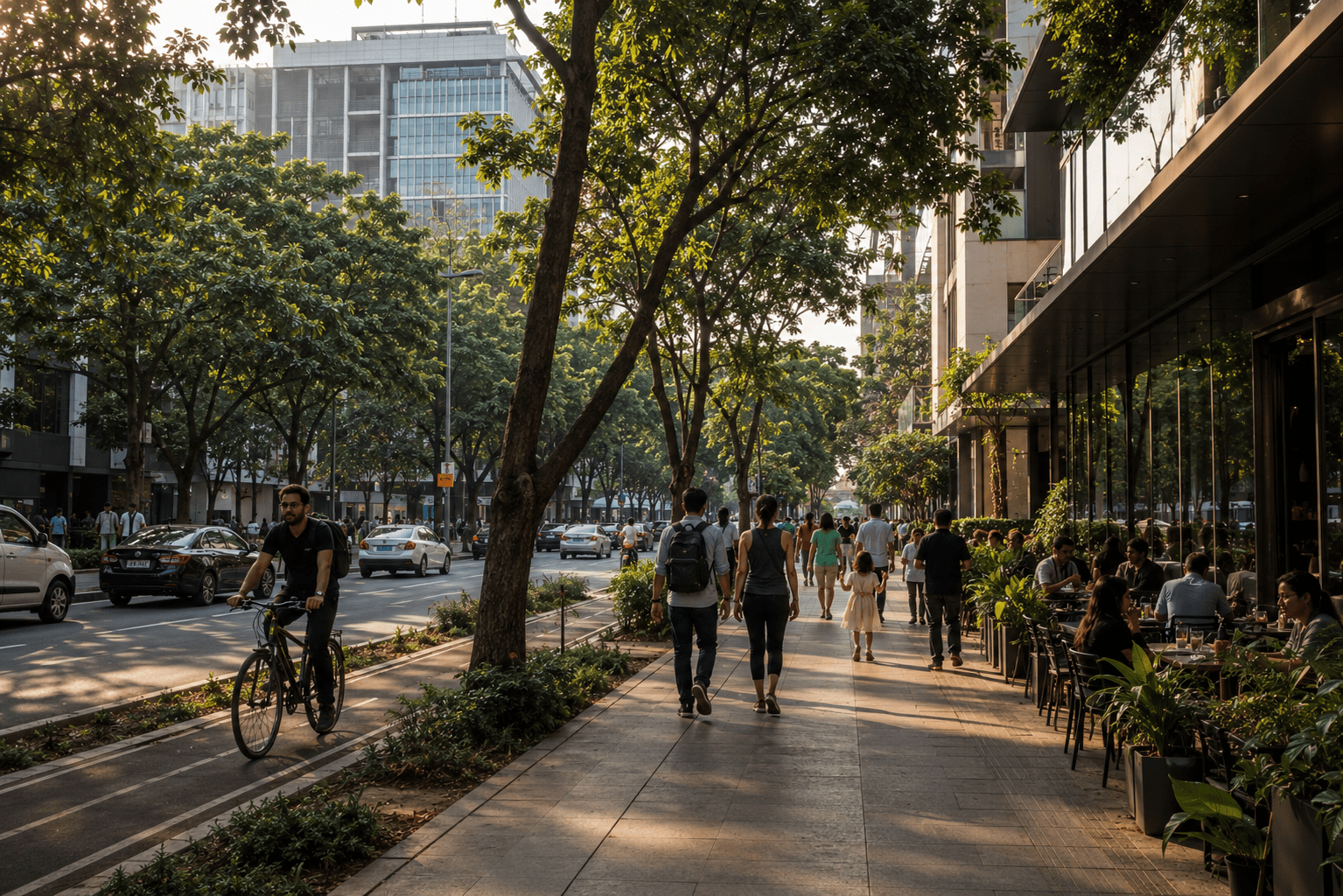
| Zone | Sub-Markets | Price Range (₹ per sq ft) | Appreciation (5-year) | Rental Demand |
| East Bangalore | Whitefield, Varthur, Hoodi, ITPL | ₹9,500 to ₹14,000 | 75 to 90% | Very high; immediate tech park adjacency |
| North Bangalore | Hebbal, Devanahalli, Bagalur, Kogilu | ₹6,500 to ₹11,000 | 40 to 55% | Moderate; airport corridor, long commute to south tech hubs |
| South Bangalore | JP Nagar, Bannerghatta, Kanakapura | ₹7,500 to ₹12,000 | 35 to 50% | Moderate-high; improving with Pink Line metro |
| West Bangalore | Rajajinagar, Yeshwanthpur, Tumkur Rd | ₹5,500 to ₹9,000 | 25 to 40% | Lower; predominantly end-user, less corporate rental |
| Sarjapur Road | ORR to Sompura Gate, Attibele | ₹8,500 to ₹13,500 | 80 to 90% | High; multi-directional tech corridor |
| Outer Ring Road Belt | Marathahalli, HSR, Bellandur | ₹11,000 to ₹18,000 | 80 to 100% | Very high; peak corporate demand, mature market |
East Bangalore
This is Bangalore’s most mature premium residential corridor. Whitefield, ITPL, and Varthur have fully absorbed post-pandemic demand and now represent a stable, high-yield zone for investors focused on immediate rental income rather than appreciation upside. Appreciation has already played out; the entry case today is cash flow, not capital gain.
North Bangalore
This is the infrastructure play. Devanahalli and the airport corridor are genuinely long-duration bets. The appreciation is real but contingent on the Peripheral Ring Road completing and on continued KIADB industrial expansionThe commute to south and east tech hubs is currently prohibitive for corporate tenants, which limits immediate rental demand.
South Bangalore
This is the metro-linked opportunity. JP Nagar, Bannerghatta Road, and Kanakapura Road are all within the Pink Line metro corridor, and Colliers India data suggests property values in Pink and Yellow Line-adjacent zones could appreciate 20 to 40% post-operational status. The combination of price affordability relative to East Bangalore and confirmed metro connectivity makes this a mid-term appreciation play.
Sarjapur Road is covered in its own section below.
Deep Dive: Sarjapur Road Pricing and ROI
Sarjapur Road is Bangalore’s most consequential residential corridor for buyers in the ₹1 to 2.5 crore segment. It is multi-directional, providing access to Infosys, Electronic City, Wipro, and Koramangala without requiring commuters to enter the city, and it has delivered consistent appreciation since 2018 without the plateau that has hit East Bangalore.
Pricing along the corridor in 2026:
| Sub-Location | Development Stage | Price Range (₹ per sq ft) | Investment Thesis |
| ORR to Carmelaram (Core) | Ready-to-move | ₹11,000 to ₹13,500 | Immediate rental demand; high liquidity |
| Carmelaram to Sompura Gate (Mid) | Under construction | ₹9,500 to ₹11,500 | Appreciation + rental on delivery |
| Sompura Gate to Sarjapur Town (Upper Mid) | Under construction / new launch | ₹8,500 to ₹10,500 | Metro-led repricing play |
| Sarjapur Town to Attibele (Outer) | Pre-launch / plotted | ₹5,500 to ₹7,500 | Long-term land value; speculative |
What 86% appreciation actually looks like. A buyer who purchased at ₹5,000 per sq ft in 2020 in the Sarjapur Road core now holds an asset at approximately ₹9,300 per sq ft. On a 1,500 sq ft apartment, that is a capital gain of approximately ₹64.5 lakhs on a purchase price of approximately ₹75 lakhs: an 86% return on the asset before rental income is counted.
That window has partially closed at the core. But the mid-corridor (Sompura Gate and surrounding zones) still offers entry at ₹8,500 to ₹10,500 per sq ft, a pricing that does not yet reflect Yellow Line metro connectivity, PRR completion, or SWIFT City development, all of which are confirmed and in execution.
Real yield modelling on a mid-corridor 3 BHK:
| Item | Figure |
| Purchase price (1,550 sq ft at ₹9,000/sq ft) | ₹1,39,50,000 |
| Registration, stamp duty, documentation | ₹10,00,000 |
| Total acquisition cost | ₹1,49,50,000 |
| Monthly rent (fully furnished, near tech park) | ₹52,000 |
| Gross annual rent | ₹6,24,000 |
| Maintenance, tax, vacancy buffer, repairs | ₹3,60,000 |
| Net annual income | ₹2,64,000 |
| Net rental yield | 1.77% |
| 5-year appreciation assumption (6%) | ₹1,49,50,000 → ₹2,00,00,000 (approx.) |
| Combined annualised return (leveraged) | 11 to 14% on deployed equity |
The yield number alone looks modest. The argument for Sarjapur Road is not yield, but yield plus appreciation plus liquidity, in a corridor with real demand, not speculative demand.
How Infrastructure Moves Apartment Prices in Bangalore
Infrastructure delivery is the single most reliable price catalyst in Bangalore’s residential market, far more reliable than developer reputation, configuration, or amenity stack. When a corridor gets a metro station, a ring road connection, or a major employment anchor, apartment prices in adjacent zones reprice within 12 to 24 months of the announcement becoming credible.
Metro Phase 3A — Yellow and Pink Lines
The Yellow Line (RV Road to Bommasandra) will bring metro connectivity to Electronic City and Bommasandra. The Pink Line (Kalena Agrahara to Nagawara) will directly serve the Hulimavu, JP Nagar, and Bannerghatta corridors. Colliers India estimates 20 to 40% price appreciation in directly adjacent residential zones once the lines are operational.
Current status: Phase 3A has received State Cabinet approval and is awaiting Union Cabinet approval; operational timeline is 2030 to 2033. Apartments purchased today in Yellow Line-adjacent corridors are buying ahead of that repricing.
The Bengaluru Business Corridor (BBC)
The Bengaluru Business Corridor, formerly the Peripheral Ring Road, will create a 73-km orbital connection around Bangalore, linking Tumkur Road in the northwest to Hosur Road in the southeast, directly passing through the Sarjapur and Attibele belt. For Sarjapur Road buyers, the PRR eliminates the current bottleneck between the corridor and North and West Bangalore, significantly expanding the tenant pool for corporate rentals. Execution is underway; completion is projected in phases through 2028 to 2030.
SWIFT City. The proposed SWIFT (Start-up, Warehousing, Innovation, Finance, and Technology) City on the Sarjapur-Attibele belt is a state government-backed employment anchor targeting 150,000 jobs. If delivered, it would be the largest single employment catalyst on the corridor since Infosys’s Sarjapur campus. Current status: land acquisition in progress. A confirmed employment anchor of this scale in the outer Sarjapur zone would catalyse the repricing of the Arekere-to-Attibele belt currently sitting at ₹5,500 to ₹7,500 per sq ft.
Buying Strategy for Domestic and NRI Investors
Understanding apartment prices in Bangalore is only half the decision. The other half is knowing which type of buyer you are and what that means for which zone, configuration, and stage you should be targeting.
For the upgrading family
Your priority is liveability, school access, and manageable EMIs. The ORR-to-Carmelaram belt on Sarjapur Road gives you proximity to Harvest International, Euro Kids, and a cluster of secondary schools, combined with ready-to-move inventory that eliminates construction risk. Entry at ₹1.65 to 2 crore for a 3 BHK. Budget for registration and stamp duty at approximately 7.5 to 7.6% of the property value.
For the domestic investor
Leverage is your tool. Deploying ₹40 to 50 lakhs in equity against a ₹1.2 to 1.5 crore asset in the mid-Sarjapur corridor gives you the combined yield-plus-appreciation return (11 to 14%) on a fraction of the capital. The risk is vacancy, which drops sharply in projects within 15 minutes of a tech park. So prioritise the location over the amenity stack.
For the NRI buyer
The regulatory pathway is clear. An NRI can purchase a single residential property in India without RBI approval under FEMA guidelines. Funds can be routed through an NRE or NRO account. Rental income is repatriable, subject to applicable TDS deductions. Capital gains on sale are repatriable, subject to FEMA conditions and applicable tax treatment.
The practical challenge is property management. Agencies charge a fixed scale of 8% to 12% of 11 months’ rent, or collect exactly 1 full month’s rent as an annual renewal and maintenance retainer. This may reduce the net yield slightly, but it entirely eliminates operational complexity.
Due diligence before any purchase — the four non-negotiables:
- RERA verification: Check project registration, promoter history, and construction milestone compliance on rera.karnataka.gov.in
- Khata classification: Confirm A-Khata status. B-Khata land creates complications in future resale, home loan disbursement, and Khata transfer
- UDS in sale agreement: The Undivided Share of Land allocated to your unit must be specified explicitly. Do not sign a sale agreement that leaves this vague
- Occupancy Certificate: For ready-to-move properties, confirm OC has been issued by BBMP or BDA before paying the final tranche
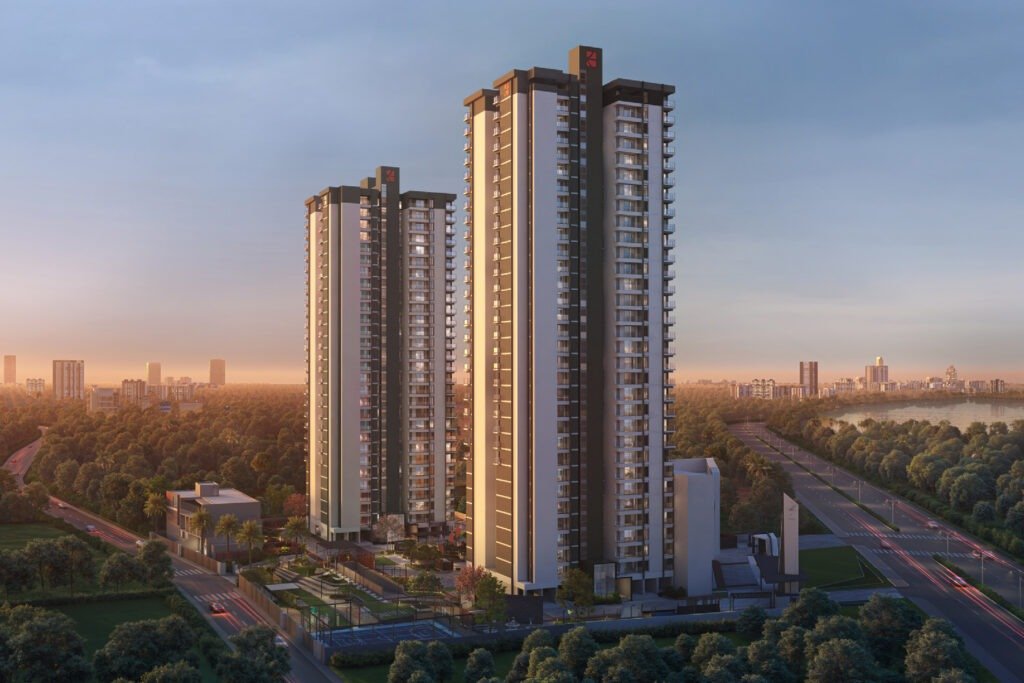
Suyug’s projects at Sompura Gate — The 1 (235 units, RERA: PRM/KA/RERA/1251/310/PR/051224/007268) and Saffron (110 units, RERA: PRM/KA/RERA/1251/308/PR/140825/008000) — are MIVAN-constructed, IGBC pre-certified residences with no shared walls, rainwater harvesting, solar integration at Saffron, and EV charging. Entry from ₹1.5 crore in the mid-Sarjapur corridor.
Speak with Suyug’s advisory team to review RERA documentation, floor plans, and pricing for The 1 and Saffron at Sompura Gate.
One Thing Worth Sitting With
The buyers who make sound decisions on apartments for sale in Bangalore in 2026 are the ones who separate location from project, yield from appreciation, and current price from future price. Sarjapur Road’s mid-corridor is still in the window where that distinction matters. In two to three years, once the Yellow Line metro opens and the PRR is functional, the window will close, and the repricing will have happened. The decision made today is not about 2026. It is about 2029.
FAQ’s :
Bangalore does not have a single average; the range is wide by design. Mid-market apartments in established corridors like Whitefield or Sarjapur Road core run ₹9,500 to ₹13,500 per sq ft. Premium zones like the Outer Ring Road belt or Indiranagar approach ₹14,000 to ₹18,000 per sq ft. Peripheral zones like the Attibele belt or North Bangalore’s outer edges start at ₹5,500 to ₹7,000 per sq ft. The right number depends entirely on the corridor and the specific project.
Sarjapur Road has delivered 80 to 90% appreciation between 2020 and 2024, making it among Bangalore’s strongest-performing residential corridors for that period. East Bangalore (Whitefield, Varthur) appreciated 55 to 65% in the same window. The difference is entry point. Sarjapur started lower and has more runway remaining. East Bangalore is mature; Sarjapur’s mid-corridor is still repricing.
Yes, with the right framework. The city’s demand fundamentals, 1.5 million+ IT professionals, sustained office absorption, constrained land supply in established corridors, support continued price floors. The investment case in 2026 is not speculative appreciation. It is yield-plus-capital-gain in corridors with confirmed infrastructure catalysts (metro, PRR) whose value has not yet been priced in.
Colliers India data shows 20 to 40% price appreciation in directly metro-adjacent residential zones within 12 to 24 months of operational status. Metro Phase 3A (Red Line) is awaiting Union Cabinet approval. Metro Phase 2A/2B (Yellow and Pink Lines) is approved and in execution, with operational timelines between 2030 and 2033. Apartments purchased today in Yellow Line-corridor zones, particularly mid-Sarjapur Road, are acquiring ahead of that repricing.
An NRI can purchase a residential property in India without RBI approval under FEMA guidelines. Purchase funds must be routed through an NRE or NRO account. Rental income is repatriable net of applicable TDS. Capital gains on eventual sale are repatriable subject to FEMA conditions, and applicable tax treatment. Engaging a FEMA-literate CA before purchase is advisable for NRIs.