

Flats for Sale in Sarjapur Road: The Legal Verification Guide Every Buyer Needs
The decision to buy a home is rarely where buyers get into trouble. It’s the gap between the decision and the possession — the months or years where paperwork is signed, money changes hands, and the legal structure of the purchase either holds or doesn’t — that separates a clean transaction from a costly dispute.
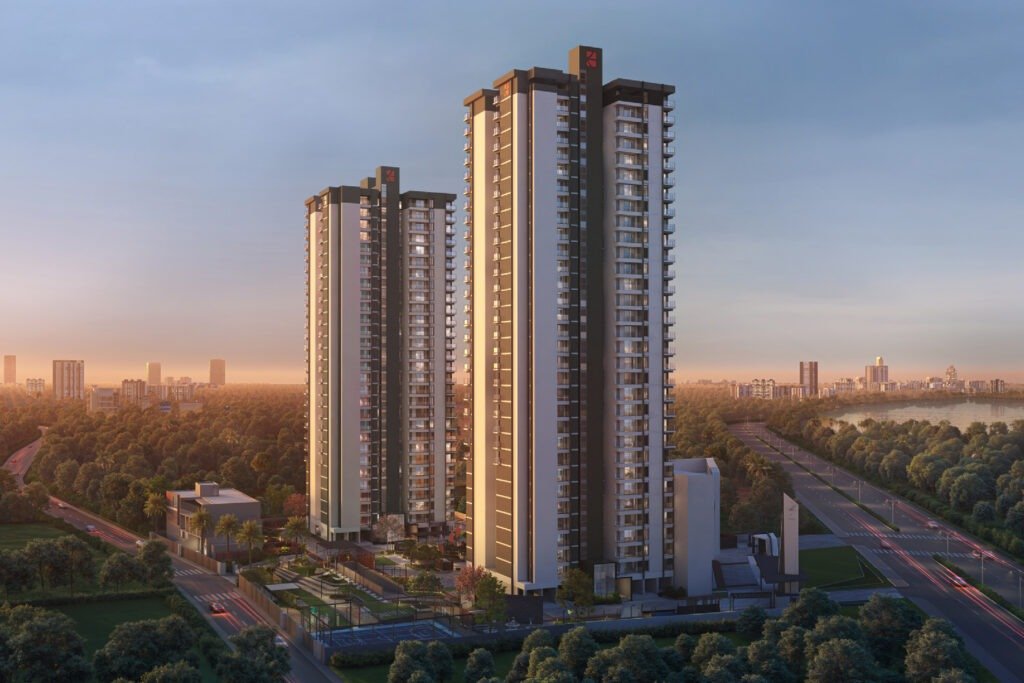
Flats for sale in Sarjapur Road sit in one of Bengaluru’s most active and competitive real estate markets. That activity brings genuine opportunity; it also brings complexity. The corridor spans multiple jurisdictional boundaries, includes land that has transitioned from agricultural to residential use at different points, and hosts projects at every stage of construction and legal clearance. In this environment, legal due diligence isn’t optional — it’s the difference between a sound investment and one that becomes difficult to sell, finance, or live in peacefully.
This guide is a step-by-step walkthrough of every legal check a buyer should complete before booking any flat in Sarjapur Road. It covers RERA verification, Khata status, title deed assessment, what warning signs look like in practice, and the questions to ask a developer that they aren’t always volunteering answers to.
TL;DR
- Every flat for sale in Sarjapur Road must be verified against K-RERA before booking, tower-wise, not just project-level
- A-Khata status is non-negotiable for home loan eligibility and clean resale; B-Khata carries conversion risk
- The Mother Deed chain must be unbroken from original land ownership to current developer — any gap is a title risk
- The Occupancy Certificate (OC) is the document that makes a building legally habitable; possession without it is a known risk on Sarjapur Road
- Warning signs include unresolved buyer complaints on K-RERA, deviations from sanctioned building plans, and “Jodi” apartment structures in RERA filings
- Apartments for sale in Sarjapur Road that pass all checks in this guide are materially lower-risk investments regardless of project tier or price point
Why Legal Due Diligence Is Particularly Important on Sarjapur Road
Sarjapur Road is not a legally uniform market. It spans approximately 21 kilometres, crosses multiple jurisdictional boundaries, and includes land with a complex history — agricultural plots converted to residential use, areas transitioning from Gram Panchayat governance to BBMP and now the Greater Bengaluru Authority (GBA), and projects at different stages of legal clearance.
Several specific factors make legal checks more consequential here than in more established Bengaluru corridors:
- Jurisdictional complexity: Parts of the corridor fall under BBMP, parts under Gram Panchayats, and the GBA transition in 2026 has introduced additional complexity around building approvals and property tax structures. Which authority governs your specific project affects your legal rights as an owner
- Agricultural land conversion: A significant portion of Sarjapur Road’s residential land was previously agricultural. Conversion certificates for such land should be verified independently — gaps in the conversion chain create title risk that surfaces at resale or when applying for a home loan
- Multi-phase township projects: Large township developments on the corridor — some spanning 50 to 200 acres across multiple phases — often have different RERA registrations, approval timelines, and legal statuses for each phase. Phase 2 buyers in a large township may have materially weaker statutory protection than Phase 1 buyers if they don’t verify this
- Active construction environment: With dozens of under-construction projects across the corridor at any given time, the gap between what’s approved and what’s being built is a real risk — sanctioned plan deviations are more common in high-growth corridors than buyers typically expect
None of this makes flats for sale in Sarjapur Road inherently risky. It makes legal verification non-negotiable.
Step 1: RERA Verification — How to Do It Properly

The Real Estate Regulatory Authority (RERA) is the single most important legal framework protecting buyers of flats in Sarjapur Road. Every project must be registered with K-RERA (Karnataka RERA) before any booking, and buyers have full access to project registration details through the public portal.
How to verify a project on K-RERA:
- Visit the official portal: rera.karnataka.gov.in
- Select “Applications Approved” under the Services menu
- Search by project name or enter the RERA registration number from the developer’s brochure
- The registration page will show: the legally binding completion date, approved building plans, promoter details, and any active buyer complaints
What most buyers miss — tower-wise vs. project-level registration:
This is the most important nuance in RERA verification for large projects on Sarjapur Road. A township may have a single project-level RERA number covering the overall development, but individual towers or phases may have separate registrations — or may not yet be registered at all. Booking a flat in an unregistered tower of an otherwise RERA-compliant project gives you significantly weaker legal protection.
What to check specifically:
- Confirm that the tower or phase your unit falls in has its own RERA registration number
- Verify that the registered completion date matches what the developer has told you verbally
- Check the “Complaints” section for the project — unresolved buyer complaints from existing unit holders are a meaningful signal about the developer’s conduct
The carpet area cross-check:
Under RERA, developers are legally required to disclose carpet area separately from super built-up area. The RERA-registered carpet area for your specific unit type should match what’s in the sale agreement. A discrepancy here — even a small one — is a red flag worth pursuing before signing.
Step 2: Khata Status — A-Khata vs B-Khata Explained
Khata is the municipal assessment record that establishes a property’s legal standing with the local civic authority. In the context of apartments for sale in Sarjapur Road, this is one of the most misunderstood documents in the buying process — and one of the most consequential.
A-Khata:
- Indicates the property is within BBMP (or GBA) jurisdiction and has been assessed for property tax
- Required for obtaining a home loan from most banks and NBFCs
- Essential for clean resale — buyers in the secondary market will ask for this first
- Required for obtaining a Khata Certificate and Khata Extract, which are necessary for utility connections and building plan approvals
B-Khata:
- Indicates the property has not been fully regularised — typically because the land hasn’t been converted from agricultural to residential use, or the building hasn’t received a completion certificate
- Banks will generally not finance a B-Khata property
- Resale is significantly more difficult — the buyer pool narrows to cash purchasers, which compresses price
- Not inherently illegal, but carries ongoing regularisation risk; a property can remain in B-Khata status indefinitely if conversion doesn’t proceed
The Sarjapur Road specific risk:
Several micro-zones along the corridor — particularly in the eastern stretch near Dommasandra, Kodathi, and Sarjapur Town — include areas that were until recently under Gram Panchayat governance. Properties in these zones may carry B-Khata status even if they were marketed as fully regularised. Verify Khata status independently through BBMP or the relevant Gram Panchayat records before booking.
How to verify:
- Request the Khata Certificate and Khata Extract from the developer for the specific survey number of your unit
- Cross-check independently through the BBMP Sakala portal or the relevant municipal office
- For projects in GBA-transitioned areas, confirm which authority currently holds jurisdiction and what the Khata status reflects under that authority
Step 3: The Title Deed and Mother Deed Chain
The title deed establishes who legally owns the land on which your building stands. The Mother Deed is the original document that traces ownership from the very first recorded title holder to the current developer. Together, these documents answer the most fundamental legal question in any property purchase: does the seller have the legal right to sell?
What to verify in the title chain:
- The Mother Deed should trace an unbroken ownership chain from the original land grant or sale deed to the current developer — any gap in this chain is a title risk
- Each transfer in the chain should be registered and stamped — unregistered transfers create legal uncertainty
- If the land was originally agricultural, a Conversion Certificate (DC Conversion) must be present, showing that the relevant authority has approved its use for residential development
- For land that was previously under a joint family or HUF (Hindu Undivided Family) structure, verify that all legal heirs have released their claims through a registered deed
What a lawyer should check that you can’t easily check yourself:
- Whether any court cases, disputes, or encumbrances are attached to the land in the title chain
- Whether the land falls under any government acquisition notifications — land near infrastructure projects (roads, metro corridors) can sometimes be subject to partial acquisition
- Whether the conversion of agricultural land has been properly recorded in the revenue records (RTC — Record of Rights, Tenancy and Crops)
The practical step:
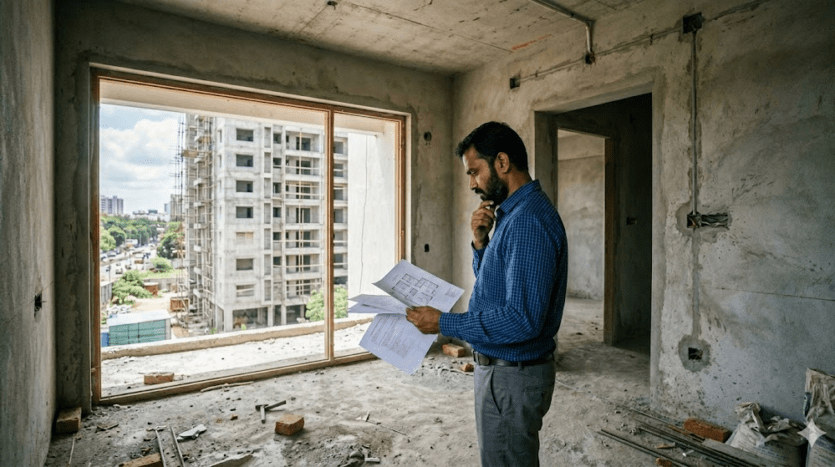
Engage an independent property lawyer — not the developer’s recommended legal team — to conduct a title search before signing the sale agreement. For a purchase of ₹1 crore or more, the cost of an independent title search (typically ₹10,000–₹25,000) is immaterial relative to the risk it mitigates.
Step 4: Sanctioned Building Plan and Deviation Check
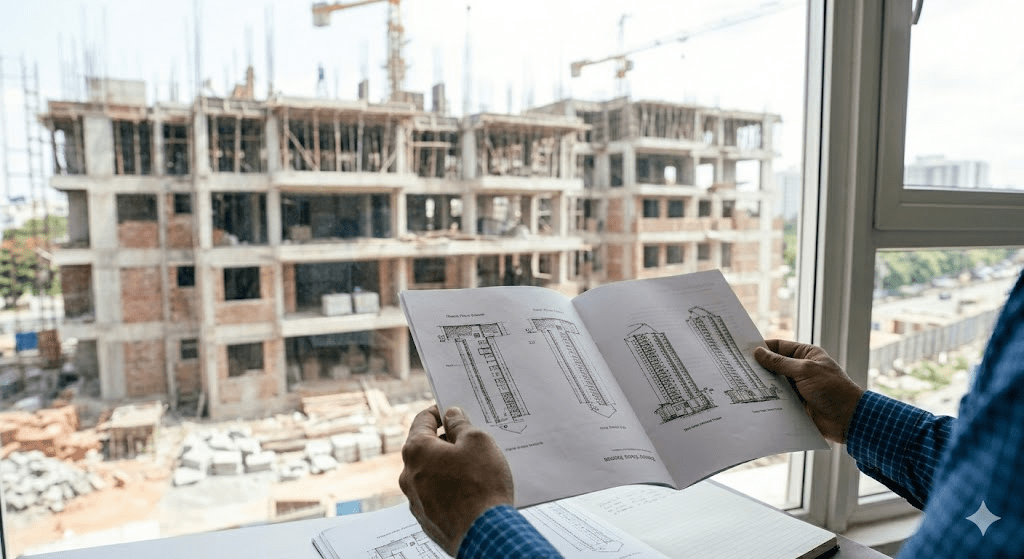
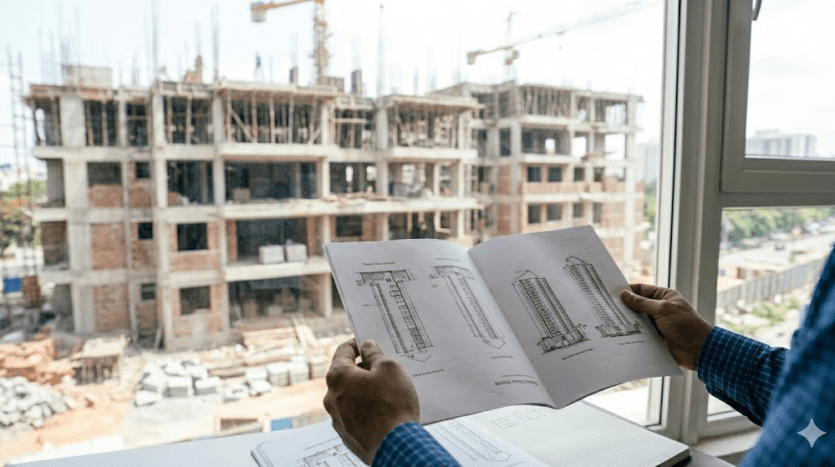
Every building constructed on Sarjapur Road must be built according to a plan approved by the relevant authority — BBMP, BDA, or Gram Panchayat depending on jurisdiction. The sanctioned building plan defines the number of floors, the floor-to-floor height, the setbacks from boundaries, and the specific configuration of each unit.
Why deviations matter:
Deviations from the sanctioned plan — extra floors, reduced setbacks, configuration changes — create legal risk for buyers in affected units. A building with significant deviations may not receive an Occupancy Certificate, which means residents are technically occupying an unauthorised structure. This affects utility connections, home loan eligibility, and resale.
What to check:
- Request a copy of the sanctioned building plan from the developer and compare the floor count, building footprint, and unit configurations against what’s being built
- Verify the Floor Space Index (FSI) utilisation — buildings that have consumed more FSI than approved in the sanctioned plan are at risk of not receiving OC
- For large township projects, verify that the sanctioned plan covers the specific phase your unit is in — a master plan approval for the full township does not automatically cover every phase
On Sarjapur Road specifically:
Several large projects on the corridor have been built in phases where later phases were under construction while earlier phases were seeking OC. If you’re buying in a later phase, verify that earlier phases have received OC — a developer with a clean OC track record across phases is demonstrably lower-risk than one where earlier phases are still pending.
Step 5: Occupancy Certificate — Why It Matters More Than Most Buyers Realise
The Occupancy Certificate (OC) is issued by the local authority — BBMP or the relevant Gram Panchayat — after verifying that a completed building has been constructed according to its sanctioned plan and meets all safety and structural requirements. It is the document that makes a building legally habitable.
Why OC matters for buyers of flats in Sarjapur Road:
- Without OC, a building is technically an unauthorised structure — residents occupy it at legal risk
- Banks and NBFCs require OC for home loan disbursement on ready-to-move units; without it, financing options narrow significantly
- Utility connections — specifically, permanent electricity connections from BESCOM — require OC; buildings without it rely on temporary connections that can be challenged
- At resale, buyers will ask for OC as a standard due diligence step; a flat without OC is harder to sell and commands a lower price
The Sarjapur Road reality:
OC delays are not uncommon in high-growth corridors. In some cases, developers hand over possession before OC is obtained — which buyers accept in the expectation that OC will follow. This is a known and documented risk on Sarjapur Road and across Bengaluru more broadly.
What to do:
- For ready-to-move flats for sale in Sarjapur Road: confirm OC has been obtained before signing the possession letter. Request a copy and verify it with the issuing authority
- For under-construction units: ask the developer for OC history on their completed projects. A developer who has consistently obtained OC before handover in previous projects is demonstrably lower-risk
- Include an OC delivery clause in the sale agreement — a contractual commitment from the developer to obtain OC by a specified date, with a defined remedy if they don’t
Step 6: Encumbrance Certificate
The Encumbrance Certificate (EC) is issued by the Sub-Registrar’s office and records all registered transactions on a property over a specified period — mortgages, liens, charges, and sales. It answers the question: is this land free of financial liabilities?
What to check:
- Request an EC for the specific survey number of your plot covering at least the last 15 years
- An EC with no encumbrances (Form 15) confirms the land is free of registered financial claims
- An EC with encumbrances (Form 16) lists what those encumbrances are — a mortgage that has been discharged is acceptable; an active mortgage or lien is not
- For projects where the developer has taken a construction loan against the land, verify that the loan has been discharged or that the lender has issued a No Objection Certificate (NOC) for individual unit sales
How to obtain it:
The EC can be obtained independently through the Karnataka government’s Kaveri Online Services portal (kaverionline.karnataka.gov.in) by searching with the survey number and sub-registrar office details. This is a step worth doing independently rather than relying on the developer’s copy.
Red Flags: What to Walk Away From
Legal due diligence isn’t just about confirming what’s right — it’s about identifying what’s wrong before it becomes your problem. These are the specific red flags that should prompt either a deeper investigation or a reconsideration of the purchase:
RERA red flags:
- Unresolved buyer complaints from existing unit holders in the same project — particularly complaints about possession delays, plan deviations, or withheld refunds
- A completion date on K-RERA that has already passed without OC being issued
- The specific tower or phase your unit is in lacking its own RERA registration
- “Jodi” apartment structures in RERA filings — where one unit in a pair is classified as EWS (Economically Weaker Section) housing, creating legal ambiguity about which unit you actually own
Title and land red flags:
- Any gap in the Mother Deed chain that the developer cannot explain with documentation
- A Conversion Certificate that doesn’t cover the full extent of the land on which the project is built
- Land that falls partially within a government acquisition notification zone — check against BDA and NHAI acquisition records for projects near major road or metro corridors
- An EC that shows an active mortgage or lien that the developer has not provided an NOC for
Building plan red flags:
- A floor count or building height that visibly exceeds what’s shown in the sanctioned plan
- Reduced setbacks from boundary walls compared to the approved plan — visible on site visit
- A developer who is unwilling to share the sanctioned building plan or RERA-registered floor layouts on request
Developer conduct red flags:
- No OC on any of their previously completed projects in Bengaluru
- A legal team that discourages you from engaging independent legal counsel
- Sale agreement terms that cap the developer’s liability for delays at amounts significantly below the market rental value of the unit
The Questions to Ask Your Developer Before Signing Anything
Most buyers ask about amenities, possession dates, and payment plans. These questions are also necessary — but they’re not the ones that protect your investment. These are:
- What is the RERA registration number for the specific tower my unit is in, and can I see it on the K-RERA portal?
- What is the Khata status for this project, and is it A-Khata?
- Can I see the Conversion Certificate for the land, and does it cover the full survey number?
- What is the EC status, and has any construction loan against this land been discharged?
- Has your previously completed project in Bengaluru received its OC before possession was handed over?
- Will the sale agreement include an OC delivery clause with a defined remedy if it isn’t obtained by possession date?
- Is the building plan for this specific phase separately sanctioned, or is it covered under a master plan approval?
A developer who answers these questions clearly, with documentation, is demonstrating the legal hygiene that protects you. One who deflects, delays, or discourages you from asking is telling you something important.
The Legal Verification Checklist

Use this before signing any agreement for flats for sale in Sarjapur Road:
RERA:
- [ ] Tower-wise RERA registration verified on K-RERA portal
- [ ] RERA completion date confirmed and not already lapsed
- [ ] Buyer complaints section reviewed
- [ ] RERA carpet area matches sale agreement figure
- [ ] No “Jodi” apartment structure in RERA filing
Khata and jurisdiction:
- [ ] A-Khata status confirmed independently through BBMP or GBA
- [ ] Jurisdictional authority confirmed (BBMP, GBA, or Gram Panchayat)
- [ ] Khata Certificate and Extract requested and reviewed
Title and land:
- [ ] Mother Deed chain verified — unbroken from original title to developer
- [ ] Conversion Certificate present for agricultural land
- [ ] All transfers in chain registered and stamped
- [ ] Independent lawyer engaged for title search
Building plan:
- [ ] Sanctioned building plan obtained and reviewed
- [ ] Floor count and footprint match sanctioned plan
- [ ] FSI utilisation within approved limits
- [ ] Previous phases of same project have received OC
OC and encumbrance:
- [ ] OC obtained (ready-to-move units) — verified with issuing authority
- [ ] OC delivery clause included in sale agreement (under-construction units)
- [ ] EC obtained independently via Kaveri Online Services
- [ ] No active mortgage or lien on EC; or NOC from lender obtained
Evaluating flats for sale in Sarjapur Road and want to understand the legal standing of a specific project before booking? Suyug’s team is transparent about every document in this checklist — reach out for a straightforward conversation.
One Thing Worth Sitting With
Legal verification isn’t the exciting part of buying a home. It doesn’t make the decision feel more aspirational or the project more beautiful. What it does is ensure that the home you’re buying is actually, legally, yours — without conditions, without complications, and without the kind of surprises that take years and significant money to resolve. On a corridor as active and complex as Sarjapur Road, that clarity is worth every hour you put into it.
FAQ’s :
Visit rera.karnataka.gov.in, select “Applications Approved” under Services, and search by project name or RERA registration number. Confirm that the specific tower your unit falls in has its own registration — not just the broader project. Check the registered completion date and review the complaints section for unresolved buyer disputes before making any payment.
A-Khata indicates the property is fully regularised within BBMP or GBA jurisdiction — required for home loans, utility connections, and clean resale. B-Khata indicates incomplete regularisation, typically because of unconverted agricultural land or missing completion certificates. Most banks won’t finance B-Khata properties, and the resale buyer pool narrows significantly. Always verify Khata status independently before booking apartments for sale in Sarjapur Road.
The Mother Deed traces the complete ownership history of a land parcel from its original title holder to the current developer. Every transfer in that chain must be registered and documented — any gap creates title risk that can surface when you try to sell or refinance. For flats for sale in Sarjapur Road on previously agricultural land, the Conversion Certificate must also be present and cover the full survey number of the plot.
Legally, a building without OC is an unauthorised structure, and occupation carries risk — including challenges to utility connections and complications at resale. Developers on Sarjapur Road have in some cases handed over possession before OC is obtained. If you’re considering this, include an OC delivery clause in your sale agreement with a defined remedy, and verify the developer’s OC track record on their previously completed projects before accepting possession.
An EC records all registered financial transactions on a property — mortgages, liens, and sales — over a specified period. It confirms whether the land is free of financial liabilities. Obtain it independently through the Kaveri Online Services portal (kaverionline.karnataka.gov.in) using the survey number and sub-registrar office details. Don’t rely solely on the developer’s copy — getting your own takes under an hour and costs very little.
Key red flags include: unresolved buyer complaints on K-RERA, a lapsed RERA completion date without OC being issued, gaps in the Mother Deed chain, an active mortgage on the EC without an NOC from the lender, a developer unwilling to share the sanctioned building plan, and no OC history on any of their previously completed projects. A developer who answers legal questions clearly and with documentation is demonstrating the transparency that protects buyers of flats in Sarjapur Road.