New Apartments in Sarjapur Road: How to Evaluate the 2026 Launches Before You Book
The volume of new residential launches on Sarjapur Road in 2026 is significant enough to be genuinely overwhelming. Within a single corridor, a buyer can choose between a 25-acre township with over 1,500 units, a boutique lakeside development with 698 units across six towers, and low-density projects with under 250 units designed around a completely different liveability philosophy. The configurations, price points, RERA statuses, and sub-zone locations differ enough that two projects marketed under the same “premium Sarjapur Road” umbrella can deliver entirely different investment and lifestyle outcomes.
New apartments in Sarjapur Road are not all created equal — and the gap between a well-evaluated purchase and a poorly evaluated one isn’t always visible at a site visit or in a brochure. It shows up at possession, in the maintenance charge, in the resale conversation five years later, and in whether the project ever received its Occupancy Certificate.
This guide is structured around the 2026 launch landscape. It covers the active projects, what their specifications actually mean in practice, how to compare them against each other, and what the sub-zone they sit in implies for your investment and lifestyle horizon.
TL;DR
- New apartments in Sarjapur Road in 2026 span a price range of ₹77 lakh to ₹3.9 crore across configurations from 1 BHK to 4 BHK
- Per micro-market tracking data, the majority of residential inventory on the corridor is currently under construction — making developer track record and RERA compliance the most important evaluation criteria
- Unit density per acre varies dramatically across active launches — from under 30 units per acre in low-density projects to over 150 in large townships; this single number determines liveability and resale trajectory more than any amenity list
- Sub-zone location determines appreciation trajectory more than project branding — Carmelaram and Dommasandra offer strong growth runway in 2026
- The base launch price is typically 15–20% below the true all-in cost once stamp duty, GST, registration, and ancillary charges are accounted for
- Upcoming apartments in Sarjapur Road near confirmed Metro Phase 3A stations are well-positioned for infrastructure-driven appreciation
- Water supply profile — BWSSB connected vs. borewell/tanker dependent — is the single most underrated variable in new launch evaluation
The 2026 Launch Landscape: What’s Active on Sarjapur Road
Sarjapur Road’s new launch market in 2026 is dominated by Tier-1 institutional developers — a structural shift from five years ago when boutique and regional developers held more of the inventory. This shift has raised the floor on build quality and legal compliance but has also pushed entry prices higher and reduced the negotiating leverage individual buyers once had.
The active project landscape includes both large-scale township launches and deliberately low-density boutique developments — two ends of a spectrum that reflect genuinely different product philosophies. All third-party project details below are drawn from current developer disclosures and should be cross-checked against K-RERA portal before booking.
Large-scale township and institutional launches:
Birla Evara (Kodathi Village):
- Land parcel: 28 acres
- Towers: 13 high-rise
- Total units: 1,594
- Configurations: 3 & 4 BHK
- Starting price: ~ ₹1.89 Cr
- RERA: PRM/KA/RERA/1251/446/AG/191015/001603
Godrej Lakeside Orchard (Kodathi Village):
- Land parcel: approximately 15 acres
- Towers: 6 high-rise
- Total units: 698
- Configurations: 3, 3.5, and 4.5 BHK
- Starting price: ~ ₹ 2.38 Cr
- RERA: PRM/KA/RERA/1251/446/PR/300924/007105
Sobha One World (Hoskote adjacent):
- Land parcel: 300-acre township
- Towers: 18 towers up to 54 floors
- Total units: 5,406
- Configurations: 1, 2, 3, and 4 BHK
- Starting price: approximately ₹1.09 Cr
- RERA: PRM/KA/RERA/1250/304/PR/080526/008634
Prestige City — Meridian Park:
- Land parcel: 18.2 acres
- Towers: 16 towers (30 floors)
- Total units: approximately 2,900
- Configurations: 3 BHK
- Starting price: 97.99 lakhs
- RERA: PRM/KA/RERA/1251/308/PR/090222/004684
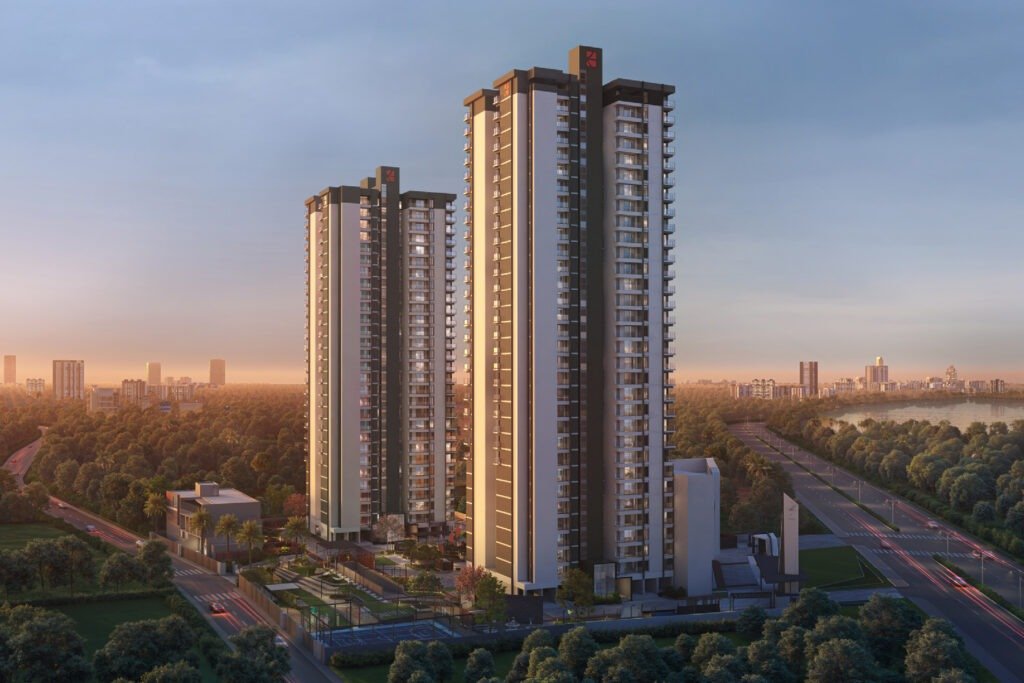
Suyug The 1 (Sompura Gate, Sarjapur Road):
- Land parcel: 3.5 acres
- Towers: 2 (Distinction: among the taller high-rise towers on Sarjapur Road
- Total units: 235 units
- Configurations: 3 & 4 BHK
- Starting price: approximately ₹1.5 crore
- IGBC Silver pre-certified
- RERA approved: PRM/KA/RERA/1251/310/PR/051224/007268
Suyug Saffron (Sompura Gate, Sarjapur Road):
- Land parcel: 2.51 acres
- Towers: 1
- Total units: 110units
- Configurations: 3 & 4 BHK
- Starting price: approximately ₹1.5 crore
- IGBC Silver pre-certified
- RERA approved: PRM/KA/RERA/1251/308/PR/140825/008000
Project Profiles: What the Specifications Actually Mean
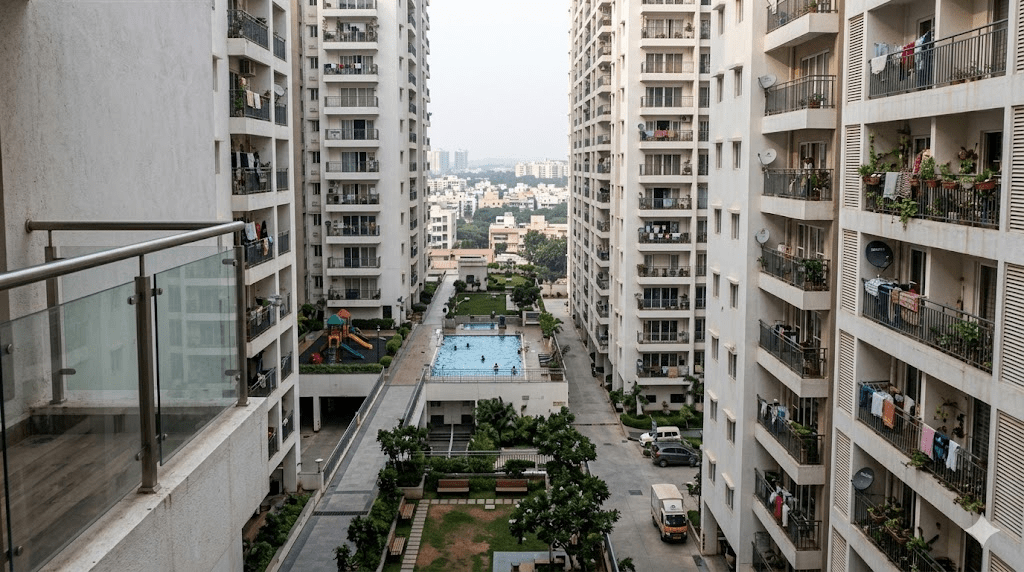
Raw specifications — acres, towers, unit counts, price per sq ft — don’t mean much without context. Here’s how to read the numbers that actually determine liveability and investment performance.
Unit density: the number most buyers never calculate:
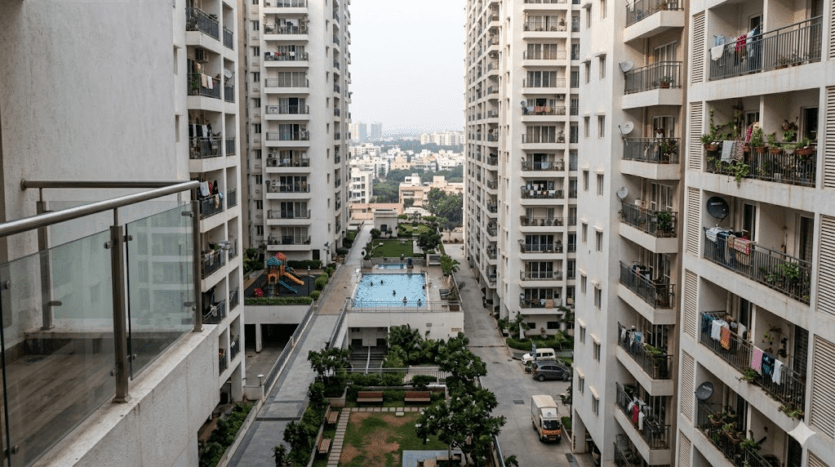
Divide total units by total acres to get units per acre. This single figure determines open space per resident, amenity competition, and long-term maintenance quality more reliably than any brochure feature.
How the active launches compare on this metric:
- Birla Evara: 1,594 units ÷ 28 acres = 57 units per acre — mid-density
- Godrej Lakeside Orchard: 698 units ÷ 15 acres = 47 units per acre — approaching low-density; the lakeside positioning reinforces the open feel
- Sobha One World: 5,406 units across a 300-acre integrated township = 18 units per acre at the township level — though this reflects the full master plan including non-residential land; residential-only density for Phase 1 will be higher and should be verified against RERA filings
- Prestige Meridian Park: approximately 2,900 units ÷ 18.2 acres = 159 units per acre — high-density; the township context provides some buffer but the residential plot itself is significantly dense
- Suyug The 1: 235 units ÷ 3.5 acres = 67 units per acre — mid-density by the raw calculation; what differentiates this project is not density alone but the no-shared-walls design, IGBC certification, and floor height, which together deliver a liveability experience above what the unit count suggests
- Suyug Saffron: 110 units ÷ 2.51 acres = 44 units per acre — among the lower-density projects in this comparison; boutique scale with a single tower
What these numbers mean in practice: projects commonly considered low-density run below 50 units per acre; mid-density runs 50–80; above 80 begins to show in shared amenity pressure, lift wait times, and open space per resident. These are practical benchmarks for comparison, not hard rules — design quality and no-shared-wall configurations can meaningfully offset what raw density numbers suggest.
Configuration and carpet area reality:
Super built-up areas carry loading factors of 25–35%. Always request the RERA carpet area certificate for your specific unit type and not just the super built-up figure in the brochure.
A few things worth noting across the active launches:
- Birla Evara and Godrej Lakeside Orchard are both positioned at the premium end of the corridor, with starting prices of ₹1.89 crore and ₹2.38 crore respectively — buyers should request carpet area breakdowns for their specific configuration before comparing price per sq ft across projects
- Prestige Meridian Park’s entry price of approximately ₹97.99 lakh for a 3 BHK reflects its sub-zone positioning further along the corridor; verify current pricing and carpet area on RERA before treating this as comparable to Kodathi-zone projects
- Suyug The 1 and Saffron both start at approximately ₹1.5 crore for 3 BHK — mid-premium positioning that reflects Sompura Gate’s mid-corridor price level and the projects’ deliberately smaller scale
Tower height and your floor position:
In a 54-floor tower (Sobha One World), a unit on the 10th floor delivers few of the ventilation, light, or noise benefits of height. In a project like Suyug The 1 — among the taller towers on the corridor — a mid-floor unit sits at a proportionally higher position relative to surrounding structures. Evaluate your unit’s floor position relative to the specific tower’s total height, not against a generic “high-rise” label.
IGBC certification — what it signals:
IGBC Silver pre-certification means verified benchmarks for water efficiency, energy reduction, indoor air quality, and site sustainability have been independently assessed at the design stage — not self-declared. Both Suyug The 1 and Saffron carry this certification. For the other active launches in this comparison, IGBC certification status should be verified directly with each developer before treating it as a comparison point.
Sub-Zone Positioning: Where Each Project Sits and Why It Matters
The sub-zone a project sits in determines its appreciation trajectory, rental demand profile, and commute reality more than any individual project feature.
Kodathi Village zone (Birla Evara, Godrej Lakeside Orchard):
- Transitioning zone, approximately 5–8 km from the ORR [VERIFY distances]
- Strong near-term rental yield driven by RGA Tech Park proximity and Carmelaram Metro Phase 3A station alignment
- Godrej’s lakeside positioning adds a natural amenity increasingly rare in dense development zones — verify flood risk on BBMP storm water drain maps before booking [VERIFY specific survey number]
- Among the better-positioned sub-zones for near-term infrastructure appreciation on the corridor
Gunjur zone (NBR Gunjur High-Rise):
- Core/mature zone, approximately 3–6 km from the ORR [VERIFY]
- Most established sub-zone; strongest school and social infrastructure density
- Appreciation largely priced in at this end; yield strong but growth runway more compressed than Kodathi or Dommasandra
Hoskote-adjacent zone (Sobha One World):
- Located beyond the core Sarjapur Road corridor [VERIFY exact location and distance from ORR]
- Township scale creates internal self-sufficiency, but buyers should verify which external infrastructure serves the location if internal ecosystem is incomplete at possession
- Phase-wise delivery means confirming which phases have received OC before committing [VERIFY on K-RERA]
Sompura Gate zone (Suyug The 1, Suyug Saffron):
- Directly on Sarjapur Road at Sompura Gate — Wipro’s corporate campus is adjacent, making this a sub-zone with a major IT employer on the same road
- Mid-corridor positioning offers access to both the ORR tech belt and Electronic City via Dommasandra
- Lower price pressure than the mature Bellandur/Kaikondrahalli end while sharing the same main road address
- Both projects’ low unit counts and IGBC credentials position them at the considered end of the Sompura Gate micro-zone — relevant for buyers who want corridor access without township-scale density
How to Compare New Launches: The Evaluation Framework
Given the volume and diversity of new apartments in Sarjapur Road in 2026, buyers need a structured comparison framework rather than a project-by-project brochure review.
The five variables that determine comparative value:
1. Units per acre (density): Calculate independently for every project. The range in the current launch landscape — from approximately 28 units per acre at Suyug The 1 to approximately 159 at Prestige Meridian Park [VERIFY] — illustrates how differently “premium” can be defined across projects at similar price points.
2. Sub-zone infrastructure timing: Map each project against confirmed Metro Phase 3A station locations [VERIFY against BMRCL DPR] and calculate walking distance from the project gate. The 1–1.5 km walkable radius is where the infrastructure premium concentrates.
3. Developer OC track record: Check whether the developer has obtained OC on previously completed Bengaluru projects before handover. Publicly verifiable through K-RERA and more reliable than any sales team assurance about possession timelines.
4. Water supply profile: Covered in the next section. Non-negotiable due diligence for every sub-zone on Sarjapur Road.
5. Carpet area efficiency: Request the RERA carpet area for your specific unit type and calculate the loading factor. Above 35% means you’re paying significantly for non-usable space. Below 25% is efficient for a high-rise project.
| Project | Units/Acre | Starting Price | Sub-Zone | Density Profile | IGBC Certified |
| Birla Evara | 57 | ₹1.89 Cr | Kodathi | Mid | Pending |
| Godrej Lakeside Orchard | 47 | ₹2.38 Cr | Kodathi | Low-Mid | Verify |
| Sobha One World | 18* | ₹1.09 Cr | Hoskote-adjacent | Township-level* | Verify |
| Prestige Meridian Park | 159 | ₹97.99 L | Township zone | High | Verify |
| Suyug The 1 | 67 | ₹1.5 Cr | Sompura Gate | Mid | Yes |
| Suyug Saffron | 44 | ₹1.5 Cr | Sompura Gate | Low-Mid | Yes |
The Water Profile Question: What Every New Launch Must Answer
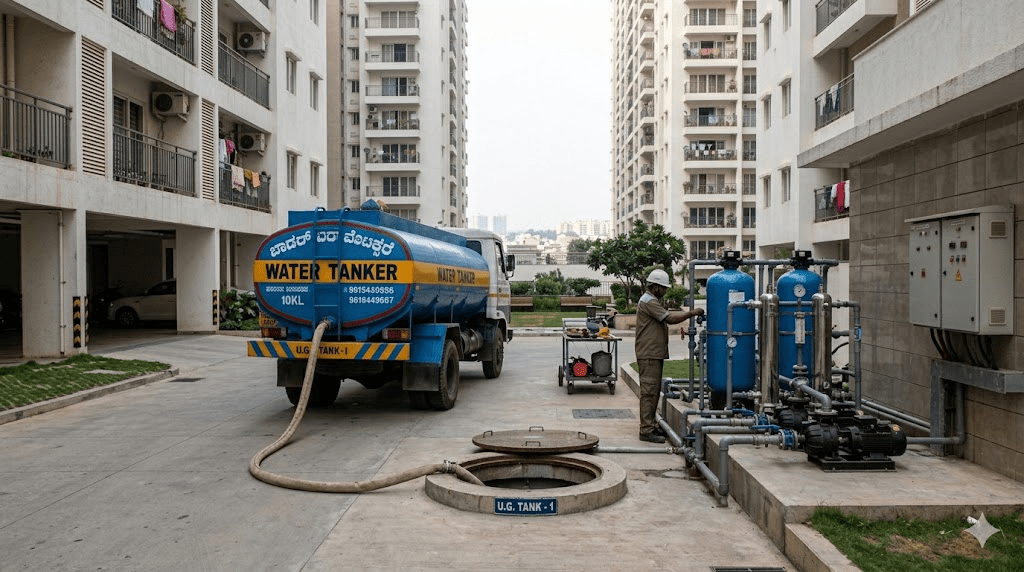
Water supply is the variable most consistently omitted from developer marketing and most consistently cited by residents after possession. For new apartments in Sarjapur Road, verifying the water profile of the specific sub-zone and project is non-negotiable.
The sub-zone water reality (as per current available data):
- Gunjur / Kasavanahalli: Partial piped water plus local borewells — better positioned than the eastern sub-zones but not fully BWSSB-connected across all projects.
- Carmelaram / Kodathi: Higher tanker dependence; limited BWSSB reach in this sub-zone.
- Dommasandra / Sarjapur-Attibele: Outside the core BWSSB municipal network in most areas; primarily borewell and tanker dependent.
- Sompura Gate: Primary source of water is deepwater borewells, water tankers, and on-sire tertiary treatment.
What to ask every developer before booking:
- Does the project have a confirmed BWSSB connection — not a pending application, a confirmed sanction?
- What is the RWH storage capacity in litres per day per unit?
- Does the STP output meet Karnataka Pollution Control Board standards for toilet flushing and landscaping reuse?
- What is the actual water procurement cost in their completed projects — not the projected figure at launch?
Why sustainable water infrastructure matters in practice:
Both Suyug The 1 and Saffron integrate smart water metering as part of their IGBC-certified design — systems that monitor consumption in real time, identify leaks, and track usage per unit. Combined with solar power and zero organic waste commitments, this reflects a design approach where sustainability is built into the structure rather than added as an amenity label. For buyers concerned about post-possession water costs, these are specific questions worth asking during a site visit. [Verify BWSSB connection status for Sompura Gate with Suyug directly before publishing]
The financial cost of unresolved water infrastructure:
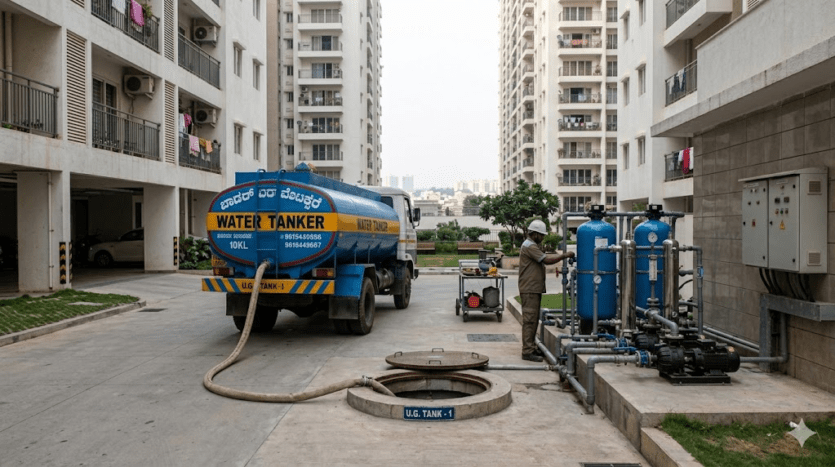
Tanker dependency in affected projects can add materially to monthly costs during peak summer months,considering the rates of ₹700 to ₹1,200 for a standard 6,000-liter load. Over a five-year ownership period, this compounds into a meaningful gap between projected and actual maintenance costs — costs that don’t appear in any base price calculation or brochure.
The Oversupply Question: What a Heavily Under-Construction Market Means for Buyers
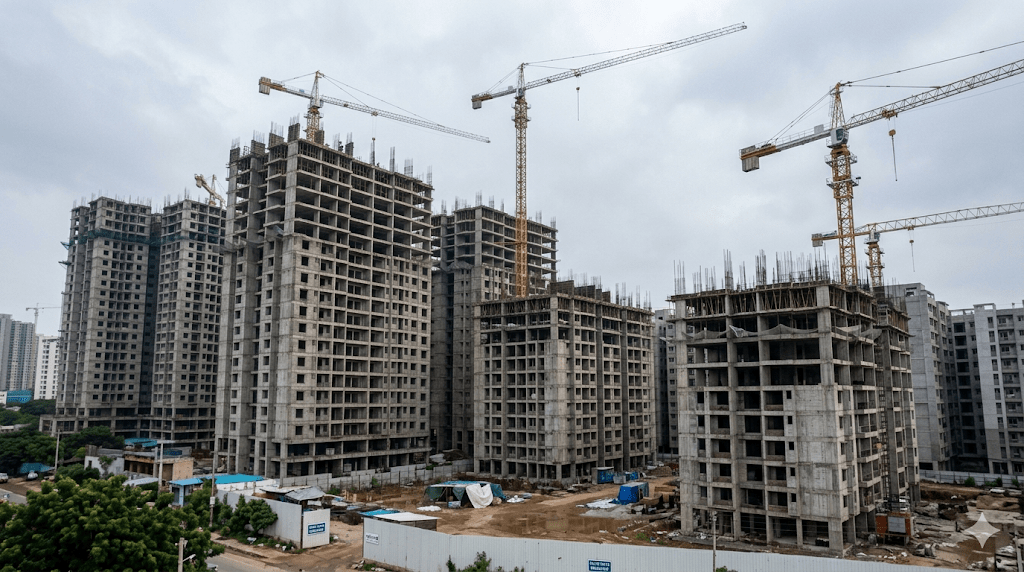
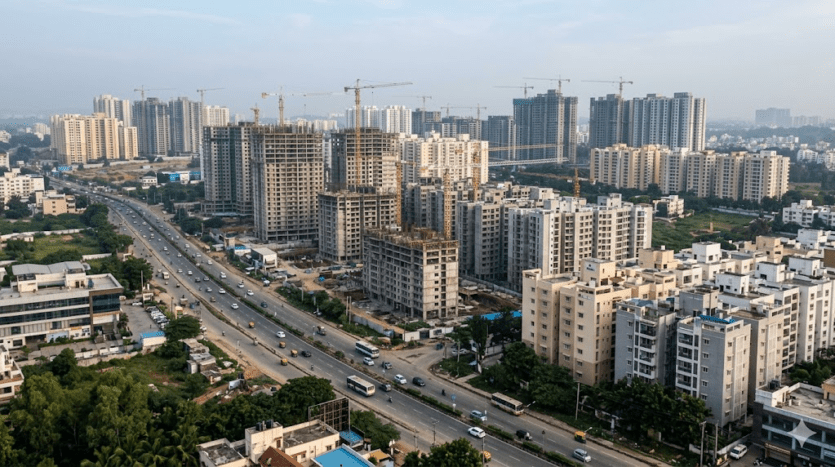
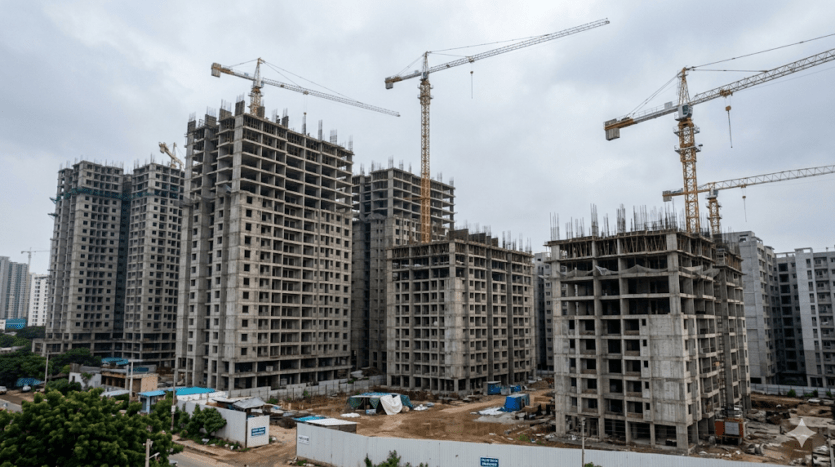
As of today, around 83% of total residential inventory on Sarjapur Road is currently under construction, according to micro-market tracking data. This concentration creates specific risks that buyers should factor into their decisions.
What a large under-construction pipeline means in practice:
- If IT hiring softens or return-to-office mandates reduce demand for large-format apartments, rental yield compression becomes a near-term risk — particularly in the 3 BHK and 4 BHK segments where new supply is heaviest
- Projects from undercapitalised developers face construction delay risk when cash flows tighten — Tier-1 institutional developers are materially better insulated than regional builders
- High-density projects are structurally more exposed to oversupply pressure than low-density boutique launches, simply because full occupancy requires a larger tenant or buyer pool
How scale affects exposure:
A project with 235 units reaching full occupancy requires a meaningfully smaller tenant pool than one with 2,900 units. In a market with heavy under-construction inventory, that scale difference is a structural risk mitigant — not a selling point in isolation, but worth factoring into a realistic comparison. Both Suyug projects sit at this lower-scale end of the launch landscape.
How to protect against oversupply risk generally:
- Prioritise developers with strong balance sheets and clean OC delivery history across multiple Bengaluru projects
- Choose sub-zones with structural demand anchors — school proximity, employment node adjacency — that sustain rental demand independent of market sentiment
- Favour projects where full occupancy requires a more achievable tenant pool relative to total units
Evaluating new apartments in Sarjapur Road and want to understand how a specific project fits this framework? Suyug’s team is transparent about every document and metric in this checklist — reach out for a conversation.
One Thing Worth Sitting With
The volume of new apartments in Sarjapur Road in 2026 is a buyer’s advantage — more options, more competition between developers, more data points for comparison. But volume also creates noise. In a market with significant under-construction inventory, the difference between a well-evaluated purchase and a poorly evaluated one isn’t visible at a site visit. It’s visible in the documents, the density calculation, the water supply confirmation, and the questions the developer is willing to answer clearly. That’s where the real evaluation happens.
FAQ’s
New apartments in Sarjapur Road currently range from approximately ₹77 lakh at the entry end to ₹3.9 crore for premium 4 BHK units, based on current developer disclosures. Low-density, sustainability-certified projects like Suyug The 1 start at ₹1.4 crore for 3 BHK configurations. The mid-premium 3 BHK segment — the most liquid configuration for both rental and resale — ranges from approximately ₹1.1 crore to ₹2.5 crore depending on sub-zone and developer tier.
Visit rera.karnataka.gov.in, select “Applications Approved” under Services, and search by project name or RERA registration number from the developer’s brochure. Confirm that the specific tower your unit falls in has its own registration — not just a project-level approval. Check the registered completion date and the complaints section before making any payment. Both Suyug The 1 and Saffron are RERA approved.
It determines how much open space, amenity access, and liveability quality you actually receive versus what the render shows. A project with approximately 159 units per acre has fundamentally less green space, more competition for shared amenities, and higher long-term maintenance complexity than one with approximately 28 units per acre. Calculate this independently for every project — divide total units by total acres — before evaluating any other feature.
Add approximately 13–17% to any quoted base price for the true all-in cost. On a ₹1.5 crore base: stamp duty (5%) adds ₹7.5 lakh, registration (2%) adds ₹3 lakh, GST on under-construction units (5%) adds ₹7.5 lakh, plus sinking fund, advance maintenance, parking, and clubhouse membership. The effective all-in cost on a ₹1.5 crore apartment is typically ₹1.72–₹1.8 crore before interior fit-out.
Ask the developer for written confirmation of BWSSB connection status, RWH storage capacity in litres per day, and STP output volume and reuse designation. Cross-check the sub-zone’s general water profile — Kodathi and Dommasandra sub-zones currently have higher tanker dependence while Gunjur and Kasavanahalli have partial piped water access. Visit a completed project by the same developer and ask residents directly about water reliability and monthly costs — this is the most reliable ground-truth available.
IGBC Silver pre-certification means verified benchmarks for water efficiency, energy reduction, indoor air quality, and site sustainability have been independently assessed at the design stage — not self-declared in marketing. For buyers, it translates to lower long-term maintenance costs, infrastructure designed to handle Bengaluru’s water stress, and better resale positioning with buyers who prioritise sustainability credentials. Among the active launches covered in this guide, Suyug The 1 and Saffron carry IGBC Silver pre-certification — for other projects, verify certification status directly with the developer before treating it as a comparison point.