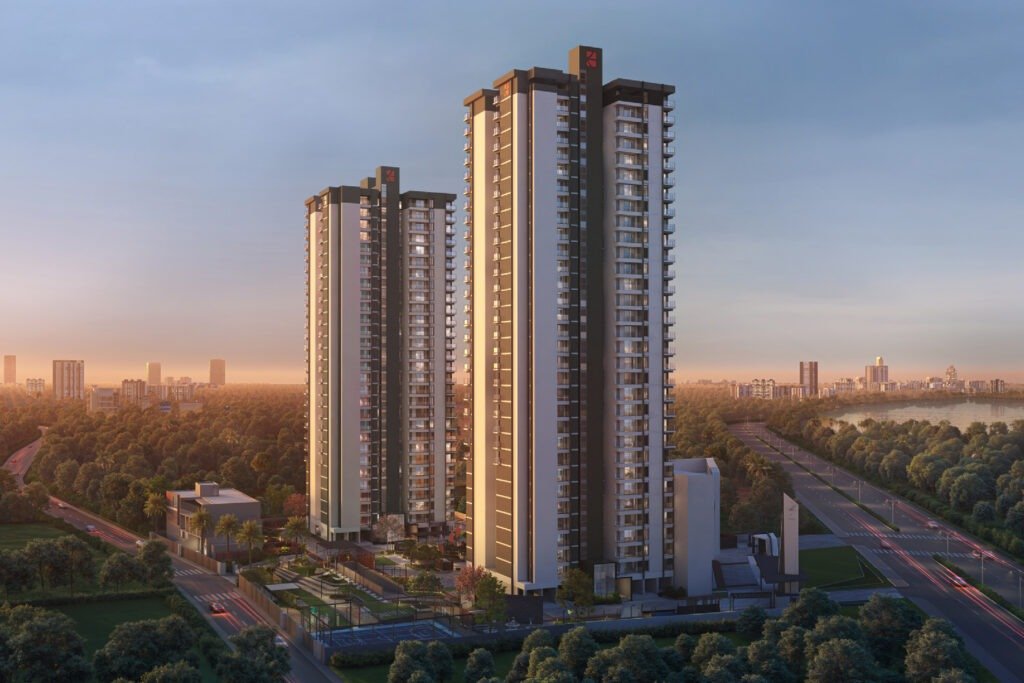

What Defines Luxury Apartments in Bangalore Today
INTRODUCTION
If you’ve been exploring luxury apartments in Bangalore, you’ve likely noticed something.
Almost every project describes itself as “premium” or “luxury.” The specifications look similar on paper, the amenities often overlap, and the pricing keeps moving upward. At some point, it becomes difficult to tell what actually qualifies as luxury and what is simply positioned that way.
This is where clarity becomes important. In today’s market, luxury is no longer defined by surface-level features. It is shaped by how a home feels to live in every day, how well it supports your routine, and whether it holds its value over time. Understanding this difference can help you make a more confident decision.
TL;DR
- Luxury today is defined by space, privacy, and long-term usability
- Larger carpet areas and low-density layouts are becoming standard
- Design, ventilation, and natural light matter more than amenities
- Technology and sustainability are now expected, not optional
- Location still plays a key role, especially near work hubs
- True luxury becomes clear only when you look beyond marketing
HOW LUXURY HOUSING IN BANGALORE HAS CHANGED
The definition of luxury housing in Bangalore has shifted significantly over the past few years. Earlier, it was often associated with visible features such as large clubhouses or premium branding. Today, buyers are more informed and tend to look beyond these surface elements.
Market trends are also driving this shift. Reports from firms such as JLL and Knight Frank show that premium housing is a leading demand, even as other segments slow down. Buyers are now focusing on quality, long-term usability, and overall living experience rather than just size or location.
- Demand is moving toward well-designed homes rather than just larger homes
- Buyers are evaluating how a space performs over time, not just how it looks initially
- There is a clear shift toward quality-driven decisions rather than price-driven ones
As a result, what qualifies as “luxury” today is more specific and harder to define through marketing alone.
WHAT ACTUALLY DEFINES A LUXURY APARTMENT TODAY
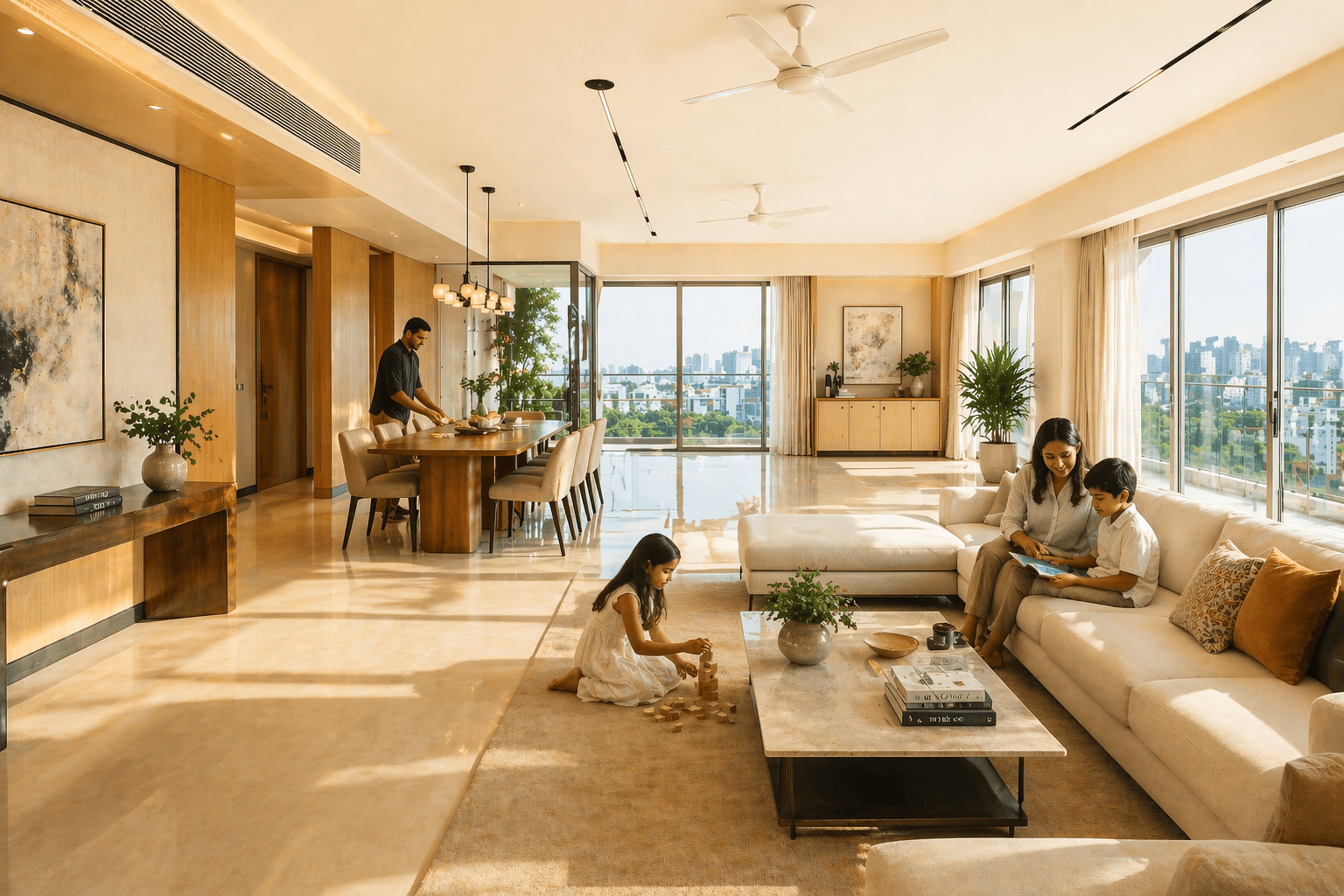
When you look past brochures and marketing language, a few consistent factors begin to stand out. These are not always highlighted clearly, but they have a direct impact on how a home feels once you start living in it.
Luxury today is less about visible features and more about how well the home works in everyday life. It shows up in space, privacy, design, and how easily the home adapts to your routine over time.
Key Differences: Standard vs Premium vs Luxury
| Factor | Standard Apartment | Premium Apartment | Luxury Apartment |
| Space | Functional but compact | Slightly larger layouts | Spacious with high usable area |
| Layout | Basic planning | Improved flow | Designed for flexibility and long-term use |
| Privacy | Shared walls, higher density | Moderate privacy | Low density, better separation |
| Design | Functional finishes | Better materials | Thoughtful design, light, ventilation |
| Amenities | Basic | Lifestyle-focused | Complementary, not defining |
- A standard home focuses on basic functionality and affordability
- A premium home improves finishes and amenities
- A luxury home focuses on how the space performs over time, not just how it looks
Answer Block
A luxury apartment stands apart in how it combines space, privacy, and design to support daily living. The difference becomes clear over time, as the home continues to feel comfortable without requiring constant adjustments.
SPACE AND LAYOUT: THE FIRST REAL INDICATOR
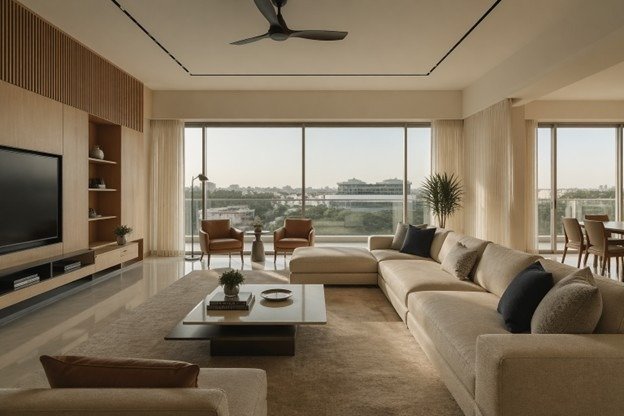
One of the clearest ways to identify a true luxury apartment is through its space and layout. This goes beyond the number of bedrooms and looks at how much usable area you actually have.
In many high-end projects, buyers now expect larger carpet areas and more efficient layouts. This ensures that space is not just available but also usable in a meaningful way.
- Luxury homes often offer larger carpet areas, typically starting around 2,500 sq. ft. and above
- Efficient layouts ensure that less space is lost to corridors and structural elements
- Rooms are designed to be usable for multiple purposes without feeling cramped
A well-planned space reduces the need for constant adjustment, allowing the home to feel comfortable even as your routine becomes more demanding.
PRIVACY AND LOW-DENSITY LIVING
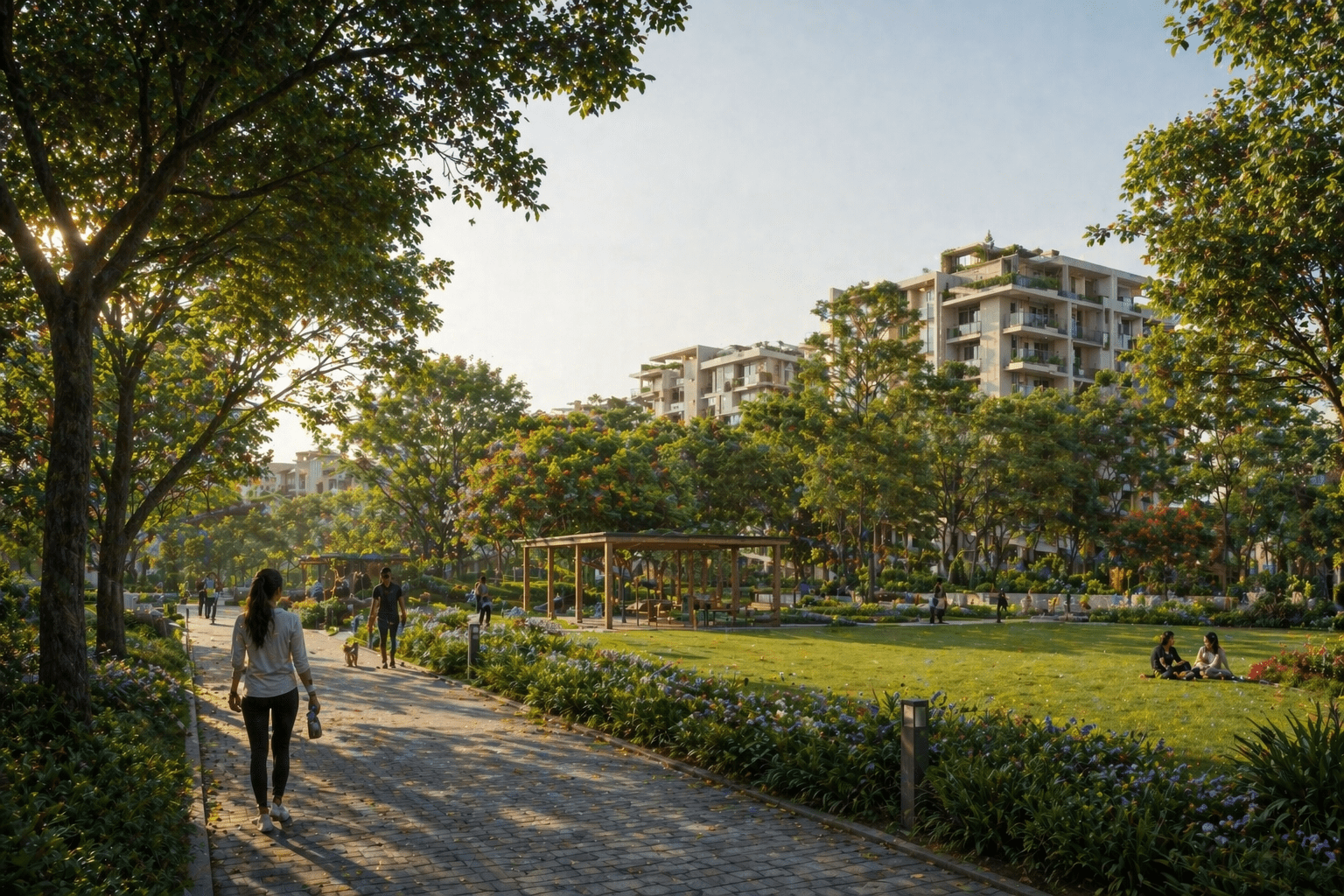
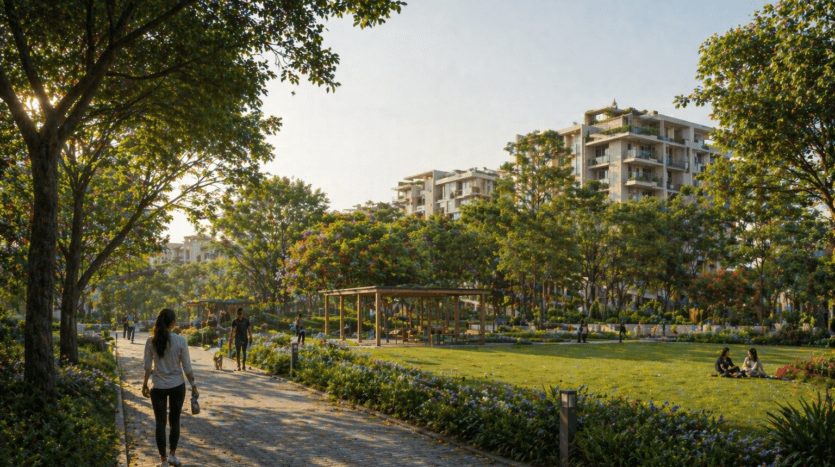
Another important factor that defines luxury today is privacy. As cities become denser, the value of having personal space within your home and community has increased.
Low-density projects, where fewer families share the same space, are becoming a key marker of premium living. This directly affects noise levels, shared amenities, and overall comfort.
- Fewer units per floor improve privacy and reduce everyday disturbances
- Features like private lift lobbies or minimal shared walls enhance personal space
- Lower-density communities provide a quieter and more controlled living environment
This aspect of luxury is often felt more than seen, but it plays a major role in long-term comfort.
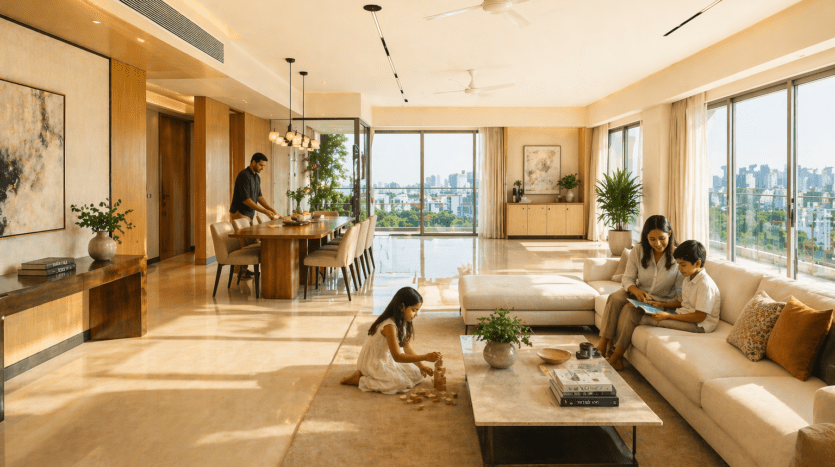
DESIGN, LIGHT, AND EVERYDAY COMFORT
Design in luxury housing is no longer limited to visual appeal. It is increasingly focused on how the home feels to live in throughout the day.
Natural light, ventilation, and orientation have become key considerations. These factors affect not just comfort, but also energy usage and overall well-being.
- Homes are designed to maximise natural light and airflow across rooms
- Large windows and open layouts help create a sense of openness and ease
- Thoughtful orientation reduces heat and improves indoor comfort
Over time, these details have a noticeable impact on how enjoyable your home feels on a day-to-day basis.
TECHNOLOGY AND SUSTAINABILITY EXPECTATIONS
Technology and sustainability are no longer optional features in luxury housing. They are expected as part of the overall experience.
Buyers now look for homes that are efficient, future-ready, and easier to maintain over time. This includes both smart home features and environmental considerations.
- Smart home systems improve convenience and control over daily functions
- Sustainable features such as water management and energy efficiency support long-term cost savings
- Certifications like IGBC ratings indicate better environmental performance and design standards
These elements may not always be visible, but they contribute to how well the home performs over time.
LOCATION AND LIFESTYLE FIT
Even in the luxury segment, location continues to play a central role. A well-designed home loses its advantage if it does not support your daily routine.
In Bangalore, areas like Sarjapur Road, Whitefield, and North Bangalore are preferred as they offer proximity to work hubs along with access to schools and essential services.
- Living closer to work reduces daily travel time and improves work-life balance
- Access to good schools and healthcare supports long-term family needs
- Infrastructure developments increase connectivity and future demand
Luxury is not just about the home itself, but also about how easily your life fits around it.
A PRACTICAL WAY TO EVALUATE LUXURY

When you are comparing options, it helps to step back and consider a few core factors rather than getting influenced by marketing language.
You can evaluate a project more clearly by asking a few simple questions:
- Does the space feel comfortable without needing constant adjustment?
- Is there enough privacy in both the home and the community?
- Does the design and layout improve daily living?
- Are the features practical for long-term use?
Developers like Suyug focus on creating homes where these aspects are built into the design from the beginning, rather than added later as features.
Luxury becomes easier to understand when you look beyond surface details. A well-designed home should feel comfortable not just on the first day, but over the years as your needs continue to change.
FAQs
A luxury apartment today is defined by space, privacy, and thoughtful design. It goes beyond amenities and focuses on how well the home supports daily living. Factors such as layout, ventilation, and long-term usability play a key role in defining true luxury.
Premium apartments usually offer better finishes and amenities compared to standard homes. Luxury apartments go further by focusing on space, privacy, and overall living experience. The difference becomes clear in how comfortable and functional the home feels over time.
No, amenities alone are not enough. While they add value, true luxury is defined by how well the home itself is designed. Space, layout, and privacy have a greater impact on daily comfort than the number of amenities offered.
In many cases, yes. Well-designed luxury homes tend to attract long-term buyers, which supports demand. However, value also depends on location, infrastructure, and overall project quality.
Both are important and need to work together. A good location improves daily convenience and future value, while a well-designed home ensures comfort. Choosing one without the other can limit the overall experience.
You can look at factors such as carpet area, layout efficiency, and privacy features. It also helps to review legal approvals and certifications. Taking time to evaluate these aspects can give you a clearer understanding of the project.