
Land Conversion in Tamil Nadu: What Changes When Farmland Becomes House Sites

SUYUG Infra
Short briefing · 1,680 words · 8 min read · 3 questions answered
In this article · 8 sections
A Bengaluru buyer arrives at a Tamil Nadu plot with one word in mind: conversion. They have learned, correctly, that agricultural land in Karnataka becomes buildable through an order, and they have learned to ask for that order by name.
The instinct is right and the vocabulary does not travel. Asking a Tamil Nadu seller for "the DC conversion" produces confusion; asking the right question produces documents. Here is what the right question is.
Classification, not the seller's description, decides what you may build
The state's records carry a classification against every survey number. That entry — not the brochure, not the road frontage, not the fact that neighbours have built — is what determines the use the land is recorded for.
This matters more on a plot than on a flat, because a plot buyer is buying the right to build later. If the classification does not support the use, the problem does not surface at registration. It surfaces at the point of applying for a building sanction, which is typically months or years after the money moved and after the buyer has stopped thinking about paperwork.
The classification appears on the patta for the survey number, and the settlement particulars behind it appear on the A-Register extract. What each record is, and what each does not prove, is set out in our note on patta and the records it travels with.
Wet, dry and house-site: how the record describes land
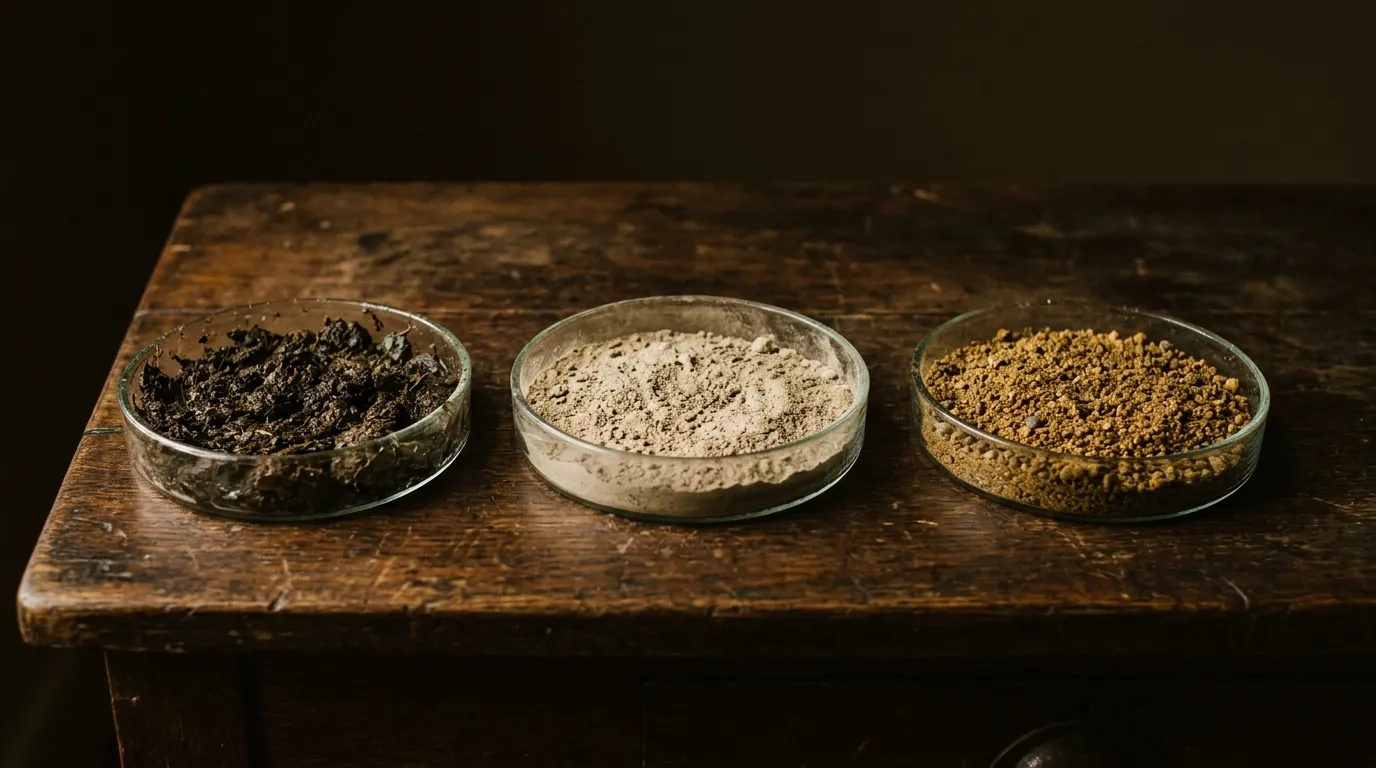
Tamil Nadu's revenue vocabulary distinguishes wet land — irrigated, historically served by a tank or a channel — from dry land, and both from land recorded as village house-site. The Tamil terms a buyer will hear at a taluk office are nanjai for the first and punjai for the second, and natham for the third.
Three practical points follow.
- The distinction is about how the land is recorded, not about how it looks today. Land that has not been irrigated in a generation may still be classified as wet.
- Wet classification carries the greatest sensitivity, because irrigation sources and the land serving them attract protections that dry land does not.
- Land already recorded as house-site does not raise the question at all, which is why the classification entry is worth reading before anything else.
Ask what the classification is, ask to see it on the record rather than be told it, and ask when it was last changed.
Which authority decides, and where the two decisions sit
Two separate decisions govern whether a house may lawfully stand on a piece of land, and they are made by two different arms of government.
The first is the revenue decision: the entry in the land record that describes the land's classification, and the order that changes it. That is a Revenue Department matter, and the officers a buyer will encounter are the Tahsildar for the taluk and the revenue hierarchy above them.
The second is the planning decision: permission to develop the land in a particular way. Section 49 of the Tamil Nadu Town and Country Planning Act, 1971 requires a person intending to carry out development on land or a building to apply in writing to the appropriate planning authority for permission, and requires the authority to record its reasons in writing where it refuses. Which body is the appropriate planning authority depends on where the land falls.
Here is the thing this page will not do. It will not name one Tamil Nadu instrument and call it the conversion certificate, because that is precisely the shortcut that produces confident, wrong advice. What a buyer asks for is the order that effected the change of classification, and then reads the authority, the provision and the date off that order. If no such order exists, that is the answer to the question.
The order of operations

On a well-run plotted development, the sequence has already happened before a plot is offered to you, and every stage of it has left a document.
- The classification question is settled for the parent land, and an order records it.
- Planning permission for the layout is granted by the appropriate planning authority, and an approved drawing is issued with its reference on it.
- The parent survey number is subdivided so that each plot has an identity in the survey record, and the FMB sketch reflects it.
- The project is registered with the state regulator before any advertising, marketing, booking or selling — section 3(1) of the Real Estate (Regulation and Development) Act, 2016 bars all of those in an unregistered project, in any manner, and section 2(zn) of that Act puts the development of land into plots inside the definition of a real estate project.
- Individual plots are sold and registered, and the patta for each subdivision is transferred to its buyer.
Read backwards, that list is a diligence checklist. Any stage a seller cannot evidence is a stage that may not have happened.
What proof looks like, and where it is recorded
Proof is not an assurance and it is not a brochure line. It is:
- The order that effected the change of classification, with the officer, the provision and the date on its face.
- The record after it — the patta and the A-Register extract for the survey number, pulled from the state's own portal rather than accepted as a printout, showing the classification as it now stands.
- The approved layout drawing, all sheets, with the granting authority and the approval reference on it and your plot number visible.
- The survey record — the FMB sketch for the subdivision — tying the plot on the drawing to the parcel on the ground.
The record is the part people forget. An order that was passed but never reflected in the record leaves the record saying the old thing, and it is the record that the next officer, the next lender and the next buyer will read.
Buying land whose position is "in process"
Sooner or later someone will tell you the change is applied for and will come through shortly. That may be entirely true. It is also a materially different purchase from one where the position is settled, and it should be priced, papered and timed as such.
Three questions make the difference visible. What exactly has been applied for, to which authority, and on what date? What is the application reference, and may I have a copy of the acknowledgement? What happens to my money, contractually, if the application is refused?
An application is not an order, in the same way that a layout "being regularised" is not a regularised layout. Both are honest positions to be in. Neither is the position a seller should be describing with the past tense.
Why an approved layout usually settles it — and when it does not
A plot inside an approved, registered residential layout is a much simpler proposition, because the planning authority has already permitted the land to be developed for that use and the approval names the survey numbers it covers. For plots inside those numbers, the question has been answered by somebody with the power to answer it.
Two situations where it is not settled. The first is a plot outside the approved survey numbers — an extra strip, an adjoining parcel, a phase that is being spoken about but does not appear on the approved drawing. The second is where the approval exists but the revenue record was never updated to match, which is a gap you find by pulling the patta rather than by reading the drawing.
Both are found by the same act: compare the survey numbers on the approved drawing with the survey numbers on the revenue record and on your draft deed, and make sure the plot you are buying appears in all three.
The two documents to insist on
If you take only two things from this page, take these.
One: the current patta for the subdivision you are buying, pulled from the state portal, showing the classification as it stands today. Not a printout from the seller, and not the parent land's patta.
Two: the approved layout drawing, with the granting authority and approval reference on its face, and your plot number and its survey number visible on it.
Between them those two documents answer what the state records about the land and what the state has permitted to be done with it. Everything else in this post is about how to read them and what to do when they disagree.
Karnataka buyers who want the contrast in full will find the Karnataka mechanism in our note on conversion under section 95. The Tamil Nadu sequence, office by office and statute by statute, is in our guide to registering a plot in Krishnagiri district, and what SUYUG builds on the Tamil Nadu side of this corridor is on the villa plots page.
Frequently asked questions
Not on the strength of the sale alone. Two things have to be true: the land's classification in the revenue record has to permit the use, and the development has to be permitted by the appropriate planning authority. Buying the land changes who holds it; it changes neither of those.
No. Karnataka's process produces a single conversion order under section 95 of the Karnataka Land Revenue Act, 1964, and buyers there learn to ask for that one document. In Tamil Nadu a buyer asks instead for the order that effected the change of classification in the revenue record, and for the planning permission for the layout — and reads the authority and the provision off each.
Usually, for the plots inside the approval. An approval covers specified survey numbers, so any strip or adjoining parcel outside those numbers is outside the approval — whatever the compound wall suggests. Check that your plot's survey number and subdivision appear on the approved drawing.
Was this useful?
Comments
Was this useful?
Schedule a site visit
Leave your details and the team will call back to fix a convenient date.