
Sustainability · certified: none · pre-certified: 2 · aligned: 0
Green building, stated precisely
At SUYUG, sustainability is a source of pride — for us and for the families who live in our homes. We continually refine our methods, embrace innovation and raise our own benchmarks across quality, technology, functionality, engineering and design.
Certified
A rating issued by the Indian Green Building Council after the finished building has been verified. The only stage that carries a rating level.
Held by no SUYUG project
Pre-certified
IGBC has assessed the design and its documentation and issued a pre-certification. Not the final certificate.
2
projects
Aligned
Designed to IGBC guidelines. Our own commitment, not an assessment by anybody else, and never described as a certification.
0
projects
Every count is read from each project's own record. See where each project stands.
The gradation
Every project, on the rung its paperwork puts it on.
The industry word for every one of these is "green". They are not the same claim, and the difference between them is who did the assessing. Each project below is placed by the status recorded in its own record — including the rung none of them has reached.
Rung 1 of 3
IGBC certified, with a rating
IGBC says it, about the finished building
Awarded only after a completed building has been verified against what was submitted, and the only stage that carries a rating level. No SUYUG project holds one — every project above is still under construction or still on paper.
No projects
When IGBC issues one, the rating and its reference will be printed here. Until then this rung stays empty rather than being filled with the rung below it.
Rung 2 of 3
IGBC pre-certified
IGBC says it, about the design
IGBC has reviewed the design and its documentation and issued a pre-certification — an independent assessment of what has been designed, not a description we wrote about ourselves.
2 projects
THE1
Karnataka · Under construction
Pre-certification is not the final certificate. THE1 is still under construction, and the final rating is awarded only after the completed building has been verified against what was submitted.
Saffron
Karnataka · Under construction
Pre-certification is IGBC's independent assessment of the submitted design — the same stage THE1 holds. As with THE1, the final rating comes only after the completed building is verified.
Rung 3 of 3
Designed to IGBC guidelines
We say it. We are accountable for it.
The design follows the guidelines published by the Indian Green Building Council. That is a commitment we made ourselves. It is not a certification, IGBC has not assessed it, and we will not describe it as one.
No projects
When IGBC issues one, the rating and its reference will be printed here. Until then this rung stays empty rather than being filled with the rung below it.
Placements are read from each project's own record. A project carrying no IGBC status appears on the bottom rung, which is a statement that we have made no claim about it — not a statement that it failed an assessment.
The credential
Who IGBC is, and why an outside assessor is the point
The council
The Indian Green Building Council was formed by the Confederation of Indian Industry and runs India's green-building rating systems. Its Green Homes system assesses a residential project on site planning, water conservation, energy efficiency, materials and the quality of the indoor environment — against a published standard, by assessors who do not work for the developer.
Why we keep the stages apart
Pre-certification is granted on the design and its documentation, while the building is still going up. Final certification follows once the completed building has been verified against what was submitted, and is the only stage that carries a rating level.
We publish no rating level for any project until IGBC has issued it. Neither stage is the same thing as a developer calling a project green — which is why the ladder above names a status one project at a time instead of making a claim about the company.
What is actually built
The green features behind the claim
A rating is the assessment. These are the things being assessed — designed into how a SUYUG project is planned, not added to a brochure afterwards.
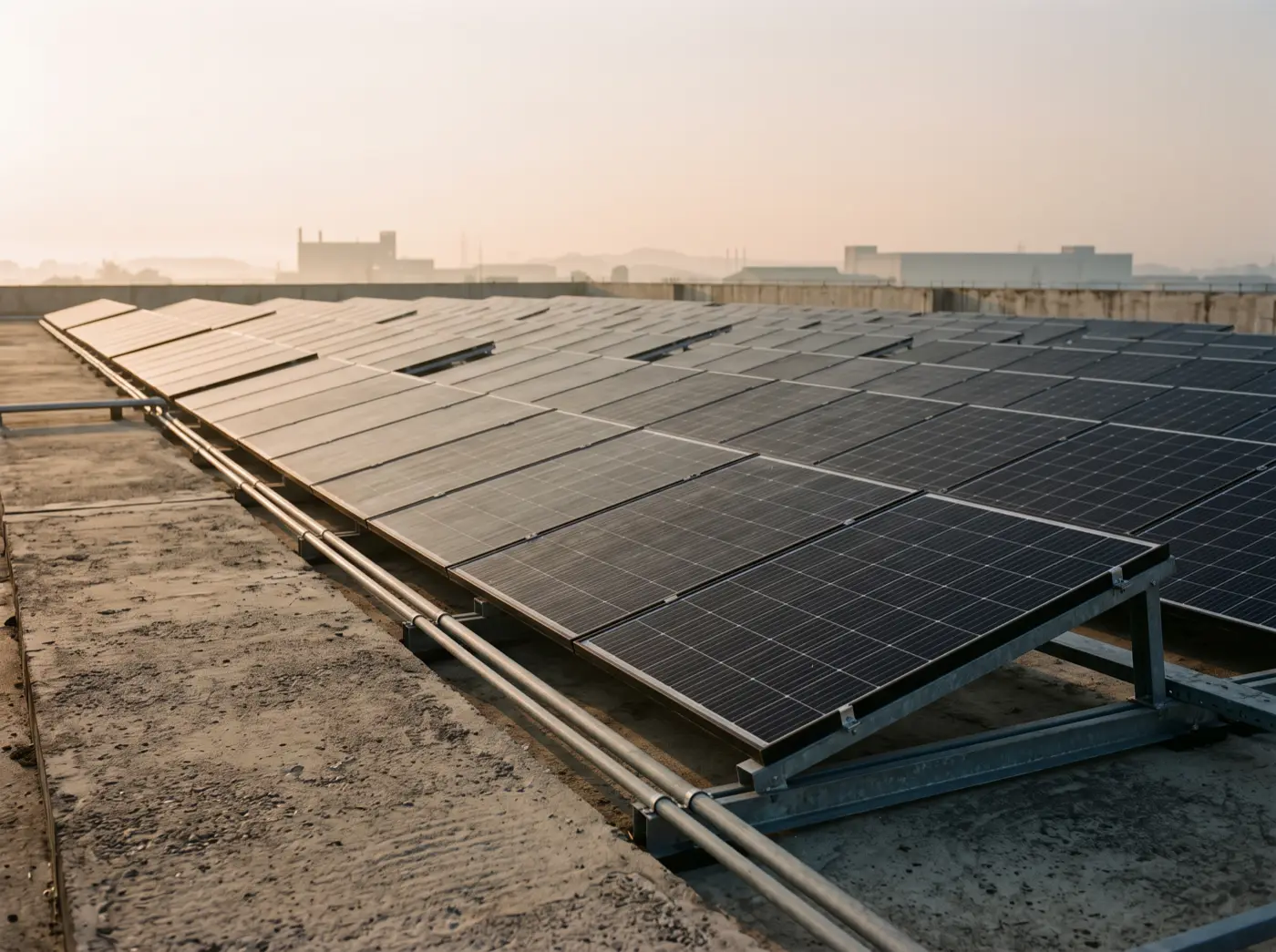
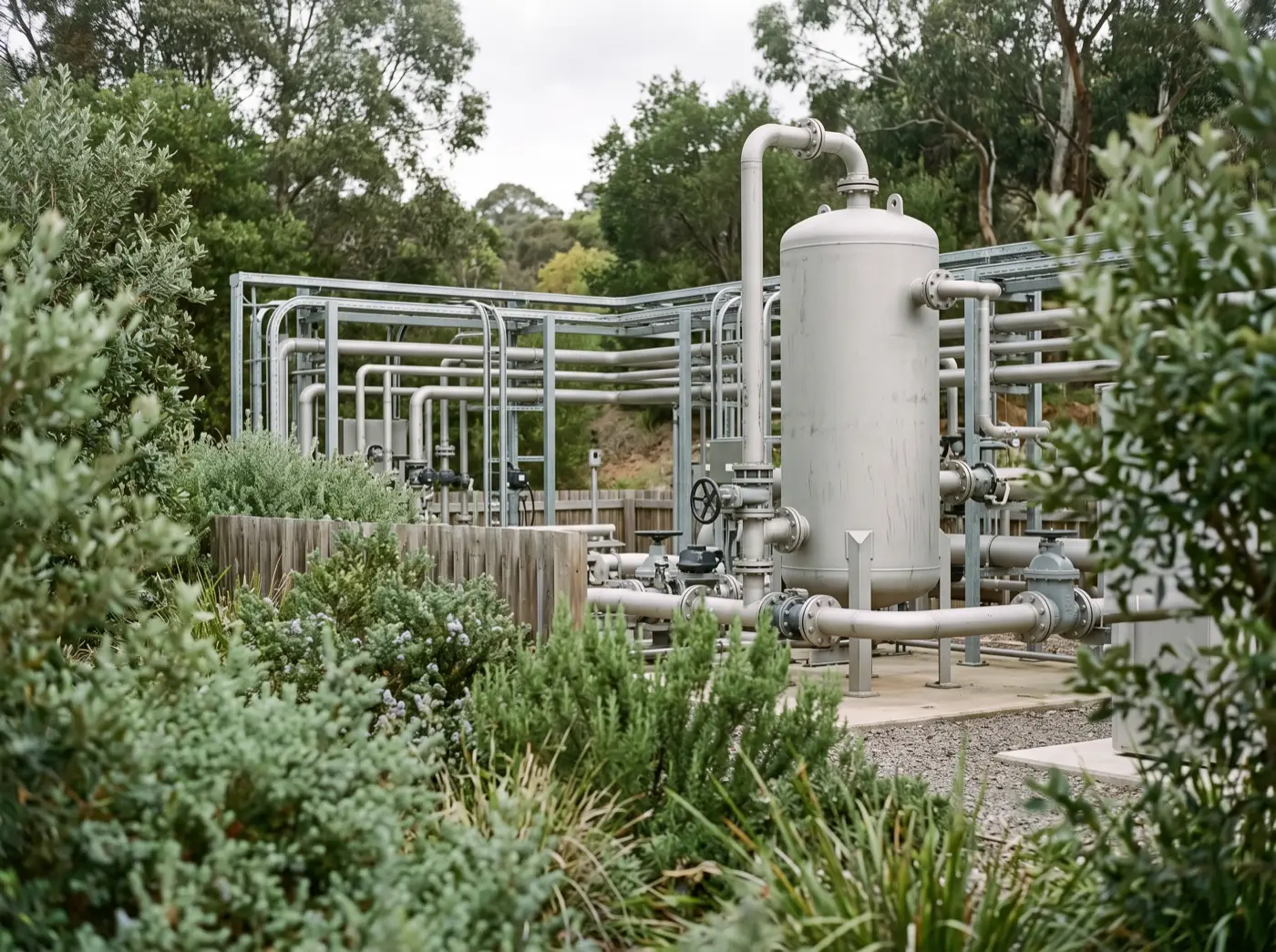
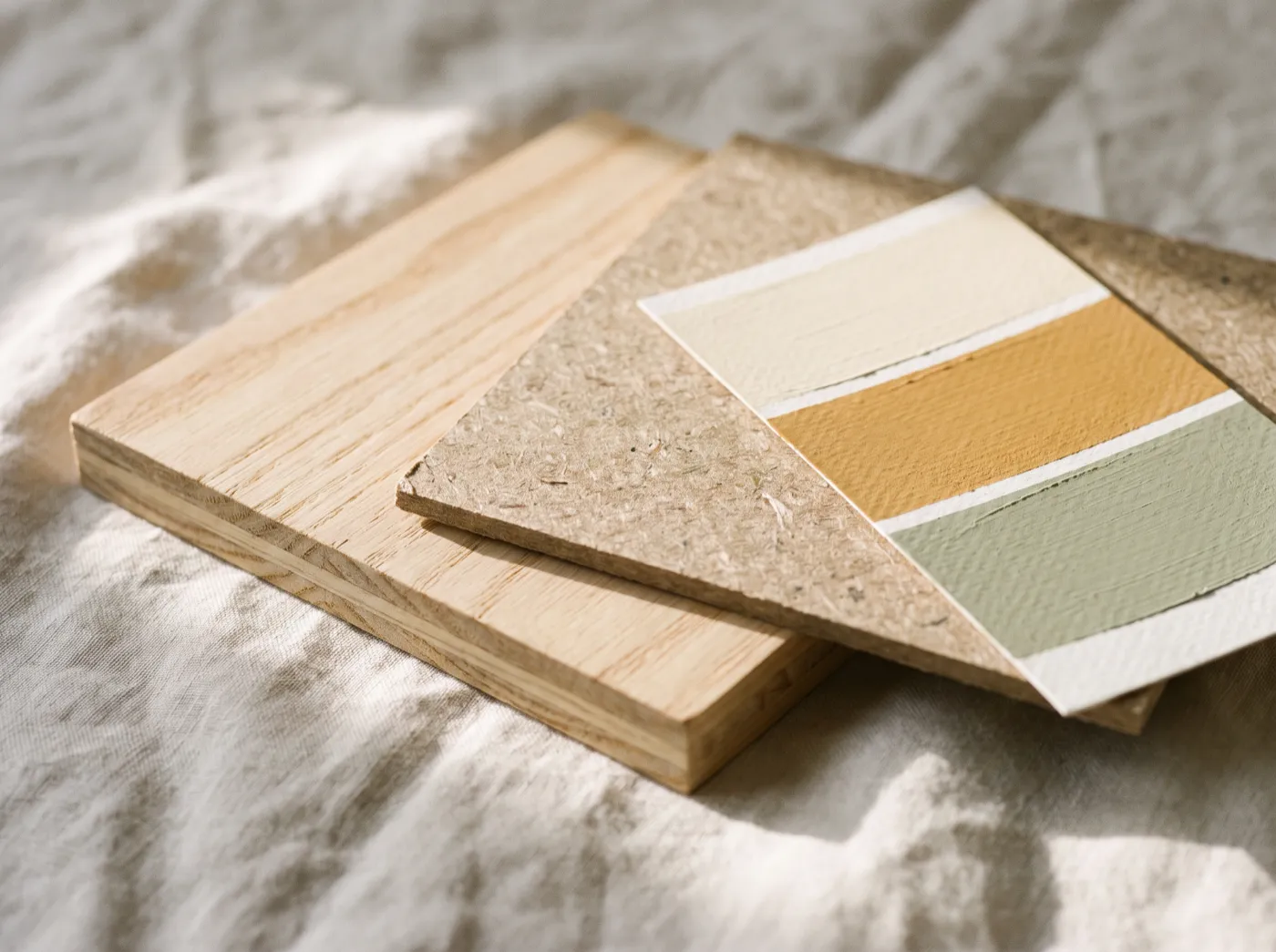
The three images above are illustrations of the systems described, not photographs of a SUYUG project. Photographs of our own sites are on the gallery.
What it changes
Running costs, and what a stranger can verify
The monthly bill
Electricity. A maintenance charge is calculated from what the common areas consume. Solar generation reduces that consumption at source, smart metering bills a household for what it actually used rather than an apportioned block average, and large windows cut the hours a home needs its lights on at all.
Water. Landscape irrigation is one of the largest non-domestic draws in a gated community; running it on recycled water takes it off the potable supply entirely. Deep recharging pits return monsoon runoff to the ground beneath the site, and on-site purification reduces what has to be brought in. Where a development depends on tankered water, every litre it does not need is a recurring cost removed.
Cars. EV charging provisioned during construction avoids the retrofit — cabling, transformer capacity and an owners' association vote to pay for all of it — that a building without it eventually faces.
Resale
The value of a third-party credential at resale is that it survives us. A future buyer, their lender or their lawyer can check an IGBC certification with IGBC. Nobody can check an adjective. That is the entire argument for being assessed by someone else, and it is why the rungs above are worth keeping apart rather than blurring.
It also travels. The features above are the ones a second buyer inherits — the solar array, the recharge pits, the charging points — none of which can be added to a finished building at anything like the cost of designing them in.
What we do not claim
We publish no percentage saving. We have not metered one across a full occupied year, and a number we cannot show the working for is worth less than the features it is meant to describe. When we have the readings, we will publish the readings.
Our benchmarks
The five we raise, project after project
Named in our own commitment above, and the axes every SUYUG design review is run against.
Questions
What the green claims mean, and what they do not
Pre-certified, certified and designed-to-align are three different statements, and only one of them is a certificate. These answers keep them apart, name what settles each, and put no number on anything we have not metered.
Two of them: THE1 and Saffron. Both hold the same status — IGBC pre-certified, which is a design-stage assessment by the Indian Green Building Council and not the final certificate. No other SUYUG project carries an IGBC status of any kind, and no SUYUG project holds a final IGBC certificate, because that is awarded only after a completed building has been verified against what was submitted. We publish no rating level for either project: a level is decided at final certification, and IGBC has not issued one.
No. SUYUG publishes no IGBC rating level for any project, and there is no field in our project records that could hold one — what the record holds is a status, and THE1's status is pre-certified. A level such as Silver, Gold or Platinum is decided at final certification, which THE1 does not hold, so a level attributed to it did not come from us. This site itself carried 'IGBC Silver' until 11 August 2026; it was withdrawn for exactly that reason, and it should not be quoted back to us from a cached copy.
The Indian Green Building Council, which was formed by the Confederation of Indian Industry and runs India's green-building rating systems. It is a voluntary private scheme, not a government approval, so the way to check a claim is to ask for the document itself — the pre-certification letter or the certificate, naming the project as IGBC registered it — and then put that reference to IGBC rather than to the developer who is quoting it. That is the same test we ask you to apply to our RERA numbers, which we print in full so you can search the regulator's own register instead of taking our word for it.
No. An IGBC rating is voluntary and issued by a private council — no building in India needs one to be lawful. The commencement certificate and the occupancy certificate are statutory approvals issued by the planning authority: the first is what permits construction to start, the second is what permits the finished building to be occupied. A green rating never substitutes for either of them, and a project holding one but not the other has not cleared anything it needed to clear.
On completion, if IGBC assesses the finished building and awards it — and not before. Pre-certification is granted on the design and its documentation while construction is still going on; the final certificate follows only once IGBC has verified the completed building against what was submitted, and it is the only stage that carries a rating level. We cannot attach a date to that for two reasons: we publish no completion date for any project, and the award is IGBC's decision rather than ours. When IGBC issues one, the rating and its reference will be printed on this page.
Twelve, and these are all of them, in the site's own wording: Native trees, plants & shrubs; Near-zero waste; Irrigation with recycled water; Pedestrian & cycle pathways; Large windows for more daylight; Smart metering; Podium biophilia; Water purification; Deep recharging pits; EV charging; Solar energy; No natural wood used. Our sustainability page groups them under site and landscape, water, energy and light, and materials and waste — a grouping we made so the list can be read, not IGBC's assessment of anything. Each of them describes how a SUYUG project is designed; we publish no percentage saving against any of them, because none has been metered across a full occupied year and a number we cannot show the working for is worth less than the feature it is meant to describe. What is actually installed at the project you are looking at is a specification fact, and the document that settles it is the specification annexure to your agreement for sale.
They are a company-level statement of how we design, not a per-project commitment. The twelve live in one file that describes SUYUG's practice, and they are rendered on our sustainability page and our careers page — no project record in our data attaches them to a particular project, so this list must not be read as a promise that every one of them is installed at the project you are considering. What is committed for your home is whatever the specification annexure to your agreement for sale lists. That document, and not a feature list on a website, is the one you can hold us to.
We will not put a number on it. What the design does is describable: solar generation reduces what the common areas draw, smart metering bills a household for what it actually used rather than for a share of a block average, large windows cut the hours a home needs its lights on, and running landscape irrigation on recycled water takes it off the potable supply entirely. What that is worth to you depends on how your household actually lives. We publish no percentage, no rupee figure and no payback period, because we have not metered one across a full occupied year — when we have the readings, we will publish the readings.
We make no such claim. Any green-linked concession on a home loan is set by the individual lender under its own credit policy, and any concession on property tax is set by the local body in the notification then in force — neither is ours to promise, and neither is ours to quote. Ask the lender you are actually applying to for its terms in writing, and the jurisdictional municipal body for the notification. This site prints no rate or figure for either, the same way it prints no stamp-duty percentage anywhere.
We claim neither, for any project. Both are defined performance claims with assessment criteria and measurement behind them, and using either loosely is the same class of error as calling a pre-certified project certified. What we publish is the design — irrigation with recycled water, deep recharging pits, water purification, solar energy — and no performance figure against any of it, because none has been metered across a full occupied year.
It means what it says: natural wood is not used in construction, with engineered and manufactured products specified in its place. It is one of the twelve green features we publish about how we design, and like the rest of that list it is a statement SUYUG makes about itself — there is no third-party audit behind it, and it is not a certification. What is actually specified for your home, product by product, is in the specification annexure to your agreement for sale, which is the document to ask for if you want the materials named.
Smart metering means consumption is measured per home, so a household is billed for what it actually used rather than for a share of a block average. It is one of the twelve green features we publish, and on our sustainability page it is one of the things described as reducing what ends up inside a maintenance charge. What it will look like to you — how many services are metered, whose system it is, and what readout you get in the home or on a phone — is a specification matter we have not published, and it belongs in the specification annexure to your agreement for sale. We publish no maintenance charge either, so nobody should be quoting you a saving off one.
See it on site
The greens, the podium planting and the metering are easier to judge in person than in a specification. Come and walk a project.