
Luxury Apartments in Sarjapur Road: The Trends That Will Define 2026
SUYUG Infra
Short briefing · 2,156 words · 10 min read · 6 questions answered
In this article · 13 sections
Introduction
The structure of the market using the luxury label on Sarjapur Road has changed in a way that is not immediately visible when browsing listings. A larger number of projects now operate within similar pricing bands, similar configurations, and comparable positioning — which means the label has stopped separating them at all.
This has reduced the gap between options at the surface level. Differences are no longer defined by availability or headline pricing. They emerge through planning quality, long-term usability, and how well each project aligns with broader shifts in demand.
As a result, understanding luxury apartments in Sarjapur Road in 2026 requires looking beyond individual projects and focusing on the trends shaping how this segment is evolving. These trends determine not only what is being built, but also which projects still stand up when you look at them a decade later.
TL;DR
- Luxury housing demand is structurally increasing across Bangalore
- Pricing varies more by micro-pocket than by project, so a corridor-wide average tells you very little
- NRI and HNI demand is driving larger configurations
- Green-rated and sustainable homes are becoming standard
- Vastu and layout planning influence buying decisions more than amenities
- Metro Phase 3A is sanctioned and unbuilt — it changes nothing about your commute today; check its status with BMRCL
Why Sarjapur Road Is Emerging as a Luxury Corridor
Sarjapur Road’s positioning has shifted from a growth corridor to a consolidation zone where premium and luxury developments are now concentrated. This shift is not only driven by infrastructure, but by how demand has evolved across buyer segments.
- Proximity to employment clusters continues to support end-user demand
- Large-scale township and gated developments have increased supply quality
- Developers are moving toward larger configurations and premium positioning
Over time, this has led to a clustering effect where multiple luxury projects compete within similar price bands. The decision is no longer about entering the market early. It is about choosing between equally positioned developments that differ in execution.
How Projects Are Positioning Themselves (2026)
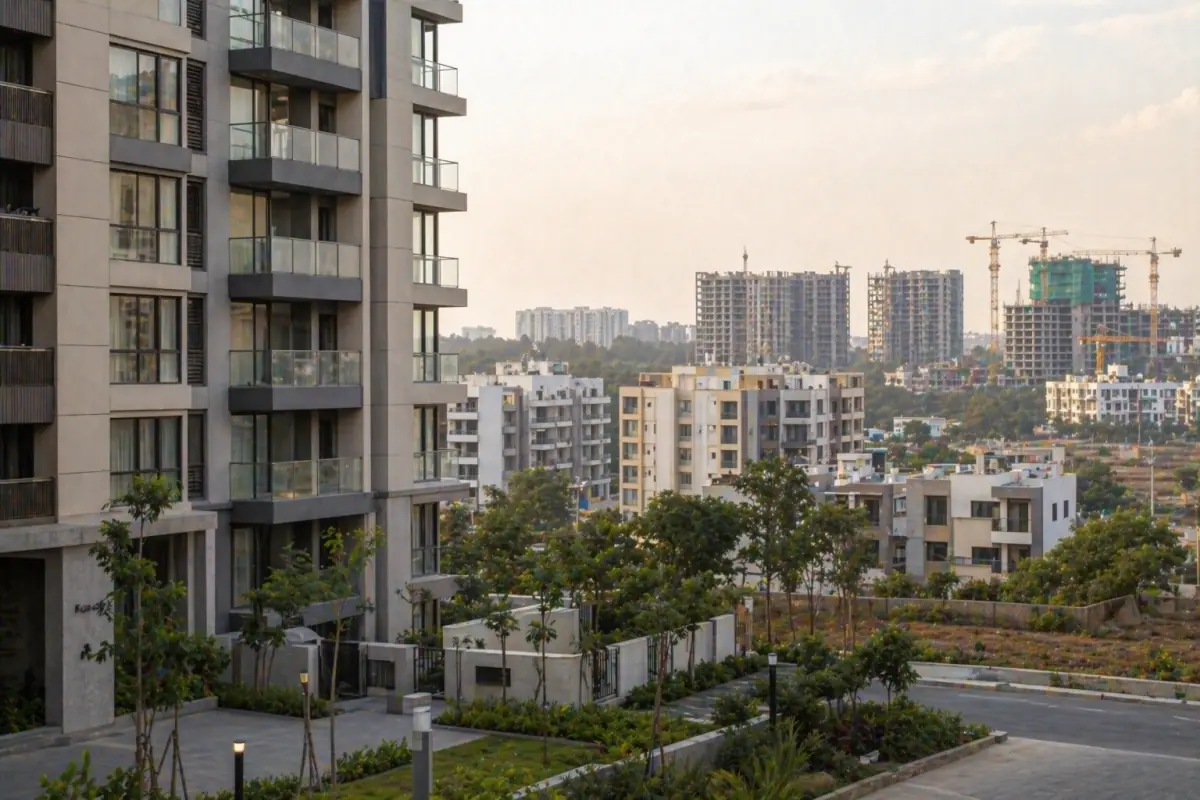
Sarjapur Road has crossed a point where pricing reflects both demand and positioning rather than just affordability. We do not publish a rate card for the corridor, and we would treat anyone else’s with caution: rates move by quarter, by launch, and by which side of a junction a parcel sits on, so a table published once and left up is wrong within months.
What is stable is the shape of the spread — the reasons one pocket prices above another. Those are worth understanding, because they are what you are actually buying:
- Distance from the ORR interchange. The pockets nearest Carmelaram and the ORR edge carry the highest rates on the corridor, because the commute they remove is the one most buyers are paying for.
- Approach road condition and width. Two projects on the same short stretch can price differently because one sits on the main road and the other behind a stretch that floods or bottlenecks.
- Water infrastructure. Pockets outside the piped network price lower and cost more to live in. That gap does not show in the rate; it shows in the monthly bill.
- How much premium supply has already launched nearby. A pocket with several concurrent luxury launches prices differently from one with a single project, in both directions — more competition on entry price, more comparable stock at resale.
To get the current number rather than a stale one: ask each developer for the rate on the specific unit in writing, and cross-check it against the sale consideration on registered transactions in the same survey number through the Karnataka Department of Stamps and Registration’s Kaveri Online Services portal. That is the price someone actually paid, which no listing rate is.
Over time, this pricing spread creates segmentation within luxury itself. Buyers begin choosing between location strength, space, and long-term positioning rather than simply budget.
The 12 Trends Shaping Luxury Apartments in 2026
Luxury housing in Sarjapur Road is being influenced by structural shifts rather than short-term cycles.
1. Luxury supply is structurally increasing
Developers are allocating a larger share of new launches to premium and luxury segments. This reflects a shift in demand rather than a temporary spike. Over time, this increases competition within the segment and raises expectations around planning and execution.
2. Premium housing demand in Bangalore is holding up
Higher launch volumes and sustained absorption indicate that demand is not slowing. This creates consistency in pricing but also reduces the margin for poorly planned projects.
3. Ticket sizes are moving upward
Larger configurations are taking a bigger share of launches than they did. This changes buyer expectations from “upgrade” to “long-term residence,” where usability and flexibility matter more than they did when the same buyer was trading up every few years.
4. HNI allocation to real estate is increasing
A larger share of wealth is being allocated to residential property. This shifts what buyers in the segment say they are looking for — asset stability and legacy value rather than short-term gains — which in turn shapes what developers build.
5. Branded developments are gaining preference
Buyers increasingly associate brand with execution reliability. Over time, this leads to consolidation where stronger developers capture a larger share of demand.
6. NRI demand is returning at scale
NRIs are actively investing in larger homes, particularly 3 and 4 BHK configurations. This influences pricing and increases demand for well-managed projects.
7. Sustainability is becoming standard
Green-rated homes are no longer seen as premium differentiators. Buyers expect water management, energy efficiency, and lower operational costs as part of the baseline.
8. Wellness-focused design is gaining importance
Ventilation, natural light, and air quality are influencing how homes are designed. Over time, these factors affect comfort more than visible amenities.
9. Vastu is becoming a consistent requirement
Orientation and layout alignment are increasingly considered during selection. Because a share of the buyer pool screens on this before anything else, it narrows or widens the number of people a unit can later be sold to — which is the mechanism, rather than any premium the orientation carries by itself.
10. Vertical luxury is becoming common
High-rise developments are increasing, changing skyline and density. This allows better views and planning but also increases reliance on lift and shared infrastructure.
11. Market consolidation is visible
A smaller number of developers are capturing a larger share of demand. This reduces risk for buyers but also limits variation in offerings.
12. Infrastructure is shaping long-term demand
Metro Phase 3A and other projects will influence value over time, but their impact is gradual rather than immediate.
Infrastructure That Will Influence Demand
Infrastructure continues to shape long-term positioning, but timelines need to be understood clearly.
- Metro Phase 3A (Sarjapur–Hebbal) is approved, with execution expected over the next decade
- STRR and Peripheral Ring Road will improve regional connectivity
- SWIFT City is expected to influence employment distribution
In the short term, road connectivity remains the primary factor. Over time, infrastructure begins influencing pricing and demand more visibly.
Answer Block
Sanctioned infrastructure is a claim on the future; the road you drive today is a fact. Evaluate current usability first — the approach road, the water connection, the commute you would actually make — and treat anything not yet built as exactly that, checking its status with the agency responsible rather than a sales office.
Sarjapur Road vs Other Luxury Corridors
| Corridor | What it is selling | What you give up |
|---|---|---|
| HSR / Koramangala | Established premium; central address, deep resale market | The most expensive entry of the four, for infrastructure that is already fully built |
| Hebbal | Airport access and north-side employment | Distance from the southern and eastern tech belt |
| Whitefield | Operational metro connectivity today, not a future line | A mature market where the connectivity premium is already in the price |
| Sarjapur Road | Multi-directional employment access; infrastructure still ahead of it | Road-dependent commuting until Phase 3A lands, and uneven water infrastructure |
Sarjapur Road sits between the established zones and the emerging ones: some of what it is selling exists today, some is sanctioned and not built, and the split between the two is the thing to establish before you commit. We have deliberately left rates out of that table: a corridor-level average is the least useful number in this decision, and the honest comparison is what each corridor is actually selling you.
Who Is Buying Luxury Homes Here

Buyer profiles in this segment are more defined than before.
- Tech founders and senior professionals prioritise proximity and quality
- NRIs focus on long-term value and ease of management
- HNIs evaluate projects based on legacy and asset value
Over time, buyer expectations are shaping how projects are designed and positioned.
NRI Buying Reality in 2026
NRI participation in this segment has increased significantly, but the process remains complex.
- FEMA regulations govern purchase eligibility
- TDS applies on rental income and resale
- Power of Attorney is commonly used for transactions
Many NRIs prefer branded developers due to trust and execution reliability.
Answer Block
NRI buyers prioritise legal clarity, developer credibility, and ease of management. Projects that simplify these aspects tend to attract stronger demand.
Vastu and Design Preferences in Luxury Homes
Vastu has become a consistent factor in luxury housing decisions.
- East-facing units are more sought after, and developers price the facing accordingly — ask for the floor and facing schedule in writing
- Layout alignment influences long-term satisfaction
- Developers are adapting designs to incorporate these preferences
Over time, these considerations shape who the eventual buyer pool for a unit is.
Green Luxury and Sustainability Shift
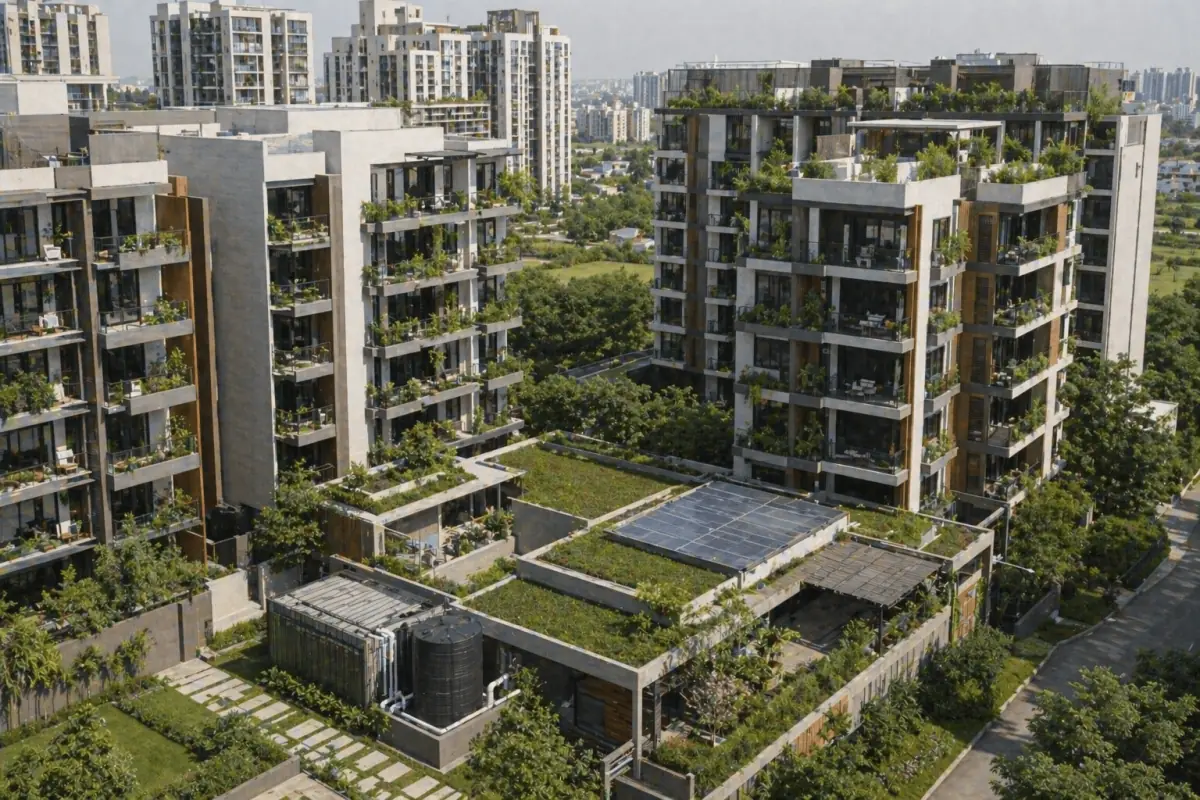
Sustainability is becoming a measurable factor rather than a marketing feature.
- IGBC certification is increasingly expected
- Water management and energy efficiency are key considerations
- Buyers evaluate long-term operational efficiency
The saving is real but project-specific: it comes from the systems actually installed and how the building is run, not from the certificate. Ask for the design-stage documentation and the monthly utility and maintenance bills from a completed project by the same developer.
Case Insight: How Modern Projects Are Responding
Projects like Suyug’s developments reflect these broader shifts.
- Focus on layout efficiency and usability
- Integration of sustainability features
- Alignment with buyer expectations around planning
These elements are becoming baseline expectations rather than differentiators.
Risks Buyers Should Factor In
Despite strong demand, certain risks remain relevant.
- Traffic congestion during peak hours
- Infrastructure timelines extending beyond expectations
- Variation in project execution quality
Over time, these factors influence both daily experience and asset performance.
Luxury housing in Sarjapur Road is no longer defined by isolated features or pricing alone. The direction of the market is being shaped by broader shifts in demand, design, and infrastructure. Understanding these patterns helps create clarity in a segment where most options appear similar at first glance.
Frequently asked questions
It remains one of the corridors where projects using the luxury label are concentrated, and where infrastructure programmes are under way. Whether it suits you depends on the micro-location rather than the corridor: the experience varies sharply between pockets, and that variation drives both daily convenience and what the home is worth later. Drive the specific approach road and check the water connection before you weigh the corridor at all.
There is no single average, and we do not publish one. The corridor is a set of micro-pockets that price differently depending on distance from the ORR, road width and condition on the approach, water infrastructure, and how much premium supply has already launched nearby. Ask each developer for the current rate on the specific unit and cross-check the registered sale consideration for recent transactions in that survey number on Kaveri Online Services.
We do not publish a return expectation, and we would not trust one. Assess it on things you can verify: RERA registration and completion date, units per acre from the filed site plan, layout efficiency measured as RERA carpet area against quoted super built-up, the BWSSB connection, and the developer’s occupancy certificate record on completed projects. Then check registered transactions for comparable units in the same survey number on Kaveri Online Services. That is evidence; a projected return is not.
Rising ticket sizes, sustainability, Vastu alignment, and NRI demand are among the key factors shaping this segment.
Yes, a significant portion of demand comes from NRIs, especially for larger configurations. Ease of management and legal clarity influence their decisions.
No. It is approved, with construction and commissioning timelines that run years out — BMRCL publishes the current schedule, and that is the version to rely on rather than a sales-office map. Treat it as sanctioned and undelivered when you weigh it.
Was this useful?
Comments
Was this useful?
Schedule a site visit
Leave your details and the team will call back to fix a convenient date.