
Snagging Before You Accept Handover: What to Inspect, and How to Record It

SUYUG Infra
Short briefing · 1,663 words · 8 min read · 3 questions answered
In this article · 9 sections
A snagging visit is not a walk-through with a torch. It is the last moment at which a defect is unambiguously the builder's, recorded in a form that survives a year of forgetting, and the recording is the part everyone skips and the part that decides whether a claim later holds.
Before you go: what to carry, and the two hours to allow
Set aside a long visit and go in daylight. Artificial light hides level problems and flatters finishes.
- The approved floor plan for your unit and the specification sheet or fit-out schedule annexed to the agreement. Without these you are inspecting against memory.
- A phone with a torch, a camera and a spirit-level app; a small spirit level if you have one.
- A plug-in socket tester or a phone charger, and a small lamp for testing points.
- A tennis ball or a marble, for floor slope, and a coin or a key for tapping tiles.
- Masking tape and a marker to tag each defect on the wall itself, and a notebook or a spreadsheet on the phone.
- A measuring tape. Areas, ceiling heights and door widths can be checked against the plan.
Work room by room in a fixed order and never double back. A wandering inspection produces a wandering list.
Wet areas first — the defects that are expensive to find later

Bathrooms, the kitchen and the utility area are where a missed defect becomes somebody else's ceiling.
- Pour a bucket of water on each bathroom floor and watch where it goes. It should run to the drain from every corner, with no pooling anywhere.
- Check the floor level at the door threshold. Water should not cross it.
- Run every tap and shower for several minutes, then look under the counters and inside the ducts for seepage.
- Fill each basin and the sink, then release — watch the drain rate and listen for gurgling, which points at venting.
- Flush every WC repeatedly. Check the cistern for a slow leak by watching the bowl when nothing has been used.
- Check the sealant lines around the counter, the shower area and the WC pedestal for gaps.
- Tap the wall and floor tiles across the whole surface. A hollow note means the tile is not fully bedded and will lift.
Doors, windows and shutters: the ten-second tests
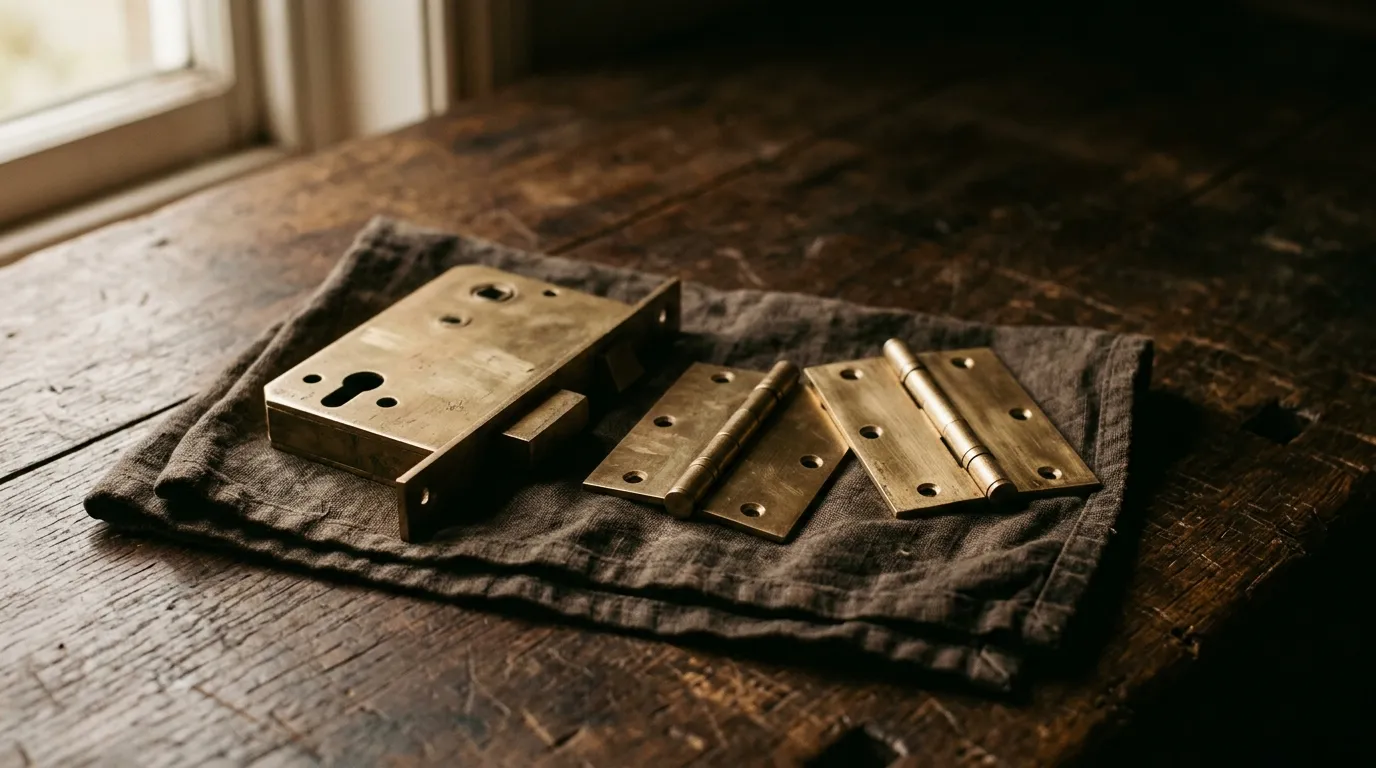
- Open every door to halfway and let go. A door that swings on its own is out of plumb.
- Close every door and look at the gap along the frame. It should be even top to bottom.
- Check that no door fouls a switch plate, a wardrobe shutter or another door.
- Slide every window the full travel. Listen for grit in the track and check the drainage weep holes are open.
- Lock and unlock everything, including the main door deadlock and every window latch.
- Open and close every wardrobe and kitchen shutter, and check the alignment of the whole run rather than each door alone.
- Check window and door seals against light and against a gentle push. This is what decides whether rain enters.
Electrical points, and testing every one of them
Every point, not a sample. A missed point is a chase cut through a finished wall.
- Test each socket with a tester or a charger, and each light point with a lamp.
- Operate every switch and confirm which fixture it controls. Mislabelled switching is common and easy to fix now.
- Check the distribution board: labelled circuits, a residual current device, and every miniature circuit breaker operating.
- Count the points against the specification sheet. Air-conditioner points, geyser points, chimney and hob points, washing machine point, and the provision for a water purifier are the ones usually short.
- Test the doorbell, the video door phone, the intercom and any home-automation panel.
- Check television and data outlets, and ask which are live and from where.
- Ask what the sanctioned load for the apartment is and how the standby supply is arranged — which circuits are on it.
Plumbing pressure and drainage, tested rather than looked at
- Open two taps in the same bathroom together and see what happens to the flow. Then open a tap and the shower at once.
- Check hot water reaches every outlet meant to have it, and how long it takes.
- Look for water hammer — a knock in the line when a tap is shut quickly.
- Check the balcony and utility drains by pouring water into them.
- Ask where the shut-off valves for the apartment are, and operate them.
- Check the water meter, if there is one, and note the reading with a photograph.
Floors, walls and ceilings
- Roll the ball across each room. A slope towards a wall is a laying defect; a slope towards a balcony door is not.
- Tap along every tiled floor. Mark the hollow ones with tape as you go.
- Check tile joints for consistent width, and skirting for a straight line against the floor.
- Look along each wall from one end, at a shallow angle, with the torch. Undulations, roller marks and patch repairs only appear in raking light.
- Check every internal corner for straightness and every ceiling junction for cracks.
- Look at the ceiling under every wet area above you, and at the underside of any beam near an external wall, for damp patches or staining.
Balcony thresholds and drainage — the Bengaluru-specific one
A city with concentrated monsoon rainfall and a lot of glazed balconies punishes two details in particular, and both are cheap to fix before handover and miserable afterwards.
- The balcony floor must fall away from the door, and the finished balcony level must sit below the internal floor level at the threshold.
- The balcony drain must be positioned at the low point and must actually take water — test it with a bucket, not by looking.
- Check the drip groove under any projecting slab or sill. Without it, rain tracks back along the underside and into the wall.
- Check the sealant and the flashing where the railing or the glazing meets the floor, and where any planter box abuts the wall.
- Ask where the air-conditioner condensate drains to. A condensate pipe discharging onto a balcony floor is a stain waiting to happen.
Recording: how to write a snag entry that is usable a year later
A list saying "bathroom tiles hollow" is unusable. It cannot be located, cannot be counted and cannot be shown to have been fixed. Every entry needs five fields, and it takes no longer to write them than to write the vague version.
| Field | What goes in it |
|---|---|
| Number | A serial number, written on the masking tape at the defect as well as in the list |
| Location | Room as named on the approved plan, plus the wall or the fixture — "Bedroom 2, wall shared with bath, near skirting" |
| Defect | What is wrong, in physical terms, not in adjectives — "four tiles sound hollow" rather than "poor tiling" |
| Evidence | Photograph filenames, each showing the tape with the serial number in frame; a wide shot and a close shot |
| Standard | The clause of the specification or the plan it departs from, where one applies |
Photograph the whole apartment as well, room by room, on the day. The date on the file is the evidence that a defect existed before you had the keys.
Getting the list acknowledged, and what to do if it is not
- Hand over the list in writing on the same day, and email it as well so there is a timestamp outside anyone's control.
- Ask for it to be acknowledged — signature, stamp or a written reply — and ask for a rectification date against each item rather than a general assurance.
- Do not sign a possession letter that records the apartment as accepted without defects while a list is open. Ask for the list to be annexed to it and referenced in it.
- Re-inspect after rectification against the same serial numbers and photograph each item again.
- Keep everything. Section 14(3) of the Act runs for five years from handing over of possession and requires rectification within thirty days of notice, and both limbs are counted from documents.
- Where a defect is not rectified, the route is a complaint to the Authority under section 31 of the Act, and it works far better with a dated, numbered, photographed record behind it.
Whether you can decline possession until defects are fixed is answered on the FAQ page, the handover stage and the documents around it are set out in the buyer guide, and a walk-through of a live site can be arranged through the site visit page.
Frequently asked questions
A written, room-referenced record of every defect and unfinished item found during an inspection of the apartment before possession is accepted, made so that each entry can be identified, photographed and re-checked after rectification. It is an evidentiary document, not a complaint letter.
Section 14(3) of the Real Estate (Regulation and Development) Act, 2016 provides that where any structural defect or any other defect in workmanship, quality or provision of services, or any other obligation of the promoter as per the agreement for sale, is brought to the promoter's notice within five years from the date of handing over possession, it is the promoter's duty to rectify it without further charge within thirty days — and on failure, the aggrieved allottee is entitled to compensation in the manner provided under the Act.
Possession is a step you take, not one done to you. Section 19(10) of the Act requires an allottee to take physical possession within two months of the occupancy certificate being issued for the apartment, so the sensible course is to inspect early, record everything in writing, and have the list acknowledged before signing a possession letter rather than after — and to read what the possession letter says you are accepting.
Was this useful?
Comments
Was this useful?
Schedule a site visit
Leave your details and the team will call back to fix a convenient date.