
Irrigating a landscape with recycled water: what it changes for the garden and the residents

SUYUG Infra
Short briefing · 1,578 words · 7 min read · 3 questions answered
In this article · 7 sections
"We irrigate the landscape with recycled water" appears on nearly every brochure for a large community and is explained on none of them. It is a real practice with real consequences that residents live with for years — in the soil, in what will grow, and in when the garden can be used. This post makes the sentence checkable.
The loop, end to end

Treated water reaches a lawn through four stages, and each one is a thing you can ask to see.
- Treatment. The community's sewage treatment plant produces treated output, to the standard its consent conditions require.
- Storage. The output goes to a treated-water tank, because production and demand do not coincide. A plant produces steadily through the night; a landscape drinks in a short window.
- Distribution. A dedicated irrigation network — separate from the potable network, and conventionally marked so nobody cross-connects the two — carries it to the planted areas.
- Application. Drip lines, subsurface lines or sprinklers deliver it to the root zone, usually on a timed controller.
The size of the storage tank is the part worth asking about, because it decides what happens on the days the landscape does not want water. Through a wet fortnight in the monsoon, irrigation demand collapses while the plant keeps producing, and the surplus has to go somewhere the consent permits. A community that has thought about this can tell you where. One that has not will discover the answer in July.
What treated water does to soil over several years
This is the part that matters most and gets discussed least, because it operates on a timescale longer than a sales cycle.
Treated sewage retains dissolved salts — sodium among them — that the treatment process is not designed to remove. Applied to the same soil day after day, those salts accumulate in the root zone. Two things follow. Salinity rises, which makes it harder for roots to take up water even when the soil is visibly moist. And where sodium builds up relative to calcium and magnesium, soil structure degrades: clay particles disperse, the surface seals, infiltration falls, and water starts to run off ground that used to absorb it.
None of this is a reason to avoid treated water. It is a reason to manage it, and good practice is well established:
- Test the soil periodically — salinity and the sodium balance — rather than waiting for the lawn to tell you.
- Let the monsoon leach. Rain is low in salts and flushes accumulated salt below the root zone, which is one of the quiet advantages of a Bengaluru landscape over a drier city's.
- Amend where needed. Gypsum is the conventional correction for a sodium-affected soil, along with organic matter to hold structure.
- Maintain drainage. Leaching only works if water can move down and away. A compacted, poorly drained bed accumulates salt no matter how much water passes over it.
- Do not irrigate more than the plants need. Over-irrigation with treated water delivers more salt, not more benefit.
Planting that holds up, and planting that does not
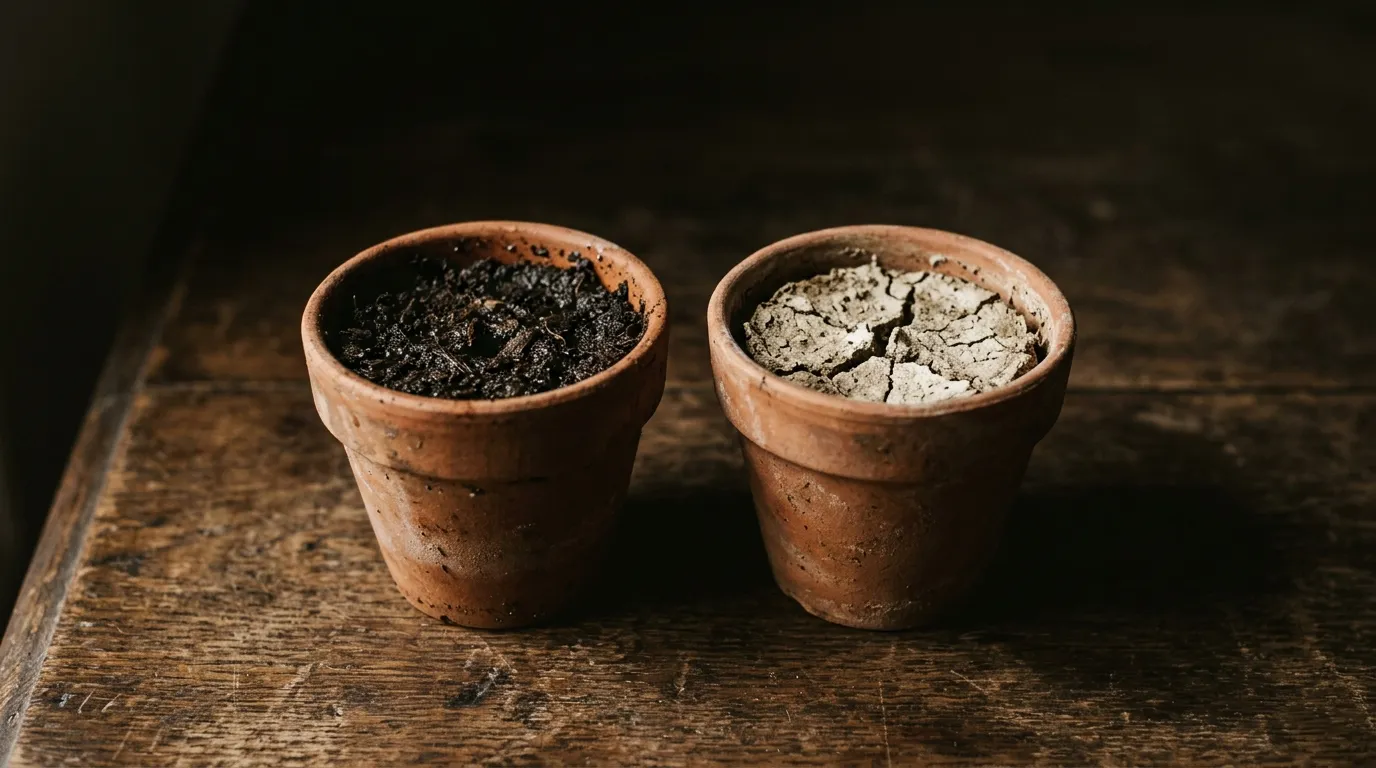
Species selection is where a landscape designer either takes the water source seriously or ignores it.
Plants tolerant of moderately saline conditions do well: many native and regionally adapted trees and shrubs, hardy grasses, and the tough ornamentals that populate Indian institutional landscapes for good reason. Plants with thin, sensitive foliage tend to show leaf-tip burn first, and are the early warning that salinity is climbing.
Two categories deserve explicit attention. Edible planting — a community vegetable patch or a herb garden — should be irrigated from the potable or rainwater supply, not the treated line, and any community kitchen garden needs that decision made deliberately and marked on the ground. And lawns, which are the most water-hungry element of any landscape, are worth questioning generally: a large ornamental lawn is a demand that must be met every week of the dry season, whatever the source.
A well-composed landscape on treated water leans on trees and shrub massing rather than turf, uses regionally adapted species, and keeps the delicate material in a small, well-managed area near the clubhouse where it can be looked after.
Why irrigation runs when it runs
Communities on treated water almost always irrigate at night or in the pre-dawn hours, and the reasons are practical rather than furtive.
- Evaporation. Water applied in the afternoon largely returns to the air. The same water applied at night reaches the root zone.
- Contact. Nobody is walking on the lawn at four in the morning, which removes the only real exposure question in a properly treated system.
- Production matching. The plant produces through the night; using the output then reduces how much has to be stored.
- Pressure. Domestic water demand is at its lowest, so the pumps have an easier time.
If you see sprinklers running across a lawn in the middle of a hot afternoon, that is a maintenance contractor working to a convenient schedule rather than a designed one — and it is a fair thing to raise.
Drip, subsurface and sprinklers
How the water is applied changes both the efficiency and the resident experience.
- Drip and subsurface lines deliver water at or below the soil surface, close to the roots. Very little is lost, foliage stays dry — which reduces fungal problems — and there is no spray. This is the appropriate default for treated water. The cost is maintenance: emitters clog, and treated water clogs them faster than fresh water does, so filtration and periodic flushing of the lines are part of the job.
- Sprinklers are used on turf because drip under a lawn is harder to maintain. They throw water into the air, which loses more to evaporation, wets foliage, and produces spray that can drift. With treated water, sprinkler zones want to be scheduled tightly outside the hours residents use the lawn.
The practical version of this question at a site visit: which parts of this landscape are on drip, which are on sprinklers, and when does each zone run?
What a healthy system looks like — and a struggling one
You can read most of this off the ground without any documents.
Healthy: even colour across planted areas; soil that looks friable rather than crusted; drip lines visible at the edges of beds and clearly in use; a filtration unit on the irrigation line that shows signs of servicing; a timer or controller that somebody sets; and a landscape whose species look regionally at home rather than imported.
Struggling: patchy lawns with pale or scorched margins; a white crust on the surface of beds or on planter rims; water pooling on beds that ought to drain; heavy reliance on annual replanting to keep the display looking new; dry zones at the far end of a run, which usually means clogged emitters or inadequate pressure; and, at the other extreme, permanently saturated ground where surplus treated water is being disposed of by irrigation rather than used by it.
That last one is worth naming plainly. If a landscape is being watered far beyond what it needs, the irrigation network has become a disposal route for output that has nowhere else to go — which is a plant-sizing and storage problem wearing a gardening costume.
How this connects to the water claims on a project page
"Water-saving systems" and "enhanced green cover" are the kind of phrases that appear on project pages, this site's included. Recycled-water irrigation is one of the specific things those phrases stand on, and it is checkable in a way a percentage is not: there is a plant with a capacity, a treated-water tank with a volume, an irrigation network with a layout drawing, and a landscape whose species list either respects the water it is given or does not.
Ask for those four. They exist as documents and as physical facts, and together they tell you far more than any performance figure quoted before a community has been lived in.
What water, waste and green cover mean across SUYUG's developments — stated per project, with the IGBC status each one actually holds — is set out on the sustainability page, and the questions buyers most often ask about services and handover are answered on the FAQ page.
Frequently asked questions
Where the plant is operated to its consent conditions and the landscape is irrigated by drip or subsurface lines outside the hours people use it, treated water is a standard and accepted use. The risk is not the concept but the operation — a plant running below standard, or sprinklers throwing aerosols across a lawn in the middle of the afternoon. Both are visible on a site visit.
Not in itself. Over years, though, treated water carries dissolved salts that accumulate in the soil unless they are flushed out, and that accumulation is what shows up as tip burn, patchy lawns and struggling ornamentals. Well-run landscapes manage it deliberately — monitoring the soil, choosing tolerant species, and letting the monsoon do the leaching.
Three reasons at once: far less water is lost to evaporation, residents are not in contact with the irrigation, and the plant's overnight output is used rather than stored. Night and very early morning irrigation is a sign of a system being run properly, not a sign that something is being hidden.
Was this useful?
Comments
Was this useful?
Schedule a site visit
Leave your details and the team will call back to fix a convenient date.