
A Complete Guide to Apartments in Sarjapur Road in 2026
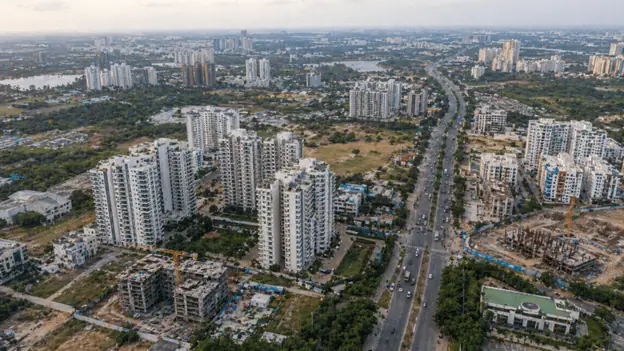
SUYUG Infraupdated
Short briefing · 1,724 words · 8 min read · 6 questions answered
In this article · 9 sections
INTRODUCTION
If you’ve been exploring apartments in Sarjapur Road, you’ve likely come across a wide range of options.
New launches, ready-to-move homes, large gated communities, and investment-led projects all exist within the same stretch. On the surface, it appears to be one of the most active residential markets in Bangalore today. But as you start going deeper, the questions become more specific. Is the location ready for long-term living? Will infrastructure keep pace with development? Are current prices justified? The versions of these we are asked most often are answered in one place.
These are important questions because Sarjapur Road sits at a transitional stage. It is no longer an early-stage location, but it is also not fully mature. That makes it both an opportunity and a decision that requires careful evaluation.
TL;DR
- Sarjapur Road is now a primary residential corridor in Bangalore
- Strong demand is driven by proximity to major tech hubs
- Infrastructure will define future livability and value
- Rates sit below the mature corridors, and the reason is infrastructure that has not been delivered yet
- Traffic, water, and legal clarity need careful evaluation
- The right choice depends on micro-location and long-term planning
WHY SARJAPUR ROAD HAS BECOME A KEY RESIDENTIAL HUB
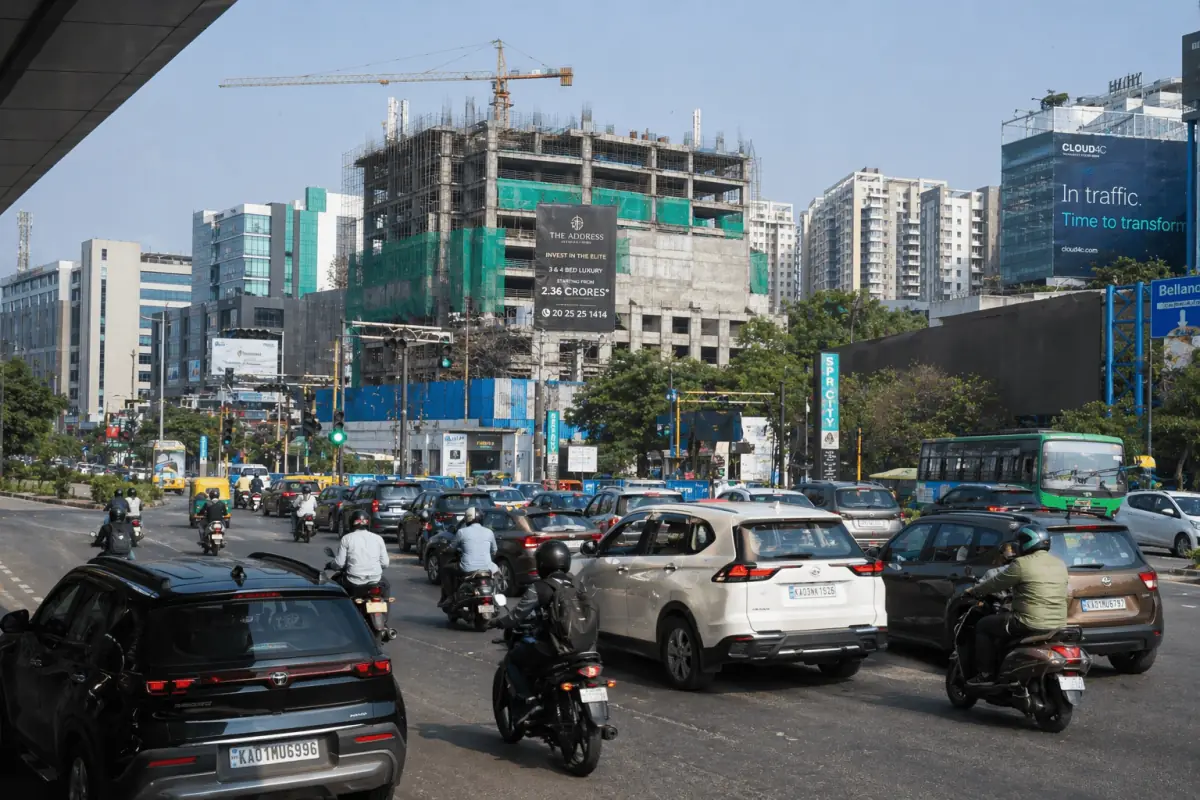
Sarjapur Road has grown steadily over the past few years, largely because of its location between major employment zones. It connects to Electronic City, Whitefield, and the Outer Ring Road, making it a practical choice for professionals working across these areas.
This proximity has led to consistent housing demand, especially among buyers who prefer to reduce commute time rather than deal with exhausting traffic daily. Over time, this has shifted the profile of buyers from investors to end-users.
Another important factor is the availability of newer developments. Compared to older parts of the city, Sarjapur offers larger layouts, gated communities, and more planned residential environments.
- Proximity to tech hubs creates stable, long-term demand
- Newer developments offer better layouts and community design
- Large parts of the corridor are still being built out, so what a location is today is not what it will be
This combination is what makes Sarjapur Road relevant in 2026.
WHAT SETS THE PRICE HERE IN 2026
Pricing in Sarjapur Road reflects its stage of development. It is no longer considered affordable, but it is still quoted below the more mature corridors.
The range varies widely depending on micro-location, developer, and configuration. Understanding what causes that spread is more useful than any single figure, because the figures move and the causes do not.
How the corridors sit against each other
| Location | What the rate is buying | Market Stage |
|---|---|---|
| Sarjapur Road | Employment access and a school belt already in place; metro and ring road sanctioned but not built | Growth phase |
| Whitefield | A delivered metro line and a mature retail ecosystem, both already in the rate | Mature |
| ORR (Bellandur) | Office adjacency, discounted for congestion | Saturated |
We do not print rates: they move by quarter, and a figure left on a page is read as current long after it stops being true. Take the number for a specific project from the developer in writing, and check it against registered sale considerations for that survey number on the Karnataka Department of Stamps and Registration’s Kaveri Online Services portal — that is what someone paid, rather than what someone is asking.
- Sarjapur is quoted lower because less of its infrastructure has been delivered
- Mature areas cost more because what you are paying for is already there
- Within Sarjapur, pricing depends heavily on exact location and project quality
It is also important to understand that price alone does not indicate value. Two projects in the same price range can differ significantly in layout efficiency, construction quality, and long-term usability.
INFRASTRUCTURE: WHAT WILL ACTUALLY CHANGE HERE
Infrastructure is the single biggest factor shaping Sarjapur Road’s future. It affects not just property value, but also how comfortable your daily routine will be.
The most important project is the Namma Metro Phase 3A (Hebbal–Sarjapur line). While approvals are still in progress, groundwork has begun in certain segments, indicating forward movement.
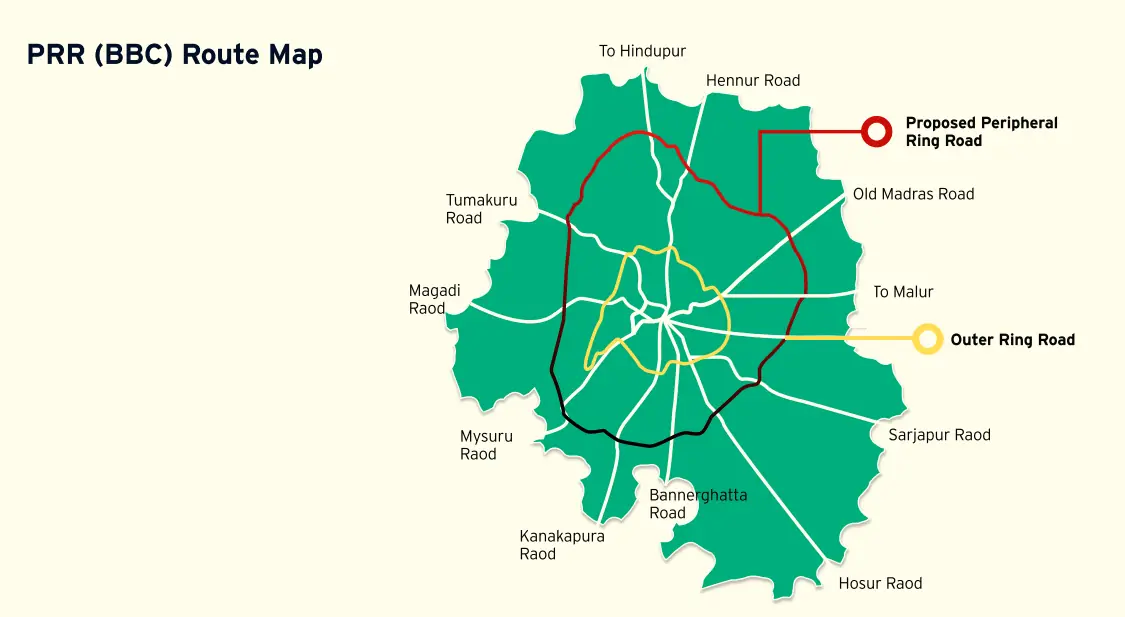
Alongside this, the Peripheral Ring Road (Bangalore Business Corridor) is expected to improve connectivity to North Bangalore and the airport.
- Metro connectivity can reduce dependence on road travel
- The ring road will enable faster cross-city movement
- Flyovers are expected to improve traffic flow at key junctions
At the same time, it is important to stay realistic about timelines. Infrastructure projects in Bangalore often take longer than expected, so decisions should not rely entirely on future connectivity.
MICRO-LOCATIONS: WHERE EXACTLY SHOULD YOU LOOK
Sarjapur Road is not a single uniform market. Different pockets offer very different experiences in terms of connectivity, pricing, and livability.
Choosing the right micro-location can have a larger impact than choosing between projects.
Key Micro-Locations Comparison
| Area | Strength | Consideration |
|---|---|---|
| Sompura Gate | Newer stock, a major IT employer on the same road | Infrastructure still developing |
| Carmelaram | Better current connectivity | Slightly higher pricing |
| Gunjur | Balanced pricing and access | Mixed project quality |
- Sompura sits where most of the planned infrastructure is still ahead of it, which asks for patience
- Carmelaram works well for immediate connectivity needs
- Gunjur offers a middle ground between price and access
Your decision here should depend on whether you are planning for present convenience or future growth.
REAL CHALLENGES YOU SHOULD NOT IGNORE
While Sarjapur Road has strong advantages, it also comes with practical challenges. Ignoring these can lead to a mismatch between expectations and reality.
Traffic congestion remains one of the most common concerns, especially during peak hours. Water supply is another factor that varies across projects.
- Traffic at key junctions can increase commute time significantly during peak hours
- Water supply often depends on a mix of borewell, tanker, and Cauvery sources
- Rapid construction can lead to temporary dust and noise issues
In many cases, these challenges improve over time as infrastructure develops. However, they still need to be evaluated at the time of purchase. It is also useful to visit the area at different times of the day before making a decision. Peak hour traffic, noise levels, and overall movement can vary significantly, and experiencing this firsthand can give a more realistic picture of what daily life will feel like.
LEGAL AND BUYING CHECKLIST
Legal clarity is critical when buying property in Sarjapur Road, especially because parts of the area fall under different jurisdictions.
Taking the time to verify documents helps avoid complications later.
- Check RERA registration and approvals
- Verify land ownership history through EC and Mother Deed (EC, Khata, UDS and OC are all defined in the glossary)
- Confirm Khata status (A-Khata preferred)
- Ensure the availability of CC and OC before possession
For under-construction projects, it is also important to understand timelines, developer track record, and any pending approvals.
A structured approach to due diligence reduces risk significantly.
HOW TO EVALUATE APARTMENTS IN SARJAPUR ROAD
When comparing options, it helps to step back and look at a few key factors rather than focusing only on marketing or pricing.
Another useful way to evaluate a project is to think about how it will function a few years after you move in. It helps to look beyond the sample flat and consider how storage, layout, and daily movement will feel once the home is fully set up. In many cases, small inefficiencies in design only become noticeable after living there for some time, which is why a slightly more thoughtful layout can make a significant difference.
- Does the location reduce your commute meaningfully?
- Is the layout practical for long-term use?
- Are water and infrastructure concerns addressed clearly?
- Does the price reflect actual value or just branding?
Looking at these questions together gives a more balanced view of the project.
Developers like Suyug focus on planning homes that work well over time, where space, layout, and usability are designed to support everyday living rather than just initial appeal.
Sarjapur Road offers a combination of present-day practicality and future growth. The key is to look beyond surface-level features and evaluate how well a home will support your life over time.
Frequently asked questions
Yes, for many buyers it is a strong option, especially if you work in nearby tech corridors. The location offers a good balance between current livability and future growth due to ongoing infrastructure projects. However, the experience can vary significantly based on the exact micro-location and project you choose, so shortlisting carefully is important.
They can be, particularly because the area is still in a growth phase. The mechanism is employment: the corridor’s residential demand tracks the offices, campuses and road links that get built around it, so what to watch is job creation and infrastructure that has actually been sanctioned, not a forecast. Returns depend on choosing the right project, location, and timing rather than relying only on the overall area trend.
The main risks include traffic congestion, water dependency in certain pockets, and delays in infrastructure timelines. These issues are not uniform across the entire stretch, which is why evaluating the specific area becomes important. Understanding these factors upfront helps you avoid surprises after moving in.
Whitefield is more established and offers a stronger current infrastructure, making it suitable for immediate convenience. Sarjapur Road is quoted lower and has more of its sanctioned infrastructure still to be delivered. The better choice depends on whether you are paying for what is already built or waiting for what is not — and on which of the two you can actually verify has been sanctioned.
Metro connectivity is expected to play a significant role in the long term by improving travel time and accessibility. However, since timelines can shift, it should not be the only factor in your decision. It is better to evaluate current connectivity along with future plans.
You should verify legal approvals, check water availability, and understand the surrounding infrastructure. Visiting the area during different times of the day can also help you assess traffic and livability. Taking these steps ensures a more informed and confident decision.
Was this useful?
Comments
Was this useful?
Schedule a site visit
Leave your details and the team will call back to fix a convenient date.