
The STP in Your Basement: Where an Apartment’s Used Water Goes

SUYUG Infra
Short briefing · 1,385 words · 6 min read · 3 questions answered
In this article · 7 sections
Every large apartment development in Bengaluru has one. Almost nobody explains it to a buyer, and most residents learn what it is on the day it starts to smell. The sewage treatment plant is the least glamorous piece of infrastructure you will part-own, and it has more effect on daily life in a community than any amenity in the brochure.
What the plant does
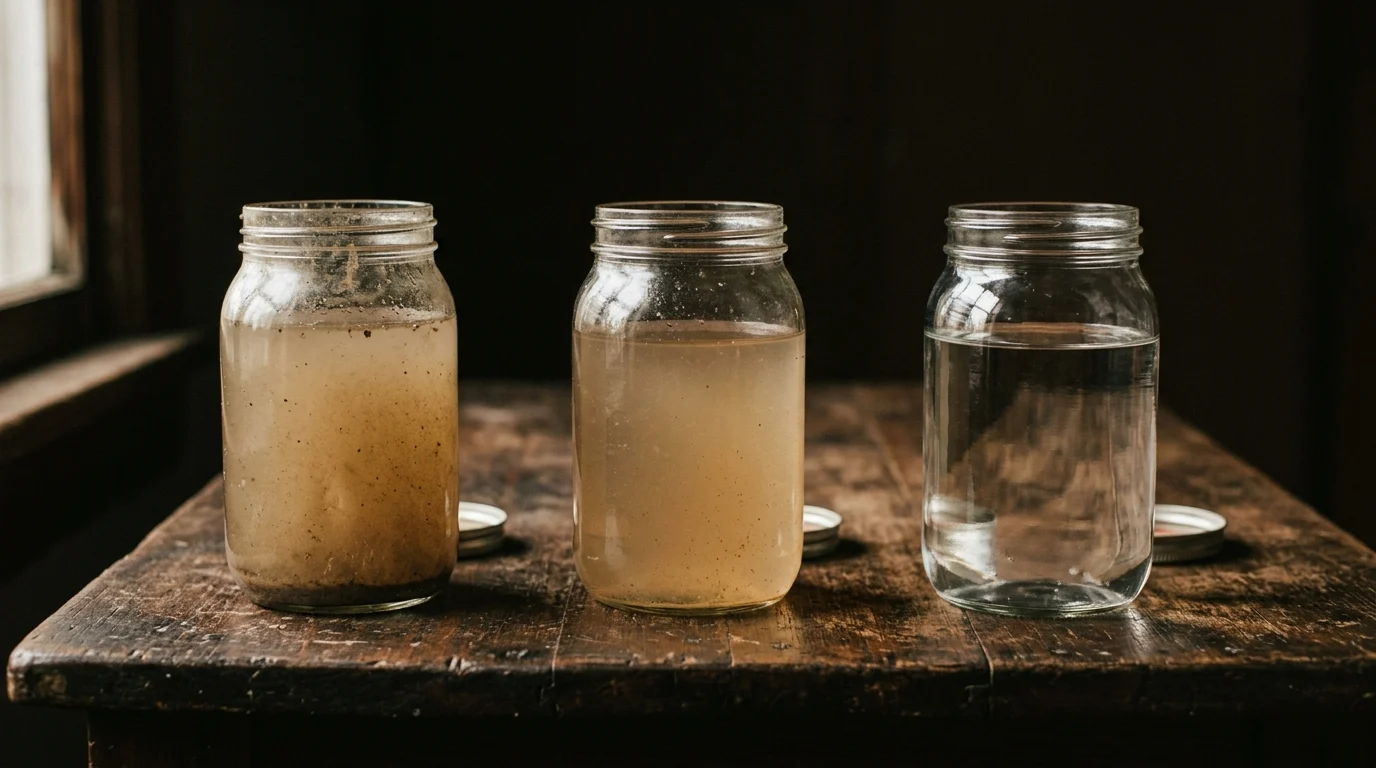
A city sewer takes waste water away and treats it somewhere else. A large development on the edge of a city frequently has no such sewer to connect to, or has one that cannot take the load — so the treatment happens on site.
The sequence, in plain terms: waste water arrives at a collection tank; solids and grit are screened out; the water passes through a biological stage where micro-organisms consume the organic content; it is then clarified, filtered and disinfected. What comes out is not drinking water. It is water clean enough for uses that do not involve a human mouth.
The plant is a living system, not a machine. The biological stage depends on a population of organisms that need consistent feeding, aeration and temperature. That is why a plant that is switched off for a fortnight does not simply switch back on, and why an under-occupied building can have as much trouble as an over-occupied one.
Who regulates it, and what the consent covers
The regulator is the state pollution control board — in Karnataka, the Karnataka State Pollution Control Board. Section 25 of the Water (Prevention and Control of Pollution) Act, 1974 requires the prior consent of the state board before establishing or operating any treatment and disposal system likely to discharge sewage, and before making any new discharge.
Consent is granted in two stages, to establish and then to operate, and it comes with conditions: the quality standards the treated water has to meet, the monitoring and record-keeping expected, and where the treated water may go. For larger developments, an environmental clearance under the central environmental notification adds its own conditions on water, waste and construction. The size at which each of these regimes is triggered is set by notification, and it is worth asking the developer which regime applies to the project rather than assuming.
The buyer-side point is short: the consent is a document with conditions in it, held by the project, and it is a reasonable thing to ask to see.
Dual plumbing: the second water line
A building that reuses treated water has two separate distribution networks. One carries fresh water to kitchens, bathrooms and drinking points. The other carries treated water to flush cisterns, landscape irrigation, common-area washing and sometimes car-wash points.
The two must never cross. Cross-connection is the one serious failure mode in a reuse scheme, and it is prevented by physical separation, by different pipe materials or colours, and by labelling at every valve and outlet. If you find a second, distinctly marked tap or line in a show flat's utility area, this is what it is.
What treated water is allowed to be used for is set by the consent conditions and the applicable standards. What it is never plumbed into is anything that supplies a kitchen tap, a drinking-water point or a shower.
The three ways an STP goes wrong
Undersizing. A plant sized to a design occupancy that the building then exceeds — or sized on paper for a phase that grew — cannot treat what arrives. The visible symptom is untreated or partially treated discharge; the practical symptom is odour and a plant permanently at capacity.
Under-staffing. A treatment plant needs a trained operator, daily readings, chemical dosing and periodic desludging. The cost of that sits inside the maintenance charge, and it is the first line a community under budget pressure cuts. A plant run by an untrained hand is a plant that will fail at the worst moment.
Odour control. Odour comes from anaerobic conditions — parts of the process going without oxygen. Blowers that are undersized or badly maintained, a plant sited too close to homes with no buffer, inadequate venting, or a collection tank that stagnates will all produce it. Odour is not an inevitable feature of on-site treatment. It is a symptom, and it has causes that can be identified.
What to look at on a site visit
- Where the plant is. Ask to be shown its location on the site plan, and see how far it is from the nearest homes, the children's play area and the clubhouse. Distance and prevailing wind both matter.
- Whether you can walk past it. On a running project, walk to it. Your nose is the fastest diagnostic instrument available and it costs nothing to use.
- Where the treated water goes. Ask for the reuse scheme: which fixtures, which landscape zones, what happens to the surplus in monsoon when the landscape needs none.
- Venting and buffer. Look for the vent stacks and the planted buffer between the plant yard and the buildings.
- Access for desludging. A tanker has to reach it periodically. If the access route runs past a lobby entrance, you will notice.
- The consent. Ask which consents the project holds and whether the plant capacity in them matches the number of homes being sold.
The questions to ask about the years after handover
The plant outlives the developer's involvement, and the terms on which it is handed over decide how the next decade goes.
- Who operates it in year one, and under what contract? Many developers retain a facility management contractor through an initial period. Ask what happens at the end of it.
- What does operation cost, and where does that sit in the maintenance charge? Power, consumables, operator, desludging, periodic overhaul. You want it visible as a line, not folded into a single figure.
- What is handed over with the plant? Drawings, the operation and maintenance manual, the consents, the commissioning records, the equipment warranties, the service history.
- What is the desludging and overhaul cycle, and is it funded from the recurring charge or from the sinking fund?
- Is there a monitoring record, and will the association receive it? Treated-water quality is measured, not assumed.
A community that asks these five questions before possession inherits a working plant. One that does not inherits an argument.
The short version
The STP is why your building can flush, irrigate and wash without drawing more fresh water than it needs to. It is regulated, it is documented, and it is entirely knowable before you buy. What separates a development where nobody thinks about it from one where everybody complains is not the technology — it is siting, sizing, staffing, and whether anyone planned for the day the developer leaves.
How water, waste and materials are handled across SUYUG developments is set out on the sustainability page; the plant, the buffer and the reuse scheme are all things worth walking to in person, which is what a site visit is for; and the vocabulary here is defined in the glossary.
Frequently asked questions
A sewage treatment plant: an on-site facility that receives everything that leaves the drains of the buildings, treats it through a sequence of biological and physical stages, and produces water clean enough to be reused for non-potable purposes. In most large Bengaluru developments it sits in or under a basement, or in a plant yard at the edge of the site, and it runs continuously.
For the purposes it is plumbed to — flushing, landscape irrigation, washing of common areas, and in some schemes cooling make-up — a properly operated plant produces water fit for use. It is not drinking water and is never plumbed to a drinking line. That separation is the whole reason a building with reuse has two water networks rather than one.
The residents' association, either directly or through a facility management contractor. This is the question to ask before you buy, not after: the plant needs trained operators, a consumables budget, a maintenance schedule and someone accountable for the discharge conditions. A community that inherits a plant without inheriting a plan for running it is the single most common way an STP goes wrong.
Was this useful?
Comments
Was this useful?
Schedule a site visit
Leave your details and the team will call back to fix a convenient date.