
Upcoming Apartments in Sarjapur Road: A 2026 Buyer’s Guide to Choosing Right
SUYUG Infra
Short briefing · 2,133 words · 10 min read · 5 questions answered
In this article · 10 sections
Introduction
Exploring upcoming apartments in Sarjapur Road in 2026 feels very different from what it did a few years ago. The challenge is no longer about identifying a growing location. That question has already been answered by the market.
Today, the difficulty lies in understanding how to enter this market at the right point. Rates have moved, supply is increasingly built to a higher specification, and infrastructure is still catching up in phases. This creates a situation where most options look similar at first glance, but behave very differently over time.
For buyers, especially working professionals and NRIs, this is not just a property decision. It is a long-term financial and lifestyle commitment. The real question becomes how to evaluate projects beyond brochures and pricing, and how to avoid decisions that look right today but feel restrictive a few years later.
TL;DR
- New supply on the corridor now launches at a higher specification than it did five years ago, and the entry-level stock has largely gone
- Rates vary more between micro-zones than between projects, so a corridor average describes nowhere
- Metro Phase 3A expected around 2033
- Rental demand is durable because the tenants work on the corridor; the yield itself depends on your entry price
- Micro-location drives long-term value
- Market requires filtering, not discovery
Sarjapur Road in 2026: The Shift in What Gets Launched
Sarjapur Road has transitioned from a peripheral growth corridor into a central residential zone with strong economic backing. This shift is not just about increased demand, but about how that demand has changed in nature.
The clearest indicator of this transition is what developers now choose to build. New launches on the corridor are pitched at a higher specification level than they were five years ago — larger configurations, more amenity, Tier-1 promoters holding most of the pipeline — which means the market is no longer catering to early-entry buyers. You can see this for yourself in the configuration mix on the K-RERA registrations for recent launches.
This creates a new dynamic for decision-making.
Buyers are no longer asking whether Sarjapur Road is an established corridor; that question has been settled. They are asking whether a specific project within this corridor justifies its pricing. The margin for error becomes smaller because most projects sit within a similar price range and promise similar features.
Over time, the difference between a good decision and a poor one becomes visible through:
- layout usability
- micro-location efficiency
- long-term livability
This makes filtering more important than discovery. Buyers who approach the market with a checklist mindset tend to perform better than those relying on price comparisons alone.
Pricing and Micro-Market Strategy
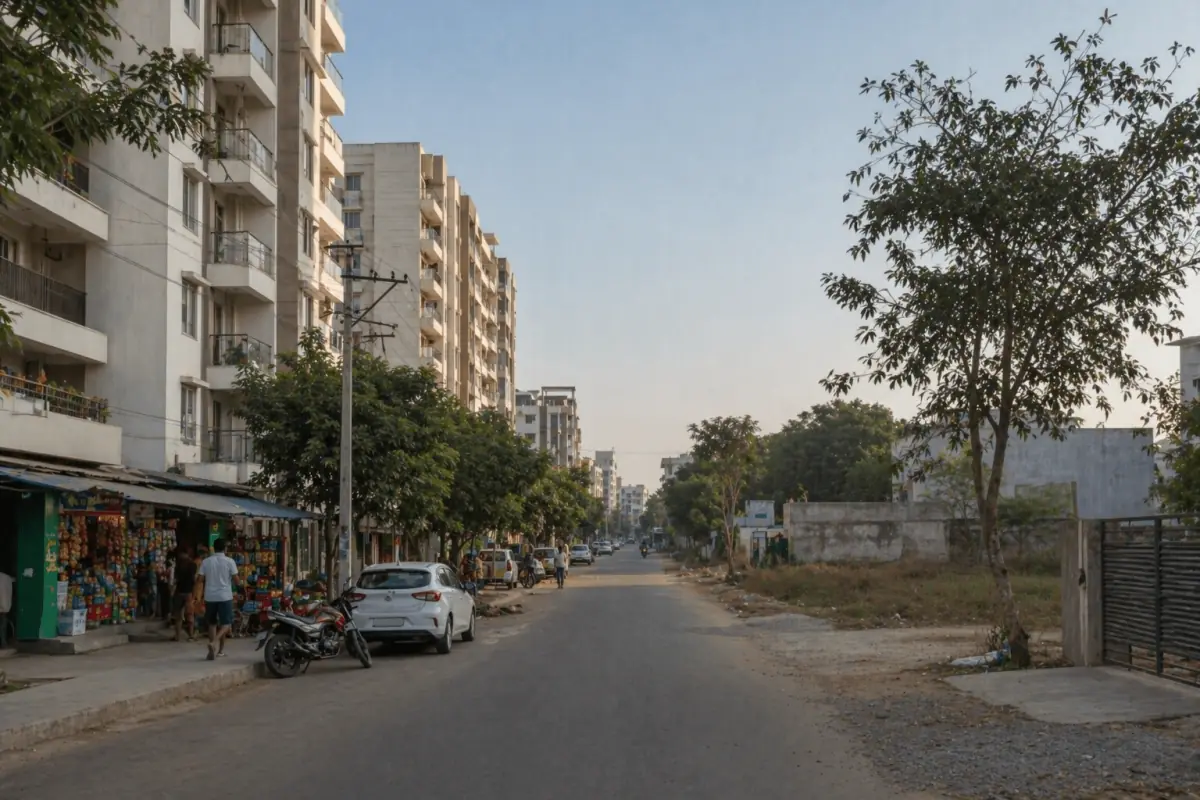
Sarjapur Road is not a single homogeneous market. It is a combination of micro-zones that function differently based on connectivity, infrastructure, and demand drivers.
| Micro-Zone | Position on price | Strategic Advantage |
|---|---|---|
| Carmelaram / Bellandur | Highest on the corridor | Strong rental demand, ORR access |
| Gunjur / Varthur | Below the ORR end | Future growth, metro alignment |
| Dommasandra | Toward the entry end | Entry pricing, industrial spillover |
| Sarjapur Town / Sompura Gate | Widest internal spread of the four | Township ecosystem |
The table ranks the zones against each other rather than printing rates. Rates on this corridor move by quarter and by launch, and a table published once and left up is read as current long after it stops being true. For the number on a specific project, ask the developer in writing and check it against registered sale considerations for that survey number on Kaveri Online Services.
At a surface level, these price differences appear to be budget variations. In reality, they represent very different trade-offs.
Higher-priced zones offer immediate convenience, which translates into:
- shorter commutes
- stronger rental demand
- higher liquidity during resale
Emerging zones provide more space within the same budget but depend heavily on infrastructure catching up. This creates a time-based dependency that buyers need to factor in.
Answer Block
Micro-location determines how the home performs after purchase. Price differences reflect convenience, demand, and long-term usability rather than just affordability.
Infrastructure Reality: Beyond the Headlines
Infrastructure is often the biggest driver behind buying decisions in upcoming apartments in Sarjapur Road, but it is also one of the most misunderstood aspects.
The most talked-about project is Metro Phase 3A, which will connect Sarjapur to Hebbal. While this is a major value driver, its timeline extends toward 2033, with ongoing design and approval complexities such as the double-decker corridor debate.
Alongside this, the development of SWIFT City, a 1,000-acre innovation hub expected to generate over 100,000 jobs, is reshaping the long-term economic outlook of the corridor.
These developments are significant, but they operate on a delayed timeline.
In the present:
- road infrastructure continues to carry the load
- traffic bottlenecks remain during peak hours
- connectivity varies significantly by micro-location
This creates a gap between expectation and lived experience.
Buyers who rely heavily on future infrastructure often underestimate how long they will be living in current conditions.
Answer Block
Infrastructure improves long-term value, but immediate decisions should be based on current commute, access, and livability conditions.
Buyer Psychology and Demand Drivers

The demand for new apartments in Sarjapur Road is driven by a specific group of buyers with clearly defined priorities.
Most buyers fall into:
- tech professionals in the 28–42 age group
- NRIs seeking stable long-term assets
- families prioritising schools and commute
These buyers are not just comparing prices. They are trying to solve real problems.
- Reducing daily commute stress
- Ensuring access to quality education
- Securing long-term financial stability
There is also an emotional layer involved.
- fear of entering at peak pricing
- concern over infrastructure delays
- desire for a better lifestyle without compromise
Over time, these factors influence decisions more than amenities or marketing.
Projects that align with these needs tend to retain demand, while those that focus only on positioning struggle to differentiate.
Over time, this pressure starts influencing how buyers filter options. A project that feels slightly expensive but reduces commute stress often becomes easier to justify than a cheaper option further out that lengthens the daily drive. Similarly, access to schools or daily conveniences begins to outweigh differences in amenities.
This is where many decisions get reframed. Buyers realise that what they are choosing is not just a home, but a structure for their daily routine. Small inefficiencies in location or planning tend to compound over time, while well-aligned decisions feel easier to live with even if they require a higher upfront commitment.
Investment Reality: Returns in a Mature Market
The investment story of Sarjapur Road has evolved. Buyers who entered when it was farmland were buying a different asset from the one on offer now. Today, the market operates differently.
- entry rates are higher than they were
- the corridor no longer moves as one market, so a corridor-wide read tells you little about a specific project
- what you get out depends on project quality and holding period, and neither is forecastable from a page
Rental demand remains strong, supported by a continuous IT workforce that lives on the corridor because it works on the corridor. That makes the income durable rather than large — what it converts to as a yield depends on your entry price, and you should compute it from live rents for the same configuration nearby rather than accept a band. This creates a more stable investment environment but requires more selective decision-making.
There is also a timing aspect that buyers need to consider. Entering an established market means the entry point alone is no longer doing the work. Instead, performance depends on how well the project sustains demand over time.
For instance, projects with better layouts, lower density, and stronger micro-location tend to hold value more consistently. On the other hand, projects that rely only on branding or launch momentum often plateau once supply increases around them. This makes project selection more important than market timing in the current cycle.
Over time, projects that combine:
- strong location
- efficient layouts
- sustainable design
tend to outperform others.
Answer Block
Investment returns now depend more on project quality and holding period than on early entry. The focus has shifted from quick gains to long-term performance.
Ground Reality: Living Conditions You Should Expect
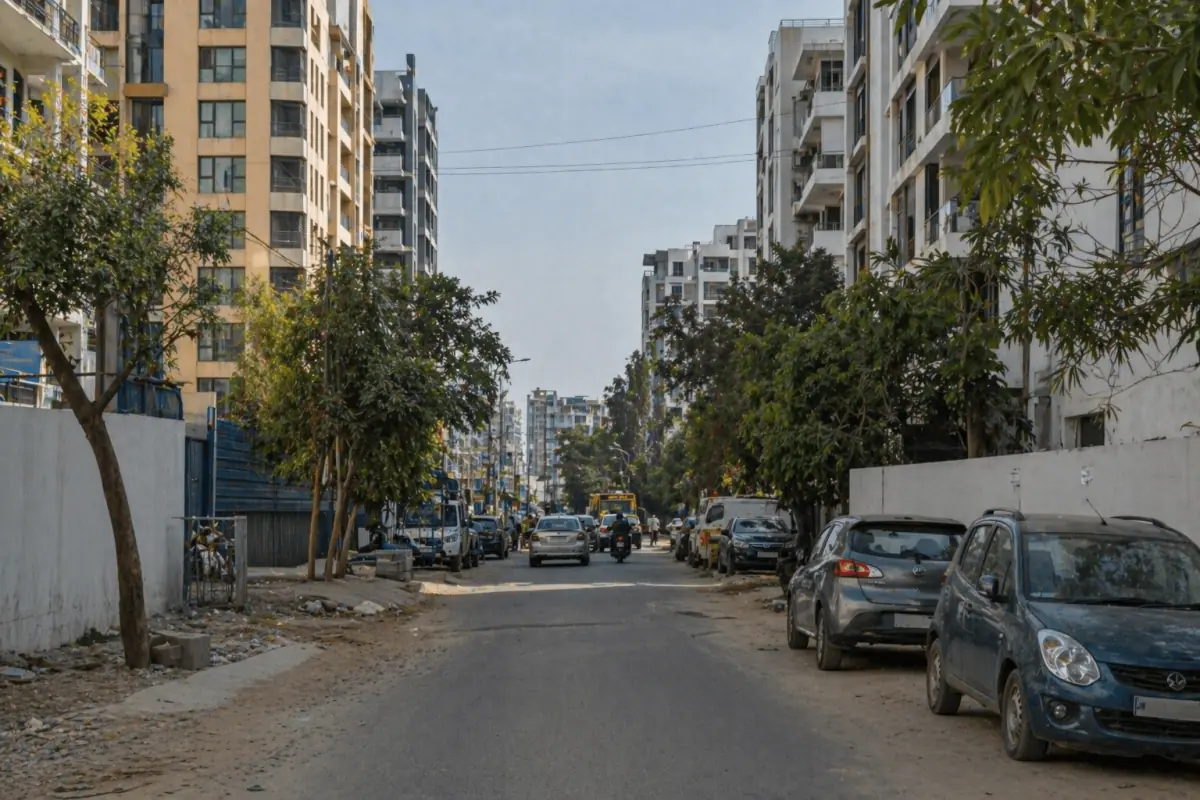
Most content about Sarjapur Road focuses on growth and opportunity, but real decisions depend on understanding the day-to-day experience.
Some key realities include:
- traffic congestion during peak hours
- dependence on tanker water in several areas
- uneven civic infrastructure
These factors do not make the location unattractive, but they require practical evaluation.
For example:
- proximity to ORR can significantly reduce commute stress
- well-planned communities can manage water and utilities better
- larger projects often provide internal infrastructure support
Over a few years, these factors start influencing satisfaction more than expected. Commute fatigue, water management, and access to essentials become part of everyday life. Buyers who account for these early tend to adjust better, while those who overlook them often feel the gap between expectation and experience.
This does not make Sarjapur Road a difficult place to live. It simply means that the experience varies significantly depending on where and how you choose within the corridor.
Evaluating Upcoming Apartments in Sarjapur Road
Choosing the right project requires a structured approach. For our own pipeline, what is coming is published before it is sellable — land parcel, location and configuration intent, with no price and no booking against any of it.
1. Micro-location clarity
Distance to work hubs, schools, and arterial roads directly impacts daily life.
2. Developer execution
Track record, construction quality, and delivery timelines are critical.
3. Layout and usability
Space efficiency, ventilation, and long-term adaptability matter more than size.
4. Infrastructure alignment
Check where a project actually sits against the sanctioned metro alignment and the named employment nodes — take the station list from BMRCL’s own Phase 3A documentation rather than a brochure, then walk it from the project gate and see for yourself.
A common mistake at this stage is overvaluing visible features such as clubhouse size or amenities, while undervaluing layout efficiency and location practicality. Over time, usability tends to matter more than features that are used occasionally.
This is why structured evaluation helps. It shifts the focus from what looks appealing during a visit to what continues to work during daily living.
Developers like Suyug focus on long-term usability and thoughtful planning, which aligns with how the market is evolving.
Final Decision Framework
Move forward if:
- the location supports your daily routine
- the project is well-planned and usable
- the pricing aligns with long-term expectations
Reconsider if:
- the decision depends only on future infrastructure
- micro-location is not clearly evaluated
- layout compromises are being ignored
Sarjapur Road in 2026 is no longer about entering early. It is about choosing correctly in a market where most options appear similar at first glance. The difference shows over time, in how the home fits your life and how well it performs as an asset.
Frequently asked questions
Yes, but decisions need to be more selective. Buyers should evaluate micro-location, project quality, and long-term usability rather than relying on general market growth alone.
We do not publish a corridor average, and one would mislead you if we did: the spread between the ORR end and the outer stretch is wide enough that the midpoint describes nowhere. Rates rise steadily as you move toward the ORR, driven by connectivity and demand. For the current figure on a specific project, ask the developer in writing and cross-check it against registered sale considerations for the same survey number on the Karnataka Department of Stamps and Registration’s Kaveri Online Services portal.
It matters over a long horizon and not at all to your commute this year, since construction is slated for 2029–2031. Buy on the connectivity that exists today, verify the station location against BMRCL’s own alignment documentation rather than a brochure, and treat the line as something you are waiting for rather than something you are paying for.
Rental demand is strong and durable, because it comes from an IT workforce employed on the corridor itself rather than from speculation. What that converts to as a yield depends entirely on your entry price and the specific unit, so build it rather than take a published band: achievable rent from live listings for the same configuration nearby, less maintenance, property tax and a realistic vacancy allowance, over total acquisition cost.
Focusing only on price or amenities without evaluating micro-location and daily usability. Over time, these factors have a greater impact on satisfaction and resale value.
Was this useful?
Comments
Was this useful?
Schedule a site visit
Leave your details and the team will call back to fix a convenient date.