
Premium vs Luxury Apartments in Bangalore: Key Differences
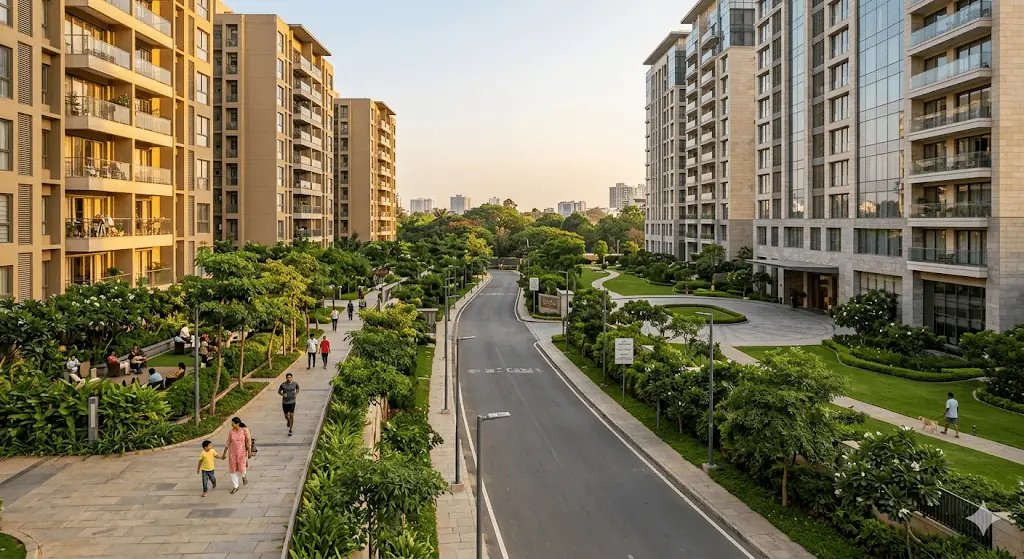
SUYUG Infra
Short briefing · 2,360 words · 11 min read · 6 questions answered
Premium Apartments in Bangalore vs Luxury: What the Difference Actually Means
Bangalore’s residential market in 2026 has more than one definition of high-end. Walk into any developer’s sales office and the words premium and luxury apartments in Bangalore are used interchangeably, applied to projects that share almost nothing in construction method, density or finish.
For a serious buyer the distinction matters. The two categories differ in structural specification, density, customisation scope, maintenance cost, and long-term return profile. Understanding where one ends and the other begins is the first step in evaluating whether a project is genuinely worth what it is asking.
TL;DR
- Neither “premium” nor “luxury” is a regulated category in Indian real estate — both are marketing labels, and no standard has to be met before either is used
- Each label usually stands in for a bundle of specifications: unit density, carpet efficiency, construction methodology, customisation scope and material specification — every one of which is checkable line by line
- Structural differences including construction method, carpet area efficiency, and density matter more than the marketing label
- Sarjapur Road’s mid-corridor projects are worth reading specification-first, against the label on the hoarding rather than through it
- RERA registration, construction methodology, IGBC certification, and the developer’s OC track record are the four checks that matter regardless of segment
Defining the Segments
There is no statutory definition of either word in Indian real estate, so no threshold marks the boundary and no regulator polices the claim. What the labels carry, when they are used honestly, is a bundle of specifications — density, customisation scope, and material specification. Read the bundle, not the badge.
Premium, as the word is normally used, describes standardised high-quality finishes applied consistently across every unit in a project, good carpet area efficiency, professional amenity infrastructure, and RERA-backed delivery. The proposition is consistency rather than bespoke work. If a project claims the label, the finishes in the sample flat should match the ones specified for the unit you are buying — ask to see both written down.
Luxury, as used, implies density has dropped and customisation has started: fewer units per floor, bare-shell or warm-shell delivery options, and material specifications that are imported rather than standardised. At that specification level you would expect the delivery condition and the brand of every imported material to be named in the agreement rather than described in adjectives. Check line by line that they are.
Ultra-luxury is the label used where private lift lobbies, column-free interiors with complete layout flexibility, and concierge-level services appear — a building run more like a serviced residence than a standard gated community. Those are three specific, verifiable things. If the spec sheet does not carry all three, the word is doing work the building is not.
| Label | Density | Finish Type | Customisation | Verify it from |
|---|---|---|---|---|
| Premium | 40–80 units/acre | Standardised high quality | Low | RERA site plan; sample flat spec vs. your unit’s |
| Luxury | 20–40 units/acre | Semi-custom or warm shell | Moderate | Delivery condition and material brands named in the agreement |
| Ultra-Luxury | Under 20 units/acre | Bare shell or bespoke | High | Structural drawings; lift lobby and service scope in writing |
The Structural Differences That Matter
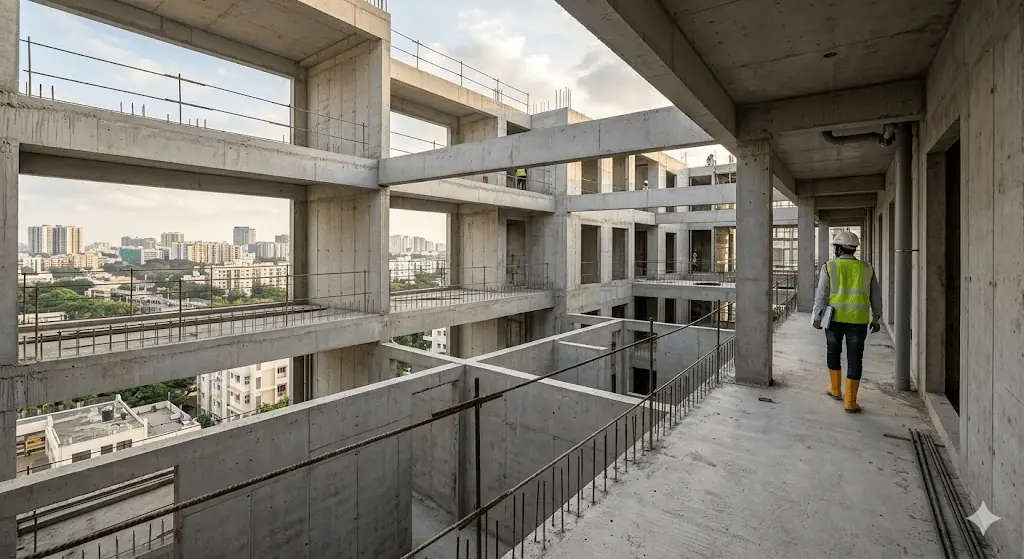
The finish quality shown in a brochure render is not the most important structural difference between segments. The more consequential differences are the ones that affect how the building performs over a 10 to 15 year holding period.
Construction methodology
Premium projects increasingly use MIVAN aluminium formwork, a monolithic concrete casting system that pours walls, slabs, and columns in a single continuous operation. This eliminates the joints and gaps of conventional brick and mortar construction, reducing long-term seepage, crack propagation, and maintenance requirements.
Luxury projects add column-free flat-slab structural systems on top of monolithic construction. This allows interior walls to be repositioned during fit-out, making bare-shell customisation genuinely possible rather than decorative. For a buyer who wants to design their own interior rather than accept a standardised layout, this structural difference is the one that enables it.
Carpet area efficiency
Premium apartments in Bangalore typically deliver carpet efficiencies of 68 to 72 percent of super built-up area. Luxury projects target 72 to 78 percent. On a 2,000 sq ft super built-up apartment the difference is 80 to 120 sq ft of actual usable space — the difference between a bedroom and a study in practical terms.
RERA carpet area for any project is verifiable on rera.karnataka.gov.in. Buyers should always compare the RERA-registered carpet area figure rather than super built-up area when evaluating value across projects.
Density
Premium projects run 50 to 80 units per acre. Luxury targets 20 to 40. This difference affects noise insulation between units, lift waiting times, parking space allocation, and the quality of common areas. It is also one of the few things about a project you can confirm before a single tower is up: it is fixed at the planning stage, cannot be changed afterwards, and is stated on the RERA-filed site plan. Divide total units by total land area yourself rather than accepting the figure in the brochure.
The Financial Reality
Rental yield
Yield is not a property of a segment, and we publish no yield band for either. It is the output of four inputs that pull against each other on any specific unit: the rent it commands, the all-in acquisition cost it sits against, the size of the tenant pool that can pay that rent, and the maintenance it carries once occupied. A higher-specification unit commands more rent in absolute terms — and sits against a higher cost, a smaller pool of tenants who can pay it, longer void periods between tenancies, and higher maintenance expectations. Compute both on the specific units you are comparing, using live listings for the same configuration nearby, and deduct a realistic vacancy allowance rather than assuming full occupancy.
Value over time
We do not forecast appreciation for either segment, and we do not print a percentage for any past cycle either — the figures usually quoted for one are estimates of listing rates rather than records of what buyers paid. What you can check is the mechanism. Registered sale considerations for the same survey number, on the Karnataka Department of Stamps and Registration’s Kaveri Online Services portal, show what actually changed hands and at what price. Ask the developer separately what the same unit type launched at and what it is quoted at today. Those two exercises together tell you more about one project than any corridor-level number will about all of them.
Maintenance cost
This is the variable most buyers underweight at the time of purchase, and it is the one you can get in writing before you sign. The higher the specification, the more there is to run — more common area, more staff, more plant — and the monthly society maintenance rate moves with it. Across a holding period that difference reduces net yield on an investment property and adds to holding cost on an owner-occupied one. Ask the developer for the projected per-square-foot maintenance rate in writing, and ask residents of their completed projects what it actually settled at, which is usually higher.
The Eco-Luxury Layer
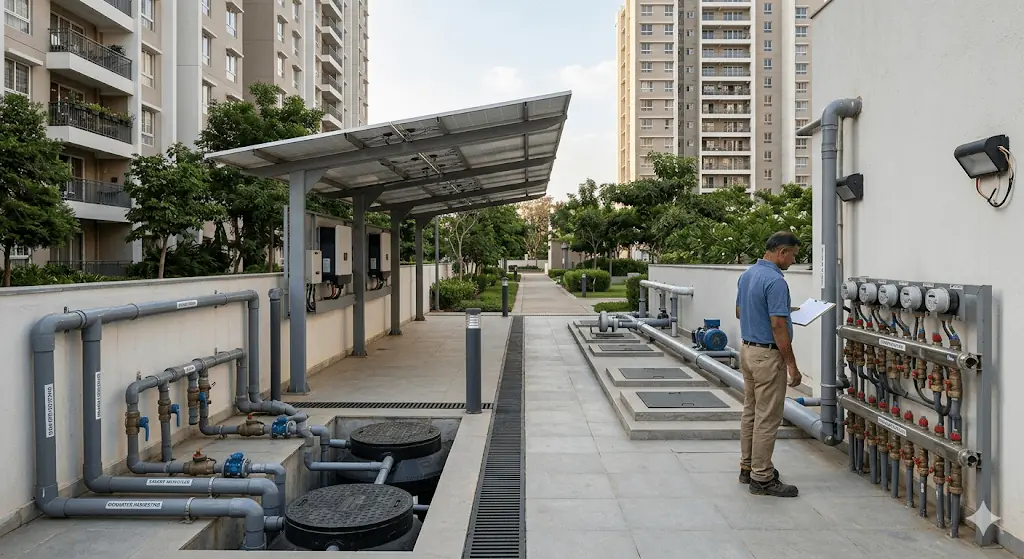
Green certification has shifted from a marketing feature to a financial variable in Bangalore’s premium residential segment. An IGBC pre-certification covers energy-efficient lighting systems, solar power integration, smart water metering, rainwater harvesting, and zero natural wood specifications — assessed at the design stage, which is not the same as certified on completion.
The operating saving is real but project-specific: it comes from the systems actually installed and how the building is run, not from the certificate. Rather than accept a percentage from anyone, ask for two things — the design-stage documentation showing which systems were assessed, and the actual monthly utility and maintenance bills from a completed project by the same developer. Those two together tell you what the green specification is worth on this building. For buyers comparing a certified project with a non-certified one at similar base prices, it is worth specifically asking for rather than assuming.
The Sarjapur Road Position
Mid-corridor projects on Sarjapur Road are marketed as premium while carrying specifications that elsewhere in Bangalore tend to appear under the luxury label: MIVAN construction, no shared walls, green-building assessment, sub-70 units per acre, and carpet efficiencies above 70%. Every item on that list is a document rather than an adjective. Ask for each one by name.
Metro Phase 3A, the Peripheral Ring Road and SWIFT City are the infrastructure programmes attached to the corridor’s forward case. Each is sanctioned and none is delivered, which is the only honest way to describe them. Check the corridor’s past movement yourself against registered sale considerations rather than a quoted percentage, and check the current status of each programme with BMRCL and the state agencies that publish it before you price any of it into a decision.
Suyug’s projects at Sompura Gate, The1 (235 units, RERA: PRM/KA/RERA/1251/310/PR/051224/007268) and Saffron (110 units, RERA: PRM/KA/RERA/1251/308/PR/140825/008000), carry MIVAN construction, no shared walls, and tower-level RERA registration. On green building: THE1 holds IGBC pre-certification — a design-stage assessment by the Indian Green Building Council, ahead of the final certificate awarded on completion. Saffron is designed to align with IGBC guidelines and has not been assessed by IGBC. These are different claims and we do not use them interchangeably.
Buyer Decision Framework
Three questions determine which segment is right for a given buyer.
What is your primary use case?
Personal use buyers should weight density, configuration, and finish specification. Investors should weight yield, corridor employment depth, and management friction.
What is your holding horizon?
A short horizon puts the weight on entry cost, liquidity, and how deep the resale market is for that exact configuration — check how many comparable units in the same pocket have registered on Kaveri in the past year. A long horizon puts it on build quality, the maintenance trajectory, and how well the tenant and buyer pool for that specification is likely to hold.
What is your maintenance budget?
Get the projected per-square-foot maintenance rate for every project on your shortlist in writing, and multiply it out on the actual area. On a rented property that number directly reduces net yield. On a self-occupied property it affects annual holding cost in ways that compound across a long tenure.
Explore Suyug’s apartments in Sarjapur Road at Sompura Gate and read the specification against the label yourself. Contact our team for floor plans, RERA documentation, and a virtual site visit.
One Thing Worth Sitting With
The premium versus luxury distinction in Bangalore is not about which category is better. It is about which is right for a specific buyer’s use case, horizon, and budget. Neither word is defined and neither is enforced. What is defined is the construction methodology, the units per acre on the RERA site plan, the carpet area figure, the green-building document and the developer’s OC record — and a project can carry all of those under either label, or neither. The label is the starting point, not the conclusion.
Frequently asked questions
Nothing statutory. Neither word is a regulated category in India, so a developer can apply either to any project without meeting a defined standard. What separates them in practice is specification, and specification is checkable: units per acre from the RERA-filed site plan, RERA carpet area against the quoted super built-up figure, construction methodology, and whether interior walls can be repositioned at fit-out. Read the two spec sheets side by side rather than the two labels.
By computing it on the two specific units, because the answer moves project by project and we publish no yield band for either segment. Four inputs pull against each other: the rent the unit commands, the all-in acquisition cost it sits against, the size of the tenant pool that can pay that rent, and the maintenance the unit carries once occupied. A higher-specification unit usually commands more rent in absolute terms and sits against a higher cost, a thinner tenant pool and longer void periods. Take rent from live listings for the same configuration nearby, and deduct a realistic vacancy allowance rather than assuming full occupancy.
It means somebody outside the developer checked. Water efficiency, energy reduction, indoor air quality and site sustainability are assessed against the Indian Green Building Council’s criteria rather than self-declared in a brochure — which is the whole of its value as a signal. The operating saving that follows depends on the specific systems installed and how the building is run, so ask for the project’s design-stage documentation and the actual utility bills from the developer’s completed projects rather than a percentage. Note also that pre-certified, certified and “designed to align with IGBC guidelines” are three different claims, and only the middle one means a completed building was verified.
Visit rera.karnataka.gov.in and search by the project’s RERA number. Confirm your specific tower has its own registration rather than a project-level number only. Check the registered completion date, approved plan, and complaint history. Takes under 15 minutes.
Both labels are in use along it, and which one a project claims tells you less than where it sits and what it is built to. Zones toward Carmelaram and Bellandur, nearest the ORR, carry the corridor’s highest rates. Further along, at Sompura Gate, projects marketed as premium carry specifications that elsewhere tend to appear under the luxury label — MIVAN construction, no shared walls, low unit density. That is the comparison worth making: put the two spec sheets next to each other and see where the labels stop matching the build.
Tower-wise RERA registration on K-RERA; construction methodology confirmation; IGBC or equivalent green certification status; and the developer’s OC track record on completed projects. These four checks take under two hours and eliminate the majority of post-purchase complications premium apartment buyers encounter.
Was this useful?
Comments
Was this useful?
Schedule a site visit
Leave your details and the team will call back to fix a convenient date.