
Compare · density and scale
Low-density boutique or large township
Two ways to build a gated community. One puts a few homes on generous land; the other spreads hundreds or thousands of homes across a small town's worth of acres. Here is what actually differs — and how to check it from the filings, not the brochure.
Reviewed 15 October 2026. No developer is named; both sides describe archetypes.
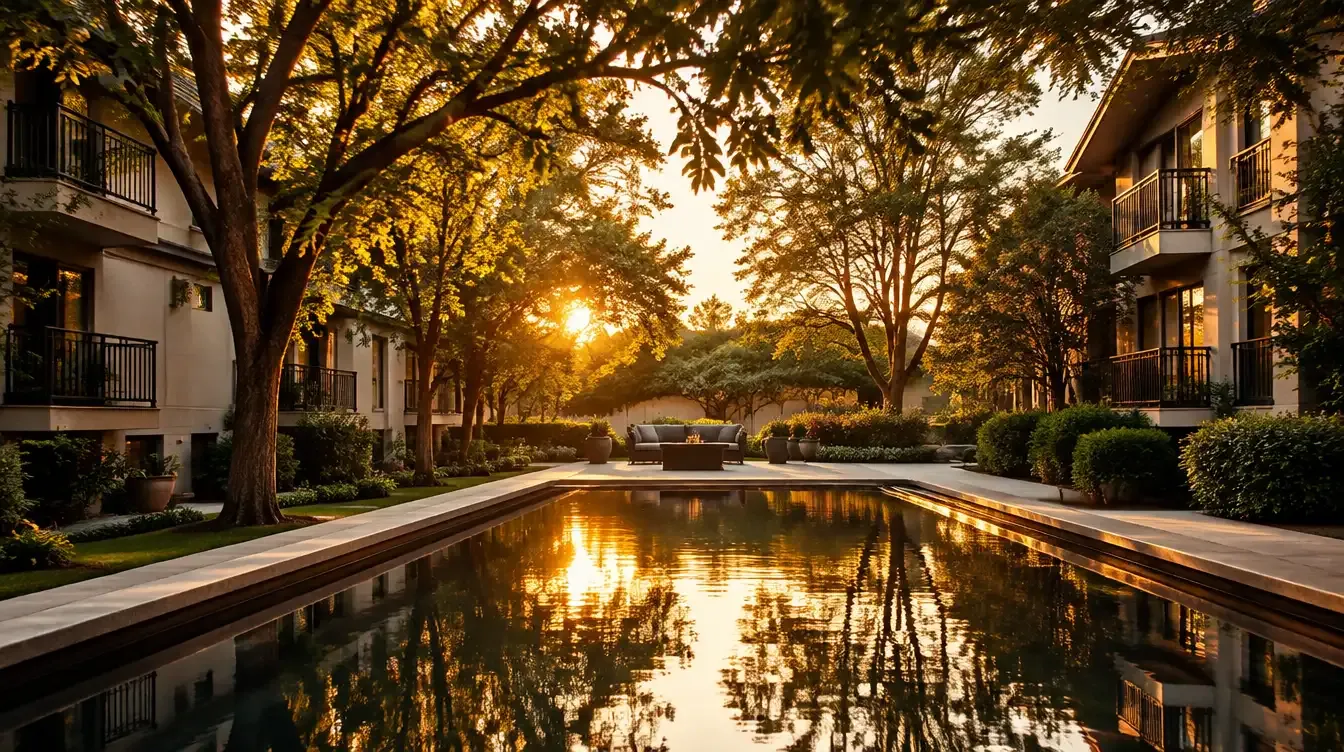
Density in numbers: units per acre, open space %
“Low density” is not a legal category. It is a ratio: homes divided by land. Two numbers tell you most of what you need — units per acre, and the share of the site left open.
| Measure | Boutique, low-density (archetype) | Large township (archetype) |
|---|---|---|
| Land | A few acres to around 10 | 50 acres and more |
| Homes | Tens to a few hundred | Often thousands |
| Units per acre | Often well under 40 | Frequently 60–100 or more across towers |
| Shape | Low- or mid-rise blocks around courtyards | High-rise towers, internal roads, retail and schools |
These bands are working rules of thumb in the Bengaluru market, not thresholds in any rule. A township with large parks can feel less crowded than a small project packed edge to edge, which is why the open-space share matters as much as the unit count.
Privacy, lift waits and crowding
Crowding is felt at the shared points: the lift lobby, the gate, the driveway at school time, the pool on a Sunday. The useful number is not the project total but homes per lift core and homes per floor.
- Boutique projects tend to put two to four homes on a floor, so neighbours are few and known.
- Townships put more homes on each core and more people on each internal road, so peak hours are busier.
- Both depend on the plan: ask for the typical floor plate and the number of lifts serving your core.
Amenities: scale vs use
A township’s strength is scale. Thousands of households can fund a large clubhouse, sports courts, a school, shops and a shuttle. That is a real advantage for families who want everything inside the gate.
A boutique project offers fewer amenities, used by fewer people. The question to ask is not “how many amenities?” but “how many homes per amenity, at peak?” One pool for 80 homes and one pool for 2,000 homes are different experiences even if the brochure lists both as “pool”.
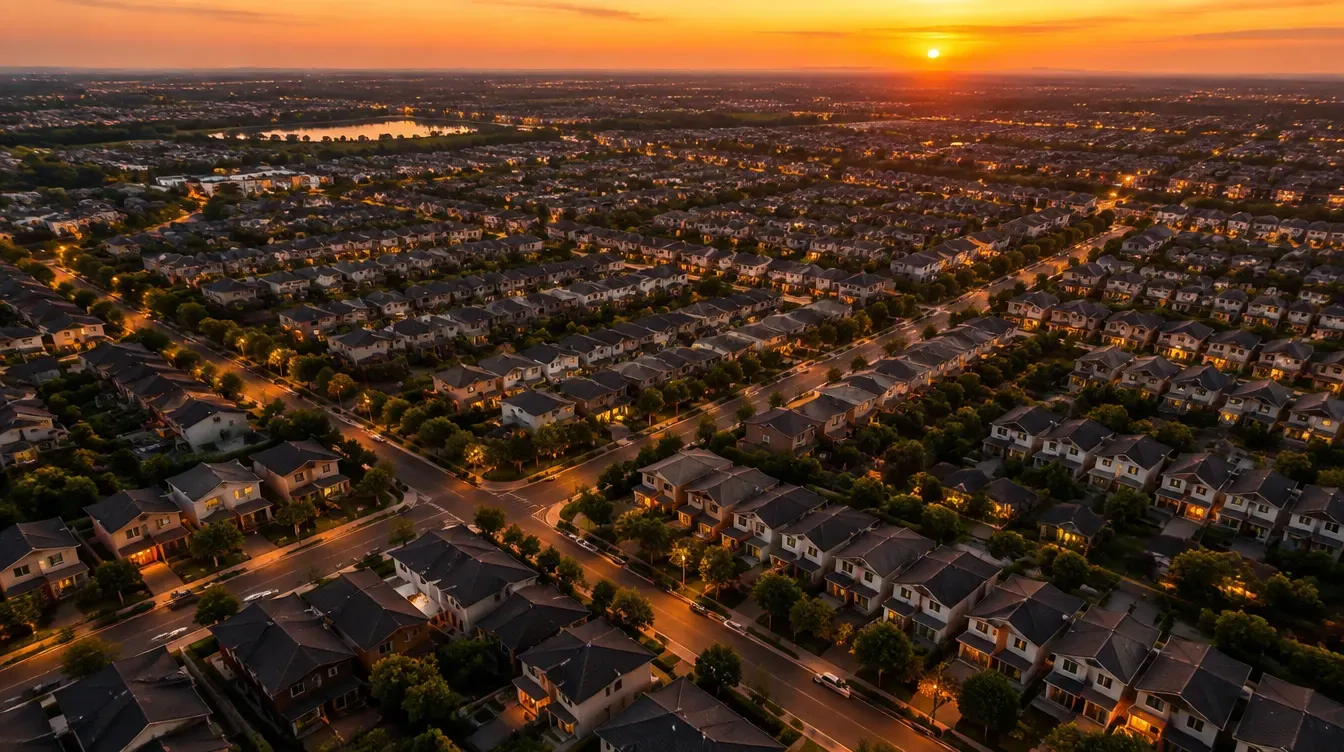
Maintenance per sq ft and corpus
Townships spread fixed costs — security, landscaping, facility management — over many homes, which can help. But they also run more systems: more lifts, more pumps, more generators, bigger clubhouses. Boutique projects run fewer systems with fewer people sharing the bill.
We do not print a “typical” rate per sq ft, because it depends on the systems installed and what the association decides. Ask for three things in writing: the maintenance budget line by line, the corpus or sinking fund and its basis, and, for an occupied phase, the association’s actual accounts. Maintenance agreements attract GST; ask the developer to show the CGST/SGST split on the estimate.
Resale and rental behaviour
No page can promise which form appreciates better, and we will not. What can be said is structural:
- In a township, many near-identical homes may be listed at the same time, so a seller competes with neighbours on price.
- In a boutique project, few homes come up for sale, so there are fewer comparables — that cuts both ways for valuation and for time to sell.
- Tenants often value township conveniences; owner-occupiers who want quiet often value low density.
Ask a local agent for actual registered resale transactions in the project, not asking prices.
How to compute density from a RERA filing
- Open the project on the Karnataka RERA portal (our step-by-step K-RERA search guide shows how).
- From the project details, note the total land area and the number of units registered for that phase.
- Convert land to acres if it is given in square metres (1 acre is about 4,047 sq m).
- Divide units by acres. That is the phase’s density.
- Check whether other phases share the same land — townships often register phase by phase.
Worked example (hypothetical): a phase registers 240 units on 24,281 sq m. That is about 6 acres, so 240 ÷ 6 = 40 units per acre. A second phase of 600 units on the same land would raise the combined figure to 140 units per acre — which is why you read all phases, not one.
Our own projects publish their registration numbers on each project page, so you can run this sum yourself. For larger family homes on Sarjapur Road, see 4 BHK apartments on Sarjapur Road.
FAQ
Questions buyers ask
What is a low-density apartment project?
A project with relatively few homes for its land area — usually low- or mid-rise blocks, fewer homes per floor and more open space per resident. It is a ratio, not a legal category.
How many units per acre is considered low density?
There is no official threshold. In the Bengaluru market, projects well under about 40 units per acre are commonly described as low density, while high-rise townships often run far higher. Always compute it from the RERA filing.
Are townships cheaper to maintain?
Not automatically. They spread fixed costs over more homes but also run more lifts, pumps and amenities. Compare the line-by-line maintenance budget and the corpus, not a quoted rate per sq ft.
Do low-density apartments appreciate better?
No one can promise that. Low-density projects have fewer competing resale listings but also fewer comparable sales. Check registered resale transactions for the specific project.
How do I check a project's density on RERA?
Find the project on the Karnataka RERA portal, note the land area and units for each phase, convert the land to acres and divide units by acres. Add up all phases that share the same land.
Sources
Where every figure on this page comes from
- Karnataka RERA — project land area and unit counts by phase; method checked 15 Oct 2026
See low density for yourself
Walk a SUYUG project, count the homes on a floor, and ask us for the RERA filing and the maintenance budget. We will put both on the table.